


The Centre for Digital Humanities and Multilateralism invites you to "The Kitchen Series" a series of seminars providing a collaborative forum to engage with researchers and their projects on the digitisation of data and the use of digitised archival resources.
What if our history could become the foundation of a memory capable of thinking? A memory that connects knowledge, places information in context and draws on an organization’s experience to inform its decisions?
Join us to discover Institutional Memory as a Service (IMaaS), an approach that puts agentic artificial intelligence at the service of institutional memory by connecting to existing systems. The goal: to go well beyond content generation and develop genuine capabilities for analysis, contextualization and reasoning across data sources of every kind.
Initiated within the Universal Postal Union (UPU), the second-oldest international organization in the United Nations system, IMaaS has a universal ambition from the outset: to make this technology widely accessible through a shared service designed for all. The UPU’s documentary archives, spanning more than 150 years of history and over two linear kilometers, will provide an initial setting for its application. Ultimately, any organization, public or private, will be able to benefit from this technology at a fraction of the cost of developing it independently.
Through postal history, let’s discover together IMaaS’s distinctive approach: starting with institutions’ needs to shape the technological response. Its ambition is to enable them to engage in dialogue with their past, reason from their experience, uncover new knowledge and draw on a living memory to write the next chapter of their history.
Speaker
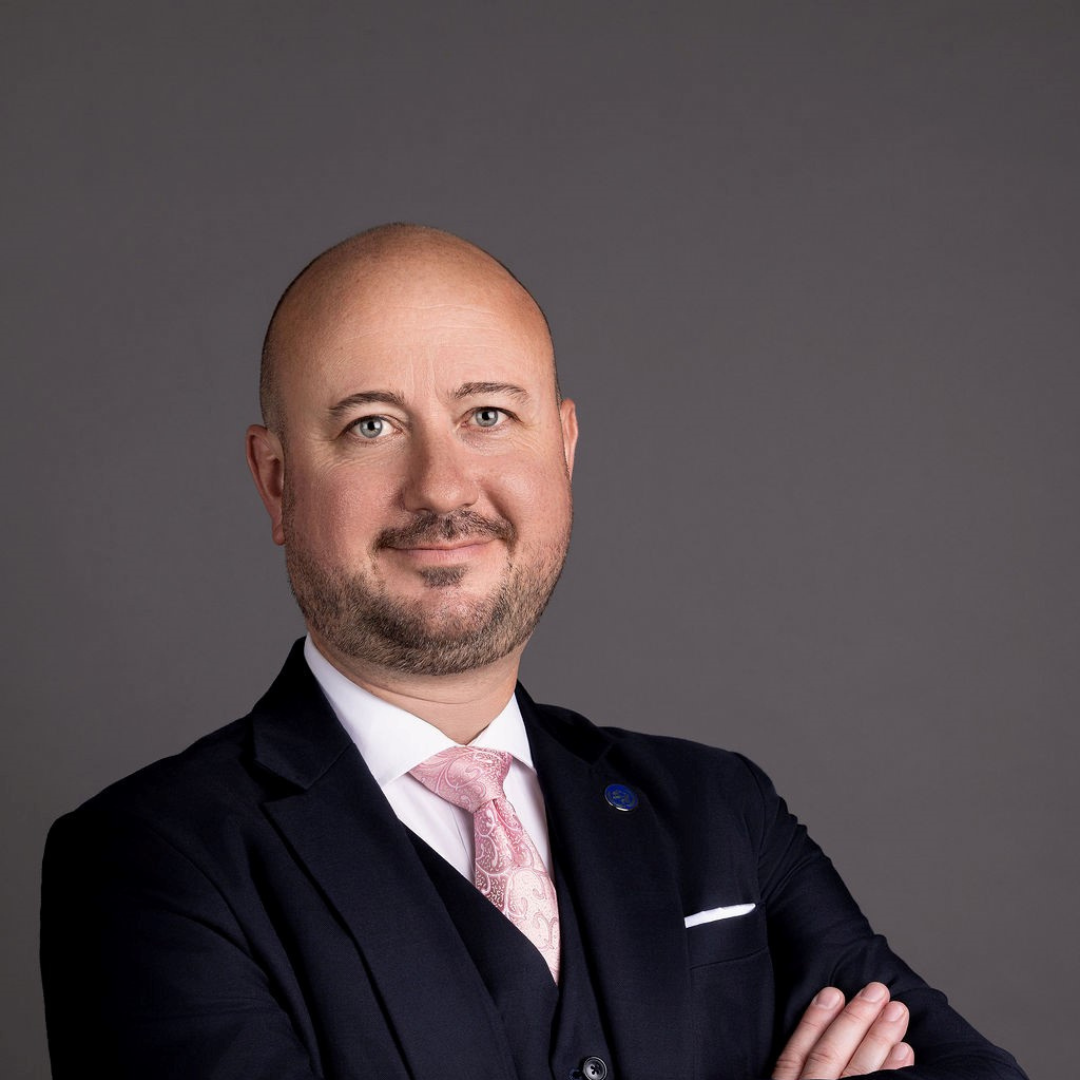 Benjamin Combes is the Philately and Documentary Heritage Programme Manager at the International Bureau of the Universal Postal Union (UPU) in Berne. An expert from La Poste Group (France), he has been seconded to the UPU since 2022.
With nearly 30 years of professional experience, including more than 25 years within La Poste Group, he has held responsibilities in information technology, management and international postal cooperation, notably working for La Banque Postale and serving on the management team of the Kahala Posts Group alliance. He was also an active member of PostEurop and led the philatelic activities of the Postal Union for the Mediterranean from 2017 to the end of 2022.
His multidisciplinary and international background informs a strategic outlook encompassing institutional, economic and technological considerations. Experienced in bringing together stakeholders with diverse priorities, he works to build cooperation and translate shared ambitions into concrete initiatives. At the UPU, he applies this approach to the development of philately and the promotion of documentary heritage as instruments of international cooperation, knowledge transmission and countries’ international outreach.