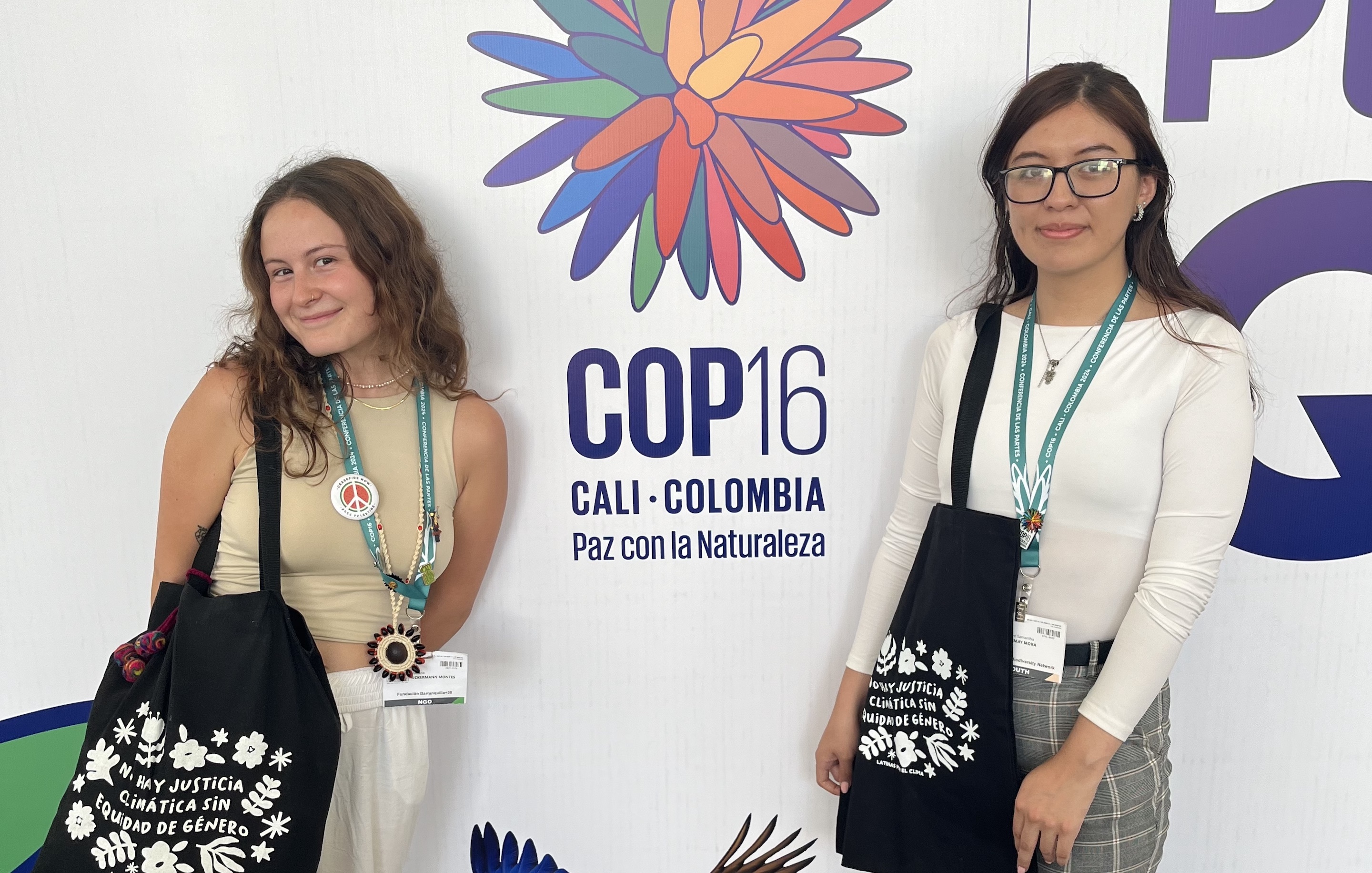


You co-founded Latinas for Climate in 2020 — can you tell us about the organisation and the role you’ve played within it?
In 2020, Latin America was fighting for the entry into force of the first treaty in the region linking environmental protection with human rights, the Escazú Agreement, that still needed two ratifications before the end of the year. Across the continent, civil society mobilised, launching coordinated campaigns to pressure governments into action.
It was in the midst of this mobilisation that Latinas por el Clima was born. As we worked to amplify the importance of Escazú, we noticed a glaring gap: the realities of the Global South, extractivism, colonial legacies and the systemic inequalities shaping the climate crisis were missing from global conversations. The voices of those most affected — girls, youth, women, Indigenous and Afro-descendant communities, and other marginalised groups — were largely absent or ignored. The climate narrative circulating internationally did not reflect the violence, inequalities, or territorial struggles that communities in our region were living every day.
That is why we decided to organise. Latinas por el Clima began as a collective effort to make these perspectives visible and to push for climate justice grounded in intersectionality, territory, and human rights.
Today, Latinas por el Clima is a growing network of young women and girls from across Latin America, fighting for an inclusive and intersectional vision of climate justice. We aim to amplify the role and leadership of girls, youth, women in all their diversity, and dissident gender communities. We do this by making ecofeminist perspectives visible, driving political advocacy, promoting education and empowerment around the climate crisis through a gender lens, and supporting ecofeminist grassroots projects across the region.
In November, you attended COP 30 in Belém, which was your fourth COP! What brought you to the conferences and what is it that you do there?
My first COP was COP26 in Glasgow with Latinas por el Clima. With a lot of effort, only a few of us were able to get there, advocating for more representation of young Latin American women and denouncing the huge barriers that prevent Latin American civil society from reaching these spaces in the first place. Already then, we insisted on the need to look at youth representation from an intersectional perspective, because youth is not a homogeneous category. The experiences, challenges, and political priorities of young people from marginalised groups are profoundly different from those of young activists from the Global North. We were also pushing back against tokenism — how youth are often used for images or speeches, but excluded when it comes to shaping negotiations or having our demands actually considered. Representation, inclusion, and visibility are terms that must be analysed very carefully so as not to fall into these traps.
We have continued campaigning for spaces like these because, despite all their contradictions, civil society and especially historically excluded groups have to be there putting pressure. I’ve always said that we reached the 30th COP without any real change precisely because it is always the same people making the decisions, instead of those who should. Environmental defenders, Indigenous peoples, farmers, women, and youth are the people who should be at the centre of the discussions, and we will keep pushing until that happens.
I attended this COP30 both as a feminist climate activist and as part of the Global Coalition of Peoples Facing Extractivism (GCPE), and my work in both roles overlaps: bringing territorial realities into global spaces, supporting environmental defenders, challenging western narratives and fighting for those perspectives and examples to be in the center. My role was very much about bridging those worlds.
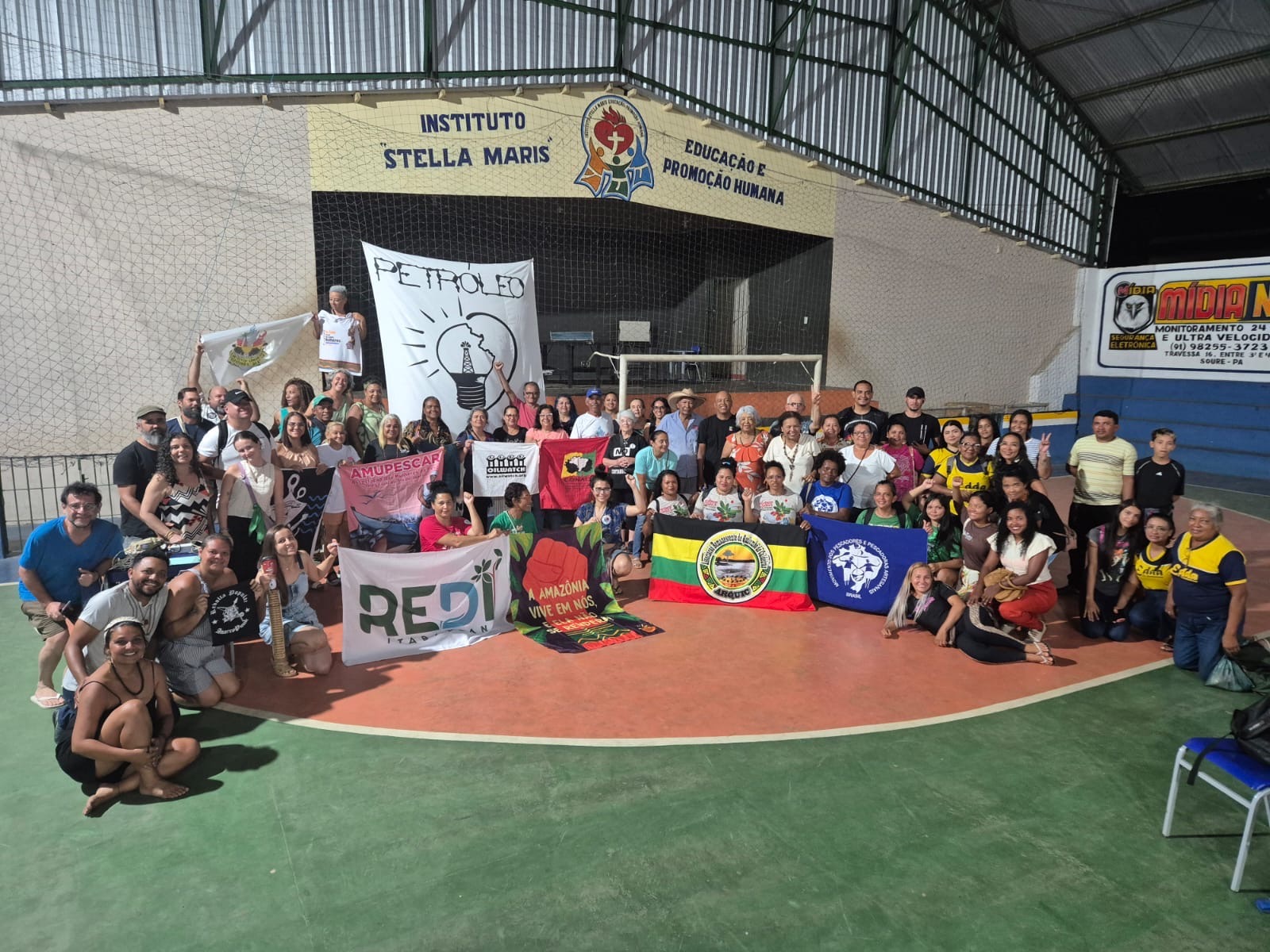
I spent time in the parallel COP spaces, because COP is not only about the negotiations — it is also about the struggles, the resistance, and the people outside. I was in Marajó at the “Ni Un Pozo Más” gathering with fisherwomen, quilombola communities and Indigenous peoples, listening to the impacts they are already facing and, most importantly, the resistance they are building. And inside the formal COP space, I worked alongside Latinas por el Clima to carry those demands forward, to challenge the disconnection between negotiations and territorial realities, and to push for gender-responsive, intersectional, and justice-centred approaches.
Ultimately, what brings me to COPs is exactly that: to make sure our region’s stories, struggles and political demands are not erased, and to fight for a climate agenda that recognises that those most affected by the crisis must be the ones shaping the solutions. It is also about shifting the narrative around COPs themselves. They are not distant negotiations that only concern the people inside the blue zone: they should feel closer, more accessible, and more democratic. With Latinas por el Clima, we had different goals and projects in Belém, but one of the most important was precisely to make COP “about and for the people.” Through our communications project “Latinas Reporting from COP,” we shared accessible, clear information about the negotiations and the political process behind them, so that communities in our region could understand what was happening and why it matters. Because afterall, as we often say “there is no global without local”.
What were some of the most inspiring and, on the other hand, most frustrating arguments you heard/elements you encountered at the conference?
One of the most inspiring parts of COP30 happened outside the blue zone, because as I mentioned earlier COP is not only the negotiations. The People’s Summit (the parallel COP) brought together civil society from all over the world, especially Indigenous peoples and environmental defenders from Latin America. Some of them crossed entire countries on foot, by boat, or by bus in organised caravans, culminating in debates, a final declaration given to the COP presidency and a massive march of more than 70,000 people demanding climate justice.
I also attended another parallel gathering three hours away from Belém, the “Ni Un Pozo Más” campaign, with fisherwomen, quilombola communities, Indigenous leaders and local defenders. These are communities directly confronting the impacts of extractivism in their territories and listening to them speak about their communities, their rivers, their struggles and the ways they organise collectively was a reminder of where real climate leadership comes from. Those spaces made visible the strength of territorial knowledge, the clarity of local demands and the central role of youth and women as political actors.
But what made these moments so inspiring is exactly what also made COP30 deeply frustrating.
We were in the Amazon, yet many of the communities most affected by the climate crisis were not present inside the negotiations. How can we negotiate in their territories without them? The communities threatened by new fossil fuel concessions along the Brazilian coast were just three hours away in the archipelago of Marajó, yet completely absent from the rooms where decisions about their future were being made. This exclusion is not accidental; it reflects how global climate governance continues to operate: those who bear the consequences and who are actively resisting are systematically kept out, while those who profit from extraction are welcomed in. According to a report by Kick Big Polluters Out (KBPO), over 1,600 fossil-fuel lobbyists were accredited to COP30 — which means approximately 1 in every 25 attendees was a lobbyist for the fossil-fuel industry.
This contradiction reveals how negotiations continue prioritising economic and geopolitical interests over climate justice and human rights. COP30 was promised to be the “COP of Truth” and the “Indigenous” COP, yet it became another fossil fuel gathering and one of the most militarised COPs ever, only confirming how the current system is designed to exclude precisely the people who should be at the centre.