


On 4 and 5 December 2025, the Geneva Graduate Institute hosted a major workshop at the Maison de la Paix titled Artificial Intelligence and the University: Knowledge Production, Pedagogy, and Infrastructure. Convened by the Institute’s Tech Hub, the event brought together faculty, students, researchers, and practitioners from a wide range of disciplines and regions to reflect on how artificial intelligence is transforming the foundations of academic life.The workshop also marked an important milestone in the Institute’s ongoing AI strategy process, offering a shared space for the different internal working groups to present the work carried out over the past six months, while engaging with external experts whose perspectives helped broaden and challenge this internal reflection.
As AI becomes embedded in research practices, teaching environments, and institutional systems, the workshop offered a moment of collective reflection on what these changes mean for universities as sites of knowledge production, critical inquiry, and public responsibility. Across two days, discussions addressed questions of academic integrity, intellectual creativity, authorship, epistemic diversity, and governance, while asking how universities can engage with AI in ways that remain consistent with their social and ethical commitments.
The workshop opened with introductory remarks by Davide Rodogno. The opening panel on AI in the Social Sciences and Humanities featured Ashwin Jayanti and Jean Philippe Cointet, alongside a presentation by the Institute’s AI Strategy Vision group, with moderation by Davide Rodogno. Jayanti emphasized how technologies are constituted through everyday practices of use, maintenance, and refusal, raising questions about how academic engagement with AI will reshape research and institutional norms. Cointet approached AI as both method and object, discussing large language models as social data and as tools enabling new forms of augmented social science. The Vision group situated these debates within the Institute’s ongoing strategy development, highlighting themes of digital sovereignty, equity, sustainability, and the centrality of human judgement and imagination.
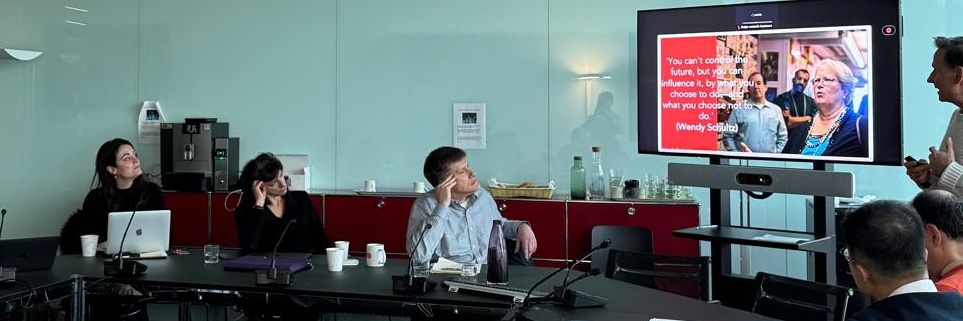
The first day continued with panels dedicated to teaching, learning, and assessment. The panel on AI in Teaching and Learning featured Davy Tsz Kit Ng, Bruce Lenthall, Claudia Seymour, and Ines Leon Gimenez, and was moderated by Graziella Moraes Silva. Discussions focused on AI literacy, adaptive learning environments, self directed learning, and the evolving role of educators. The subsequent panel on AI and Academic Assessment brought together Isabelle Nizet, David Schmocker, and Patrick Jermann, with moderation by Jerome Duberry, addressing redesigned assessment formats, inclusion, and faculty preparedness in the context of generative tools.
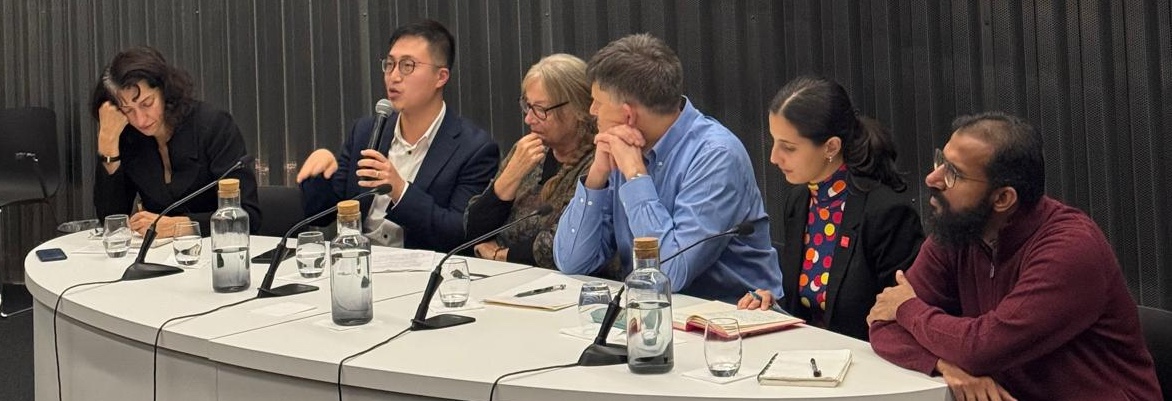
In the evening, a public panel discussion titled The University in the Age of AI: A Global Perspective opened these conversations to a wider audience. The panel featured Davy Tsz Kit Ng, Ashwin Jayanti, Bruce Lenthall, Jessica Feldman, Isabelle Nizet, and Ines Leon Gimenez. Introductory remarks were delivered by Achim Wennmann.
The second day turned to the implications of AI for research practices and institutional decision making. The panel on AI in Research Design and Inquiry brought together Jessica Feldman, Florian Cafiero, and Mark Carrigan, alongside a presentation from the Institute’s research working group, and was moderated by Grégoire Mallard. The discussion examined how AI is reshaping scholarly creativity, altering processes of research production, and encouraging new forms of anticipation and speculation about the future of academic work, including comparisons with earlier moments of transformation linked to social media. Attention was given to how predictive narratives around AI influence research agendas and scholarly norms, sometimes ahead of concrete empirical change.
This was followed by a panel on Deploying AI in Academia, moderated by Bruno Chatagnat, with contributions from Nicolas Salamin and members of the Institute’s support groups. This session focused on the practical and normative challenges of institutional adoption, including governance structures, data protection, ethical frameworks, and the infrastructures required to support AI use while safeguarding academic autonomy and public trust. The workshop concluded with a foresight exercise on AI mediated knowledge production in 2040, moderated by Jerome Duberry, and involving mixed groups of invited experts, faculty, early career researchers, and students. Participants identified emerging tensions, institutional risks, and possible pathways for the future university.
The event took place as part of a broader consultation process aimed at developing the Geneva Graduate Institute’s AI strategy, which will culminate in a strategic document outlining priorities for research, teaching, and administrative services aligned with the Institute’s commitments to peace, sustainability, and equity.
Supported by the Swiss National Science Foundation through a Scientific Exchanges grant, the workshop was organized by Laura Bullon Cassis, Ralph Müller, and Jérôme Duberry from the Tech Hub.