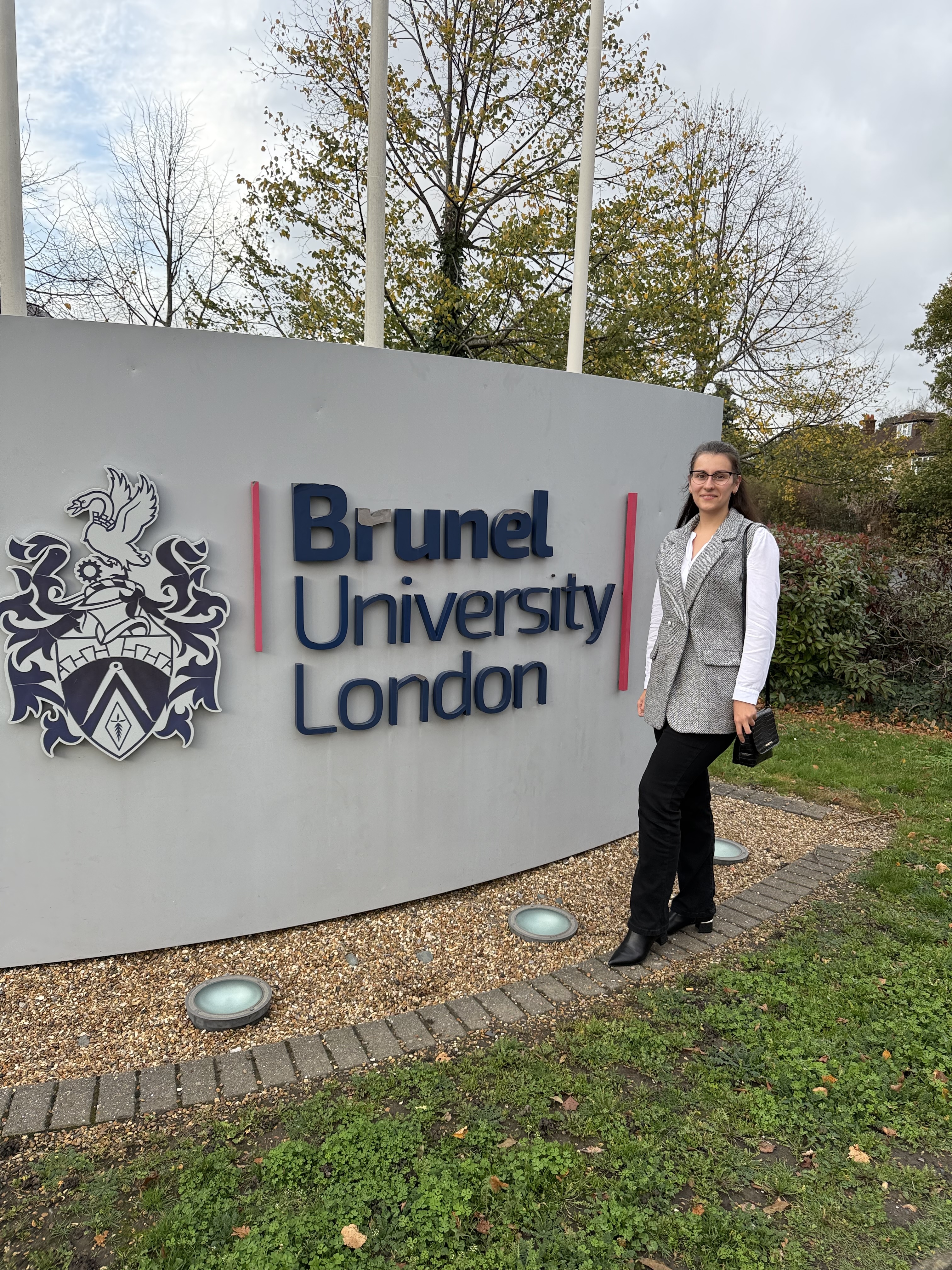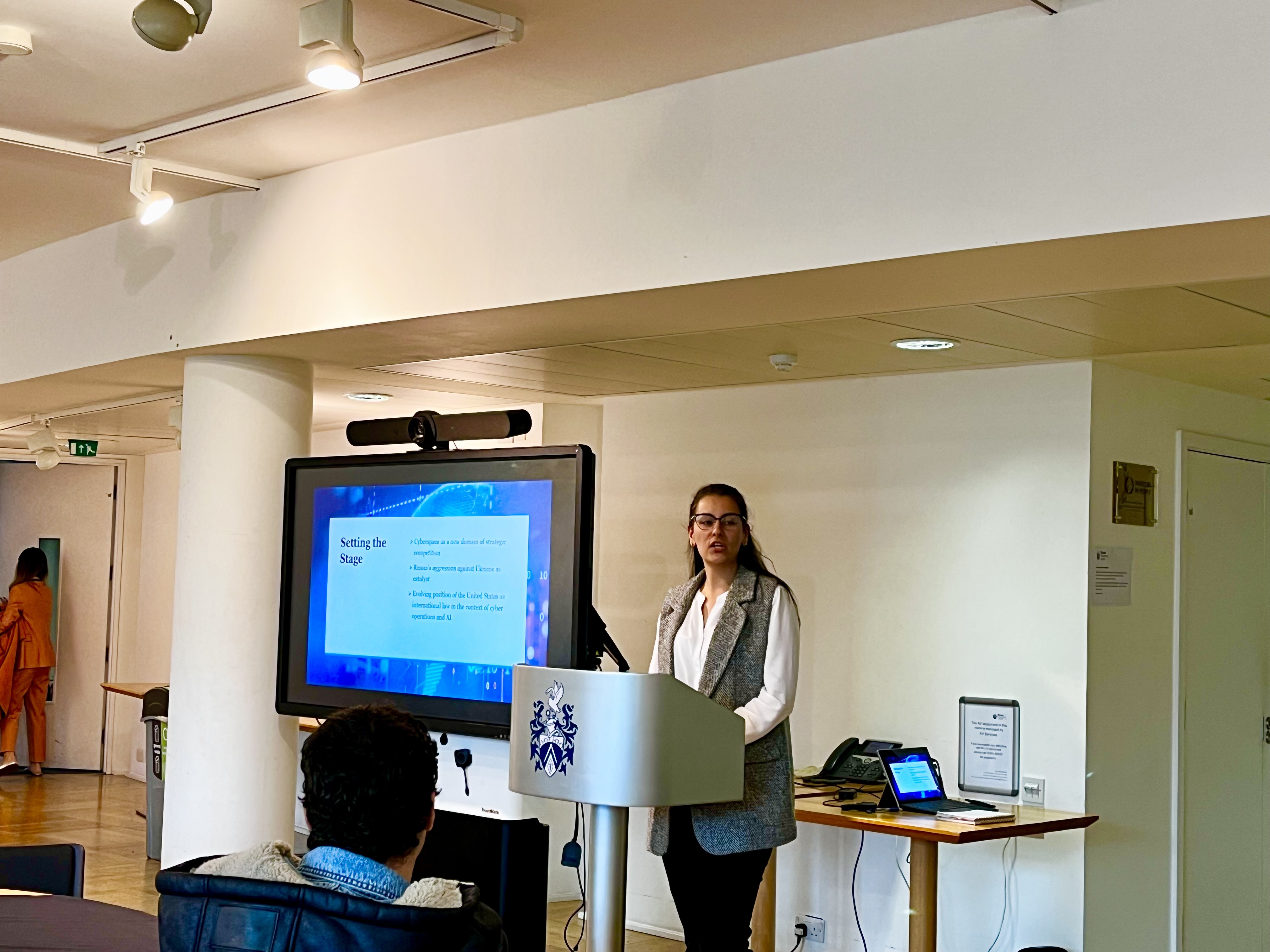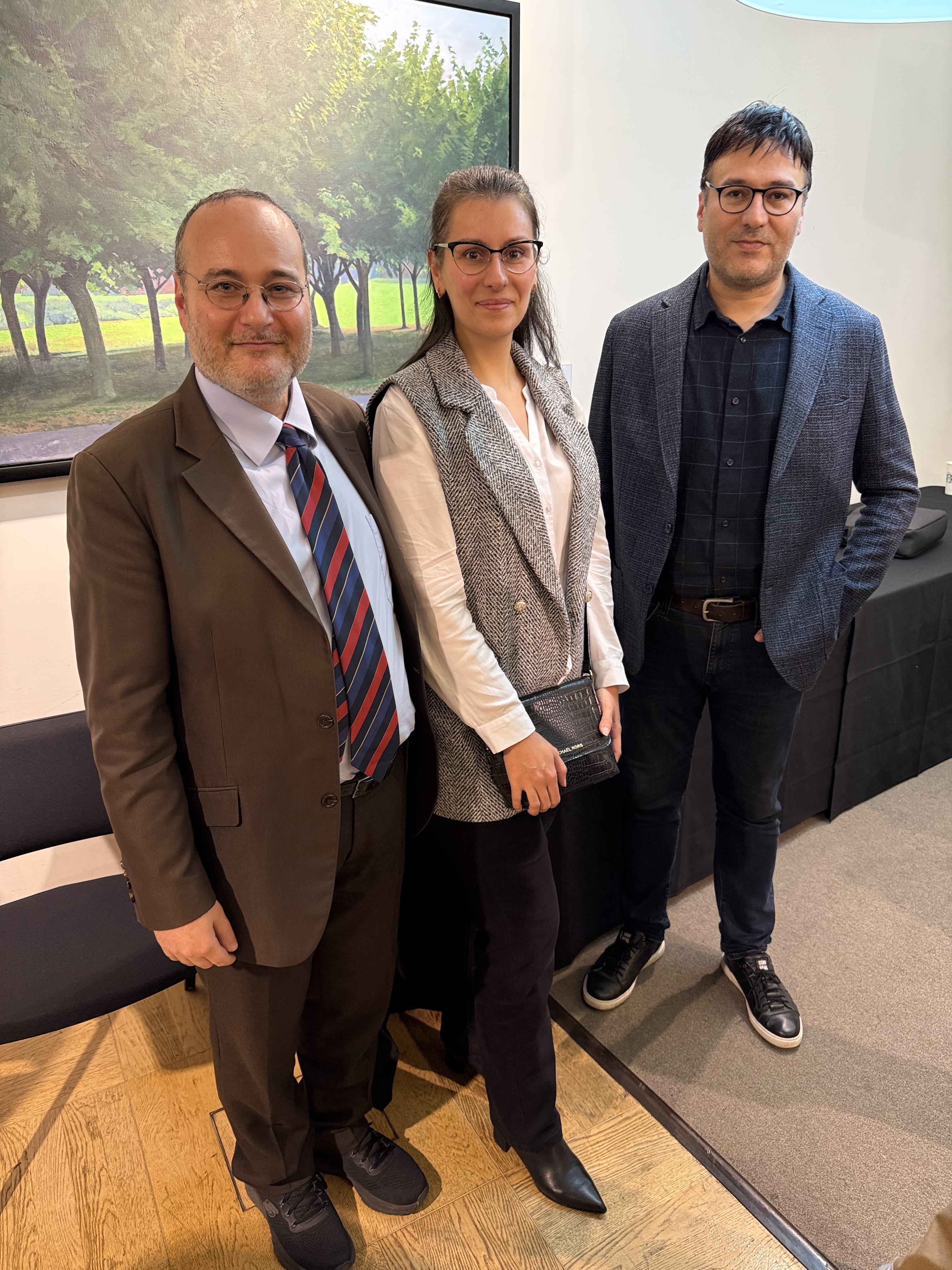


CCDP Postdoctoral fellow Daryna Abbakumova took part in the international law conference The U.S. and International Law in a Changing World, held at Brunel University of London on 5 to 6 November 2025. She joined the panel on The U.S. between AI, Science and Technology, alongside speakers from the University of Cambridge, Leicester University, Northumbria University, and the University of Cape Town. The first day was held in the Institute of Advanced Legal Studies in central London and the second day at the Brunel University of London. This two-day conference was organised by the International Law section of the Society of Legal Scholars, Dr. Solon Solomon from the Brunel Law School (Brunel University of London) and Dr. Saeed Bagheri from the University of Reading.
Her presentation examined the evolving U.S. position in the cyberspace, exploring how its approaches to offensive and defensive cyber operations have changed, considering Russia's aggression against Ukraine, and how AI is reshaping the future of cyber warfare. She also highlighted the urgent need for continued international cooperation and norm-building in this rapidly developing area. Since Daryna is currently leading her SNSF postdoctoral project “Cyber Operations, International Humanitarian Law, and Issues of Neutrality,” it was crucial for her to examine the position of the United States on cyber operations as one of the leading actors in the technological sphere. This is particularly relevant given the active and influential role of the U.S. in developing doctrinal positions on the application of international law to cyber operations and its participation in multilateral processes within the UN. At the same time, the presentation emphasized that the U.S.'s participation in these processes has recently decreased, especially after the U.S. ceased offensive cyber operations against Russia in February 2025, which puts international cybersecurity and U.S. allies in a dangerous situation.
Holding this conference is very timely, given contemporary debates about U.S. international engagement (or disengagement) and its consequences for global legal order. By covering topics ranging from geopolitics to technology, the conference perfectly covered both traditional topics of international public law (sovereignty, human rights, international organizations) and emerging challenges (AI, cybersecurity, technology).
The conference featured keynote speakers Oona Hathaway (Yale University), Jose Alvarez (New York University), Gerry Simpson (London School of Economics), who shared their perspectives on different U.S. approaches to the foundations, legitimacy, and adaptability of international law, helping to see how contemporary geopolitical dynamics affect legal norms, state behavior, and the interpretation of treaties and customary law. The conference also included a roundtable discussion with Oona Hathaway (Yale University), Jose Alvarez (NYU), Martins Paparinskis (UCL & UN International Law Commission) and Moshe Hirsch (The Hebrew University of Jerusalem) on the Trump legacy when it comes to international law, that was chaired by Solon Solomon (Brunel University of London). A recording of this roundtable discussion can be viewed at this link.