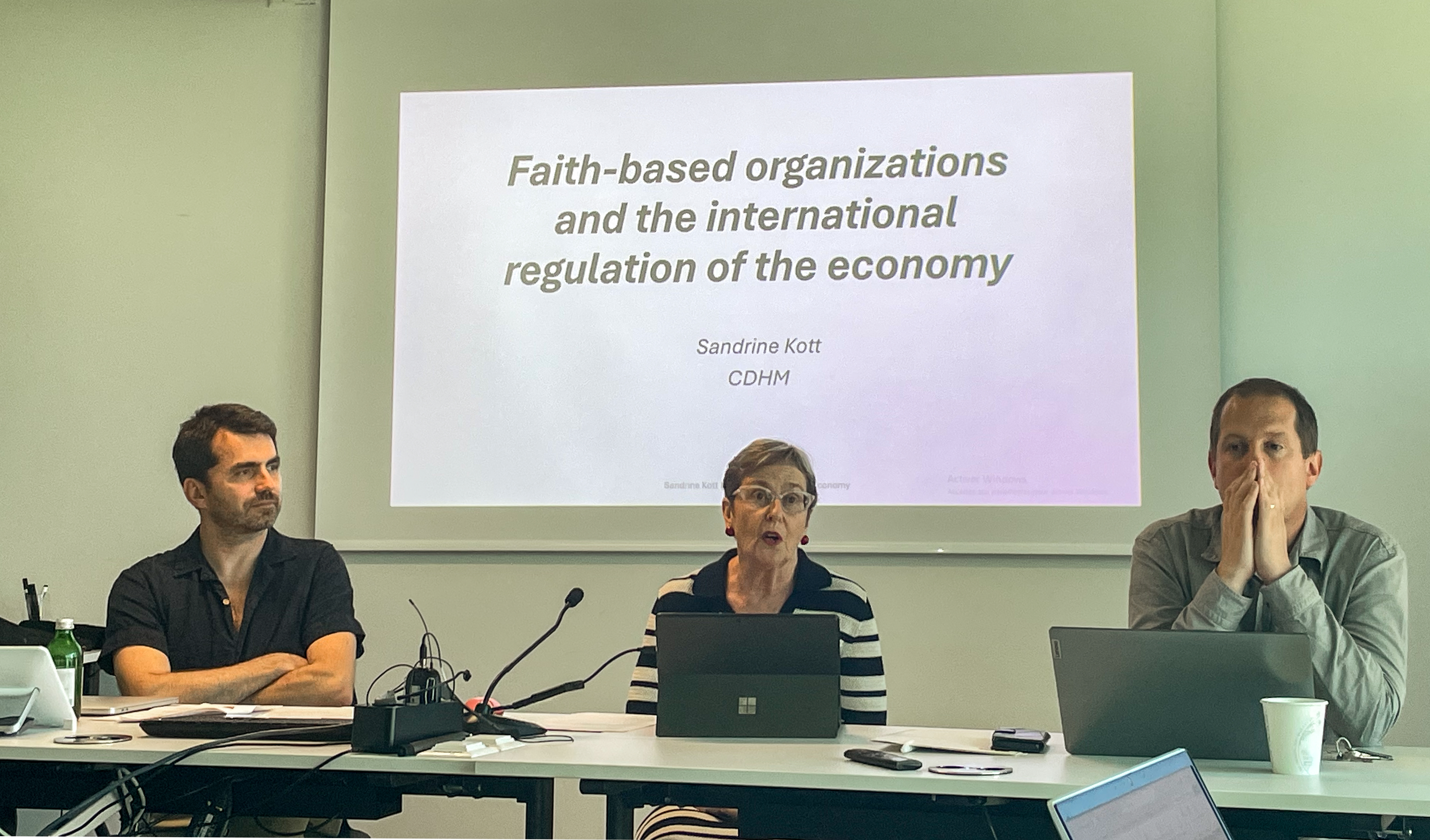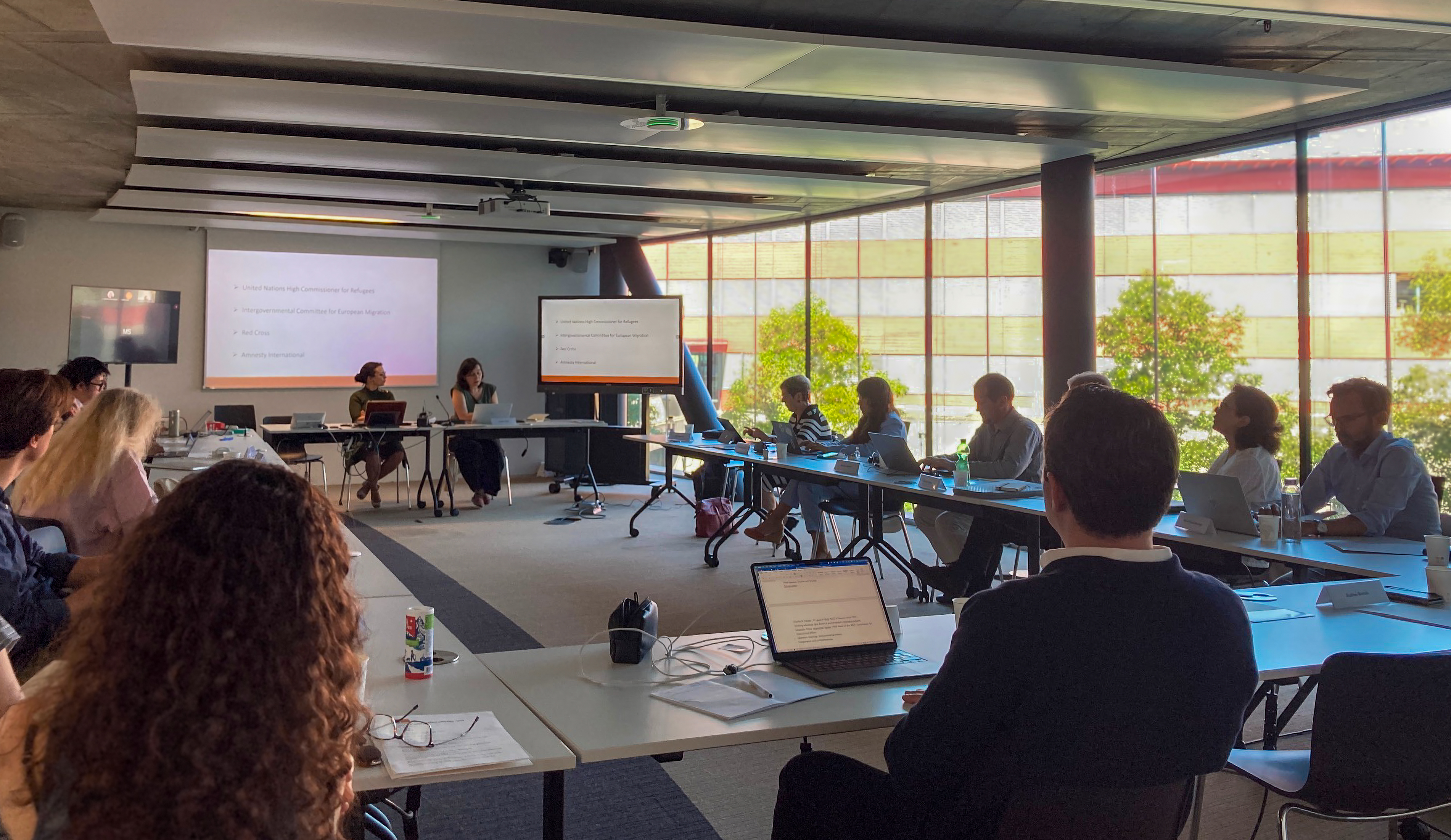


This exploratory workshop brought historians of religion together with international historians to examine a still under-studied intersection: the place and role of Christian actors, networks, and values within the twentieth- and twenty-first-century multilateral system. Across four panels, participants traced how churches and faith-based individual and collective actors—generally considered at odds with a multilateralism built on secularism—came to engage with the League of Nations, the United Nations, and their agencies.
A first panel on human rights followed the World Council of Churches from its early hopes in the UN and the Universal Declaration to its more anti-imperialist, grassroots turn in the 1970s, alongside the quieter lobbying of the Quaker UN Office and the WCC's networks in Pinochet's Chile. A second panel moved from missions to development, examining the International Missionary Council, Protestant and Catholic advocacy on colonial affairs, and Christian Democracy's evolving entanglements with UN developmentalism.
Discussion of economy and labour centred on the ILO as an arena where Christian social doctrines met multilateral conceptions of social justice, extending to questions of corporate responsibility and the Global Compact. A final cluster on religious networks and national questions ranged widely: the Holy See's diagnosis of today's multilateral crisis and the BRICS; Catholic women's leagues acting as "observers before the observer" of the Vatican; and the WCC's mediation in the Korean reunification process.
Throughout, four threads recurred: the actors involved—with notable attention to women; the circulation and secularization of values; the institutional and global spaces of engagement; and the long-term and understudied reconfiguration of religious presence within multilateralism.