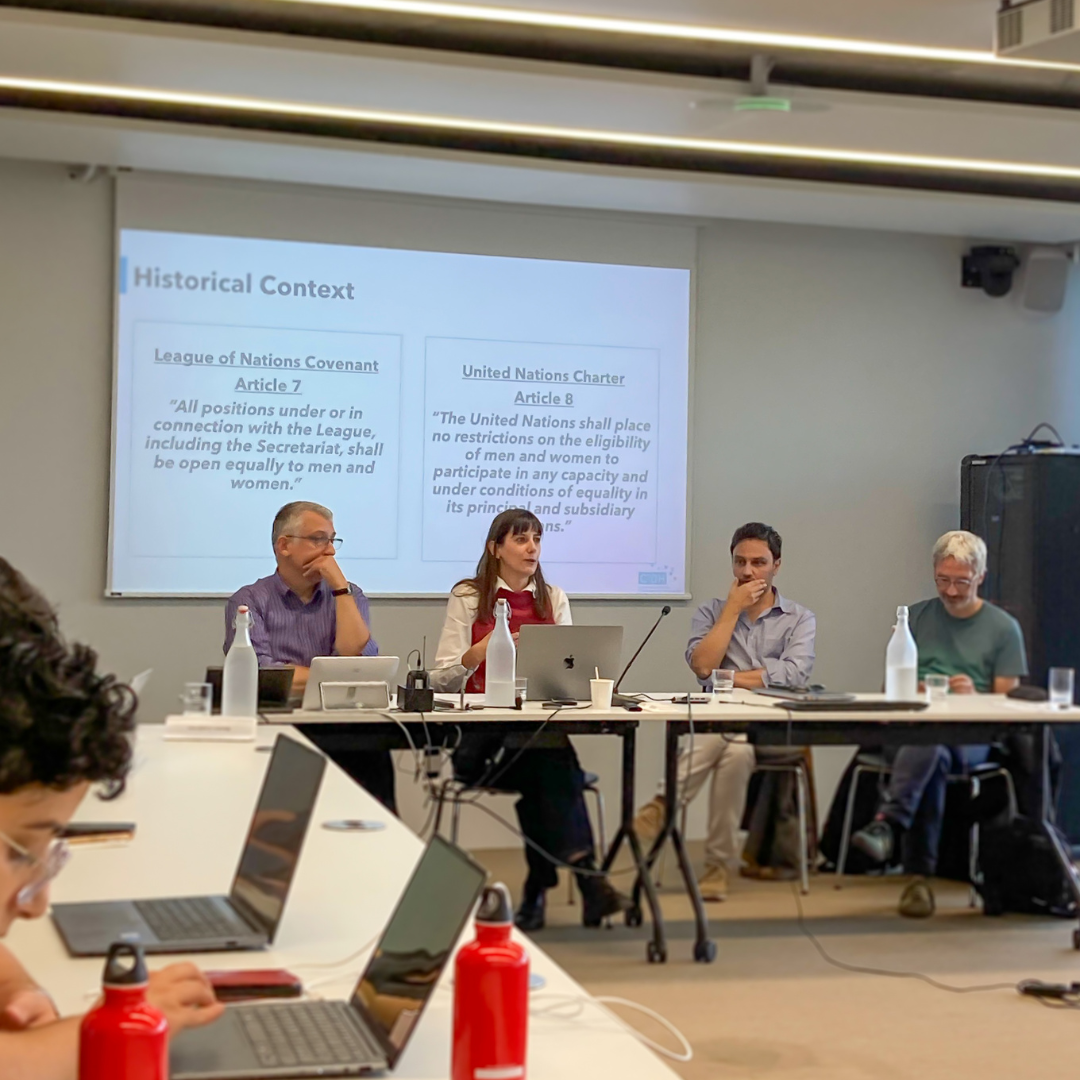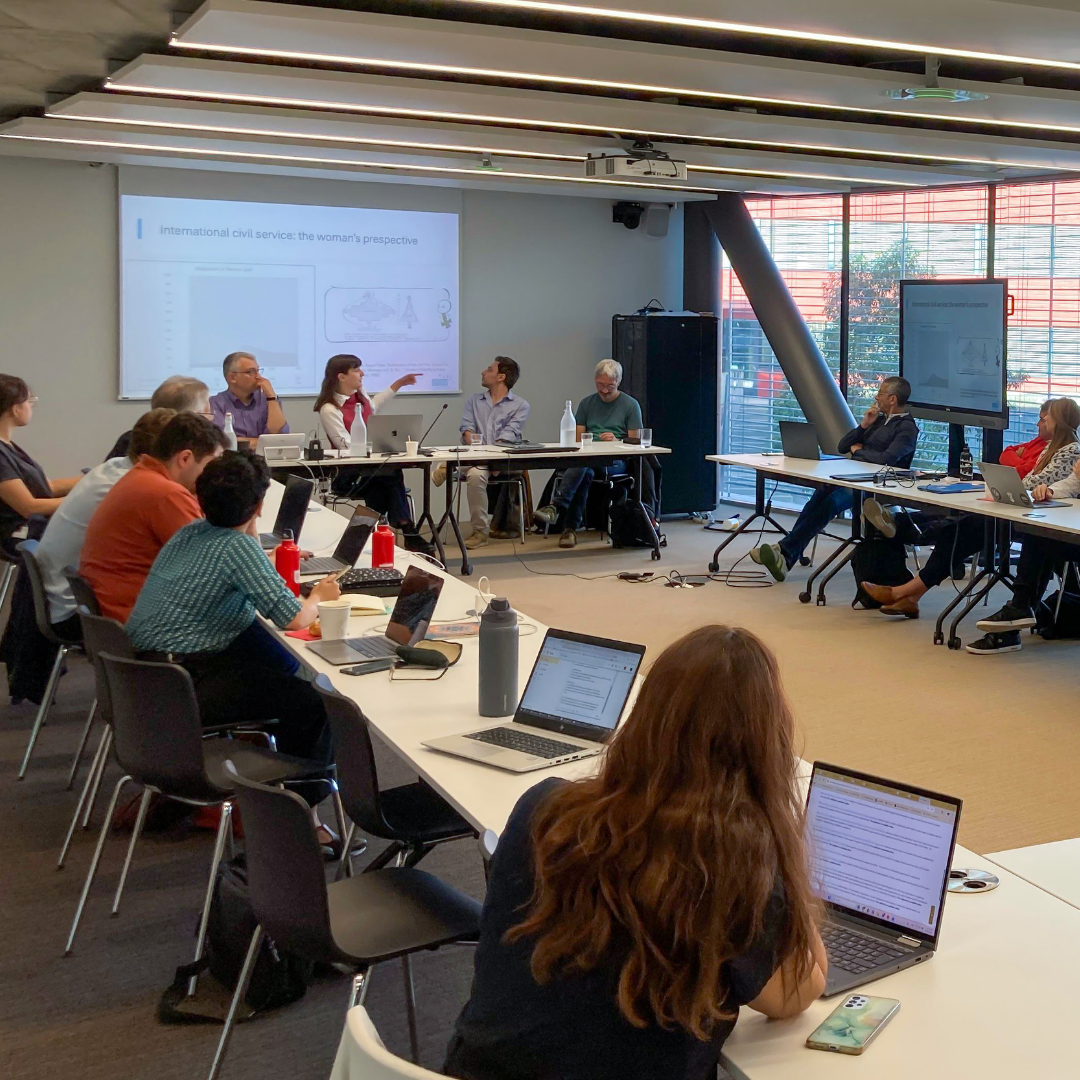


The seminar featured presentations by Benoît Majerus, Matteo Calabrese, Myriam Piguet, and Frédéric Clavert, highlighting the diverse ways digital tools are reshaping historical research.
The key focus of the first part of the seminar was the ERC-funded DIGISHELL project, presented by Benoît Majerus and Matteo Calabrese. Their presentation, Digital archaeology of shell companies: infrastructures of global connections and local networks, examined the role of shell companies as a central infrastructure of global capitalism in the 20th century’and the role of international organisations within these networks. The researchers also showcased digital methods and approaches being used to uncover and analyse complex financial and institutional connections, including hownational legal regimes became interconnected within a global offshore infrastructure.
The event also featured a presentation by Myriam Piguet, who introduced her forthcoming book The Women Behind Multilateralism: Gender and International Civil Service from the League of Nations to the United Nations. Drawing on her research into the social history of international organisations, she highlighted the contributions of women working within multilateral institutions and discussed ongoing developments in the field of international history. Her work in microhistory and the use of more obscure digital sources of biographical data provided a segue to presenting the C²DH relationship to the Journal of Digital History (JDH), which promotes new forms of data-driven scholarship and transmedia storytelling in the historical sciences.
Addressing one of the most rapidly evolving topics in the digital humanities, Frédéric Clavert presented his current research on the use of generative artificial intelligence in historical research. Using his ClioDeck project as a point of illustration, he explored the opportunities and challenges of retrieval-augmented generation (RAG) and reflected on the implications of AI-assisted research for historians and digital scholars in a time of epistemic diversity.
Through discussions ranging from financial networks and international civil service to digital methodologies and artificial intelligence, the event illustrated the growing importance of interdisciplinary approaches in understanding both historical sources and contemporary digital ecosystems. This event also reflects the growing collaboration between our two centres, which continues to foster new exchanges and opportunities for joint research, dialogue, and engagement.