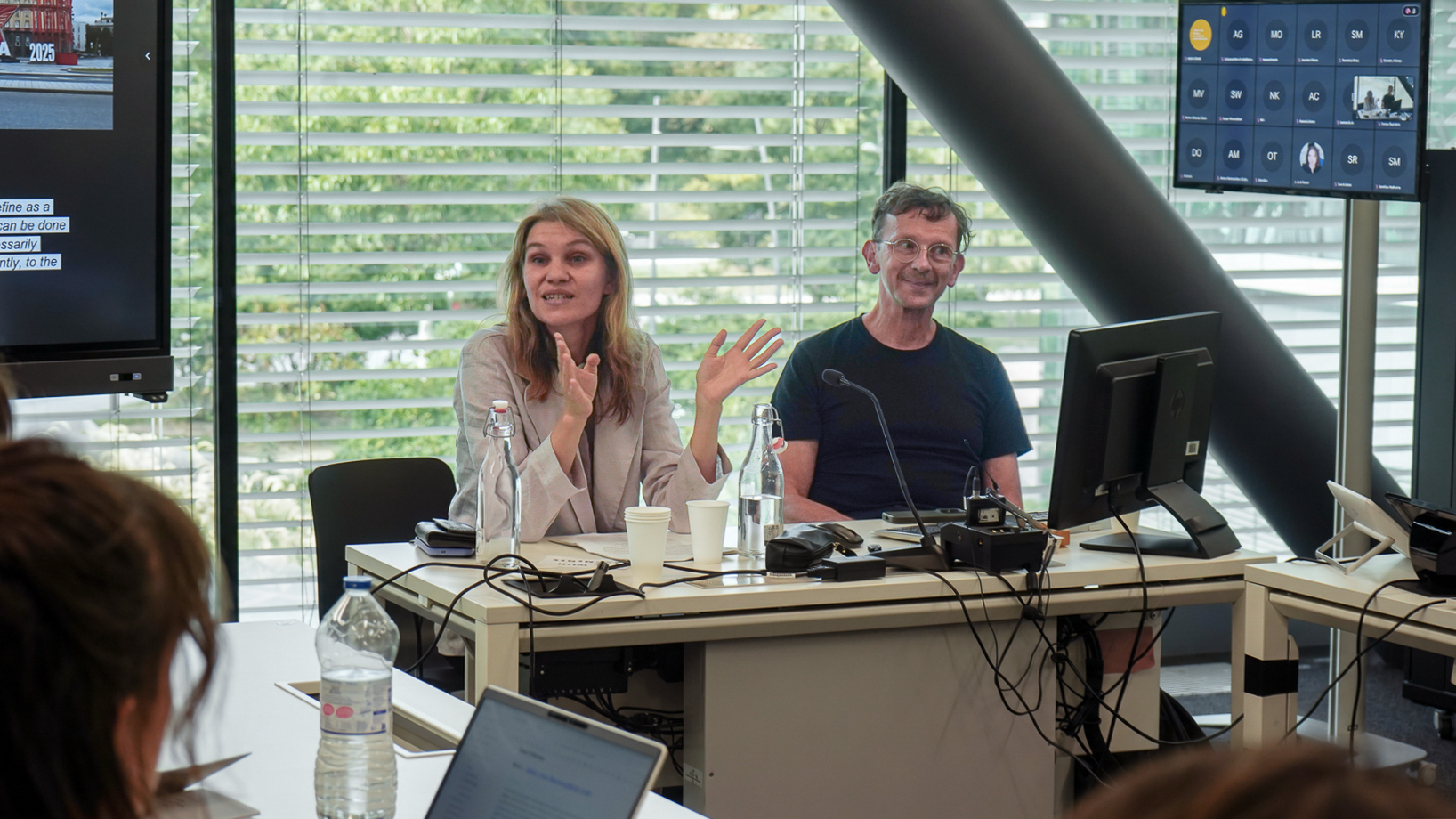


The book offers a poignant reflection on the monumental institutions of modernity—the university, the museum and the discipline of anthropology itself—and on the people whose lives and voices have been erased from their official narratives. Drawing on four interconnected dimensions of his analysis—monumentality, museums, memory and militarism, which he identifies as the “four Ms”—Hicks examined the historical entanglements of colonial violence, cultural institutions and the politics of public memory. Through examples from Bristol’s contested monumental landscape and the collections and institutional history of the Pitt Rivers Museum in Oxford, he explored how imperial legacies are embedded in the material and epistemic structures of cultural heritage, and how these structures have become sites of contemporary struggles over historical accountability, restitution and decolonisation.
The seminar also provided an occasion to introduce the ERC-funded research project ICONS: Exploring Global Iconoclastic Politics in the 21st Century, led by Nataliya Tchermalykh and hosted by the CDHM. The project investigates the destruction, alteration and contestation of monuments and visual symbols as forms of political expression, truth-seeking and justice-making across different historical and political contexts. Hicks's work offered a productive framework for considering how struggles over different cultural objects expose competing political values, challenge institutional authority and open new possibilities for historical justice.
The seminar concluded with a lively discussion and audience Q&A, highlighting the importance of interdisciplinary approaches to understanding how societies negotiate difficult histories and imagine more inclusive futures.