


By Augusta Nannerini
This is a commentary on the UN Global Dialogue on AI Governance, held in Geneva on 6 and 7 July 2026. It steps back from the themes discussed to focus on the format of the convening. It notes that the schedule of side events were overlapping, conversations ran in parallel, and gender reached the main stage mostly once it had been reduced to statistics. At first sight this looks like a consequence of scale, and evidence for an unsolvable binary choice between UN-chaired universality and club-governance efficiency. Against this inevitability, I argue that we can move past a binary usually settled by counting who is in the room, by qualitatively changing the methods and methodologies used to design the conversation, building on “dos” and “don’ts" from feminist analysis.
Context and challenges
The Dialogue brought to Geneva more than 4,200 registered participants from nearly 170 member states. Co-chaired by El Salvador and Estonia, it stood up for the UN as a universal platform, complementary to the less-than-universal, club-governance frameworks running in parallel, such as the US-led Pax Silica initiative, the G7-launched Hiroshima AI Process (now monitored through the OECD), or the World Artificial Intelligence Cooperation Organization, established in Shanghai around ten days after the UN Dialogue, invoking the UN Charter while sitting outside UN auspices. Against this backdrop, the Dialogue’s distinctive power was the power to convene everyone, spanning states, civil society, AI industry and academia, under the UN's own normative umbrella.
The diplomatic work required to gather everyone is visible in the themes chosen for discussion, which ran from AI's opportunities and implications through bridging AI divides and safe and trustworthy systems to human rights and human oversight. Military AI and AI-enabled domestic surveillance both stayed outside the agenda, even if Guterres called autonomous weapons "morally repugnant" in his opening remarks.
The Dialogue shared the venue, the conference center Palexpo in Geneva, and even some speakers, with the AI for Good Global Summit and the World Summit on the Information Society (WSIS) Forum, while side events filled halls and hotels across the city. There was a huge offer of venues through which to be included, yet not everyone could travel because of visa issues.
And even for those present, who has the power to be in three rooms at once? As the schedules of different events were not coordinated, conversations ran in parallel and many ended up siloed: at a side event on gendering AI, for instance, panellists noted that the room, mostly women, was filled with participants already convinced of the importance of gender equality. This is a common phenomenon of big UN gatherings, showing a new kind of problem handed the old, standard tools.
Beyond the side events, gender became legible to the main room only once it had been reduced to numbers, and managed to reach the main stage through the statistics: 99 per cent of AI deepfakes are sexual and 96 per cent target women and girls. Quantification, as Sally Engle Merry put it, continues to be “seductive” and it remains among our standard tools even though its limits in representing social dynamics are well documented.
If the UN's added value for AI governance is universality under a shared normative umbrella, that claim has to mean something beyond the large number of inclusive events organised and the easy-to-measure statistics reported back to the plenary. It needs more creative tools and design.
This is urgent because AI does not wait to be governed at the pace of UN diplomacy. Timely decisions are essential to prevent loss of control of AI systems and extreme concentrations of power. And the same goes for universality: stakeholders who hold first-hand evidence of the real-life impact of the technology, even when they don't produce it, need to be involved in regulating it, and overall both capability and safety need evaluations independent of their developers.
The choice between (UN-chaired) universality and (club-governance) efficiency is therefore a false binary, because both are required. The emphasis should not be posed only on the number of people included, but on the way the conversations are facilitated, and feminist analysis can help identify some “dos" and “don’ts” in this regards.
Feminist solutions
Starting from the latter, reflecting about meaningful inclusion, feminist scholarship documented instances, both in policymaking and in the internal governance of organisations, where women were counted and included, but representation became just a number that could be reported, without bringing meaningful qualitative change. Critical feminist scholars in IR explain this pattern in two ways.
First, epistemologically, critical feminist methodologies tend to be more interested in the qualitative study of power than quantitative causal claims. This is one of the long-standing conversations between feminist International Relations (IR) and traditional IR. In an academic exchange between J. Ann Tickner and Robert Keohane, feminist scholars were asked to demonstrate that societies with more gender equality are less violent, and the reply was that, even if there is quantitative evidence pointing in that direction, this kind of causal inference is not the question feminist methodology is designed for and meant to answer. The point of a feminist standpoint is to read power from the position of those who remain at the margins, to ask what that power does to and with them, and to build analysis and policy from what that position makes visible.
Second, to give a concrete example, feminist IR scholars writing on gender mainstreaming have shown that the practice has sometimes brought strategic advantage to the cause of gender equality, but that in others it has taken out of the picture any reflection on the societal structures behind women's disadvantaged position of power, including the economic structure and the distribution of labour, retaining only the bare statistics of inclusion: women counted in a room, or budget lines allocated to them. For instance, Jacqui True gives the example of a gender-empowerment project in Bangladesh that lent mobile phones to women in poverty to connect them to the market, leaving the root causes of that poverty untouched.
Moreover, when the root causes of a problem are left out by the policies designed to address it, the problem itself can be co-opted, and placed in a context that changes its nature. For instance, in Neoliberalising Feminism, Elisabeth Prügl shows what feminist ideas lose, and sometimes gain, when they are taken up by a neoliberal rationality of government, the very rationality feminist critique set out to challenge.
The lesson to be drawn for the “dont’s” for AI governance is twofold. First, bare statistics about AI-induced harms are of little use unless read in context, so it is important to host targeted conversations that propose holistic solutions, rather than just reporting numbers. Second, and related to that, safety regulations need to be aware of logics of co-optation, where the wish to show something is being done may use a simplified version of the problem, without addressing its root causes. This risk can arise if AI safety is evaluated through countable deliverables while the conditions that produce the harm go unexamined.
Speaking about the “dos", feminist analysis can help design better dialogues, both in terms of methods and methodologies. To begin with methods (i.e. the tools used), a small example from the July UN Dialogue shows both the need and the opportunity. At one plenary, participants found post-its on their chairs and were asked to leave their feedback with staff on the way out. Next time that feedback could be collected digitally, analysed live with AI tools, and, most importantly, rendered back while the session runs, turning a one-way collection exercise into a conversation. The emphasis on conversation, and on dialogic formats more broadly, is an example of feminist pedagogy, in which everyone in the room both offers and gains knowledge and learns from one another through active exchange.
In terms of methodologies, I will mention only two ideas here, though feminist methodologies apply more widely, including to participatory event design. The first, again from IR and the writing of J. Ann Tickner, is reflexivity and positionality. Designing a convening means recognising that participants, and the conveners themselves, are located in a variety of hierarchical social structures, including race, class and gender, which shape how they see reality. Those positions have to be acknowledged if a conversation is to rest on a shared, universal, understanding of the problem, which means including people with different views in the same room. The second, from Cynthia Cockburn's action research with women peacebuilders, is "transversal politics”, a term first used by Italian feminists as politica trasversale. It works with people who hold very different identities and views in the same space, starting from the points that connect them and building from there.
These lessons can make the difference between a contextually grounded dialogue and one reduced to a headcount or box-ticking exercise.
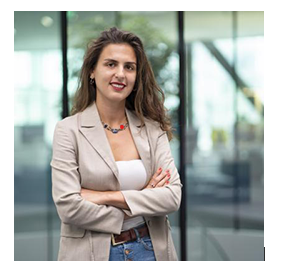
Augusta Nannerini is a Research Affiliate at the Gender Centre. She has a decade of experience working at the intersection of conflict and multilateral governance, including field experience in Somalia, the Philippines and Jordan, and headquarters-level engagement in Geneva and Brussels. Her current research focuses on AI governance, peacebuilding and conflict prevention. She works as an independent researcher, conducting consultancies with think tanks and UN agencies, with a particular focus on designing the structures and conversations around AI governance, the securitisation of AI, and AI-related conflict dynamics, including conflict mapping in Somalia. Augusta holds a BA in Philosophy from La Sapienza University of Rome, an MSc in Refugee and Forced Migration Studies from the University of Oxford, and a PhD in International Relations from the Geneva Graduate Institute.
Banner: © Inkoly, Shutterstock