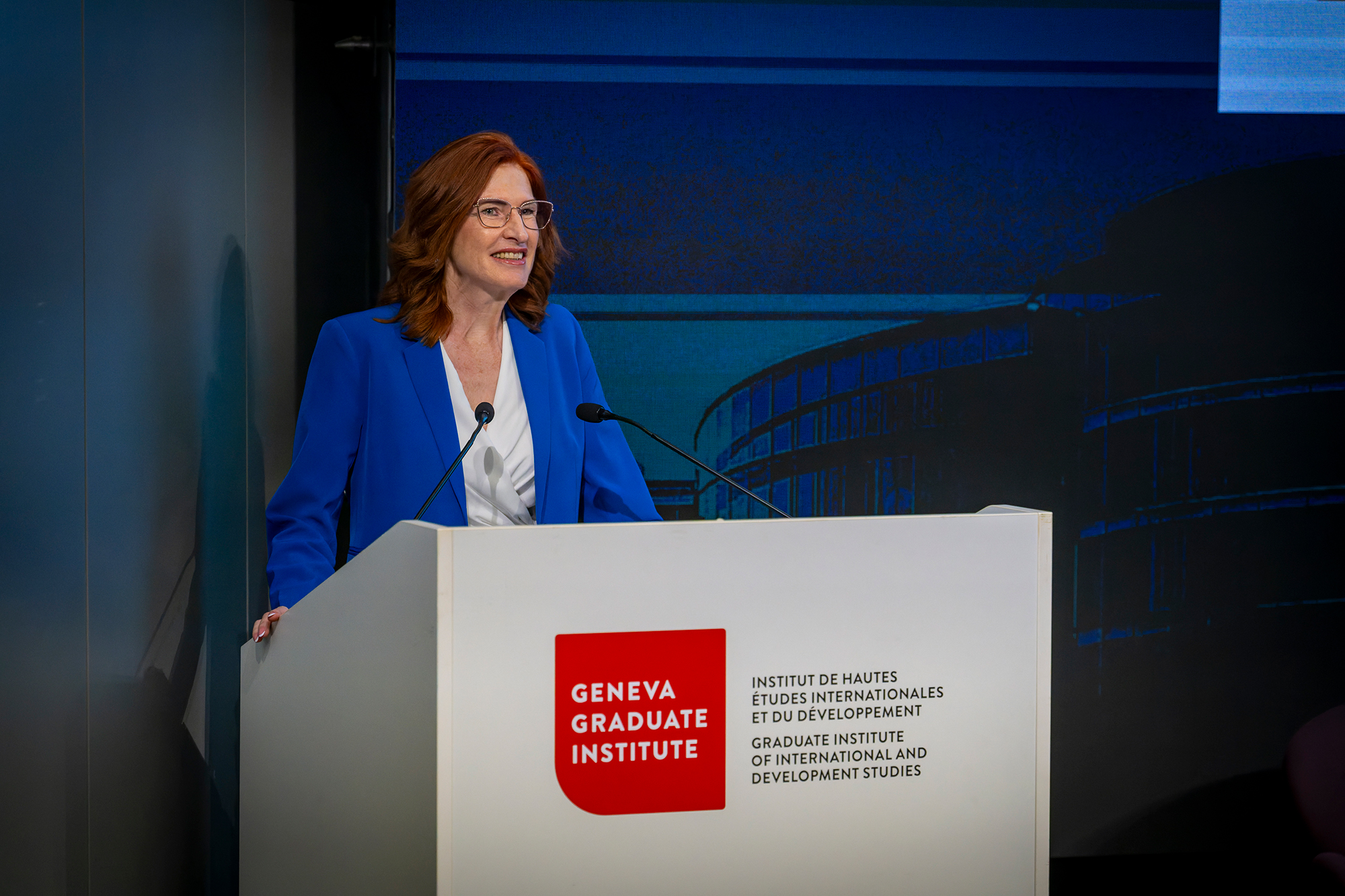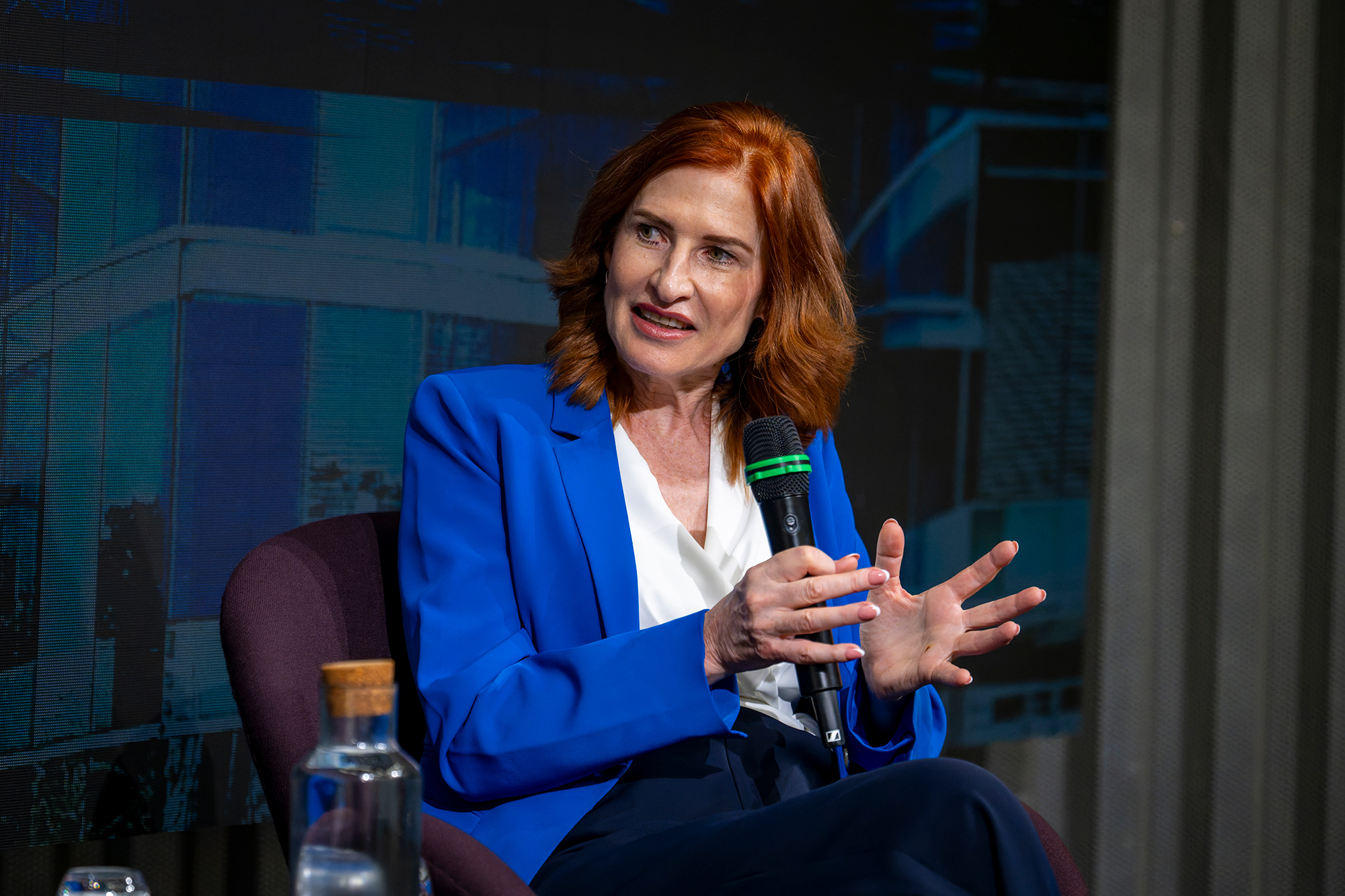



You have longstanding ties to Geneva. How does returning to the city and joining the Institute connect with your own intellectual journey?
Geneva is not simply a place I am returning to; it is where an important part of my intellectual journey began. I lived and worked here for many years, and it was here that I became interested in European history and began to see Europe not merely as a geographical space, but as a historical problem. Some of the questions that have accompanied my work ever since were already taking shape in Geneva.
Coming back now offers a chance to revisit those questions from a different vantage point. The Graduate Institute is a particularly stimulating place to do so, given its long tradition of bringing history into dialogue with international affairs and of thinking across national and disciplinary boundaries. It is also an interesting moment to return, as the Institute approaches its centenary in 2027. For me, there is something intellectually satisfying about returning to a place where these questions first took shape, but now being able to approach them from a broader perspective.
Which questions would you like to develop through the Pierre du Bois Chair Europe and the World in your research and teaching?
I would like to pursue more fully a history of Europe that does not take the nation-state, or even Europe itself, as a self-evident framework. Europe is a relatively small geographical space, but its history has been shaped by constant connections with the wider world: through migration, commerce, diplomacy, law, and the circulation of ideas, but also through war, imperial expansion, colonialism, and decolonisation. We therefore need to look at Europe both from the inside out and from the outside in. How does Europe appear from Africa, Asia, or the Americas? And how might those perspectives alter the history we tell about Europe?
Challenging Eurocentric views of the world also means challenging Western-centric views of Europe. This is not just about adding more material to an already crowded history, but about changing the questions we ask.
Your work focuses on systems of peace in Europe. What historical lessons can help us better understand and manage contemporary conflicts, particularly in the Russian-Ukrainian war?
History cannot provide a ready-made solution to a contemporary war, and historians should be wary of pretending otherwise. What it can do is enlarge our sense of the possible. European history offers a range of ways of containing conflict and organising coexistence: from the balance of power and plans for perpetual peace, through diplomatic congresses and territorial settlements, to international law and institutions of political cooperation. Each sought to give peace a more durable foundation.
One lesson stands out: ending a war and making a peace are not the same thing. A ceasefire may stop the fighting, but peace has to address questions of justice and security, legitimacy and political inclusion. This is especially relevant to Ukraine. The question is not only how the war ends, but what kind of international order follows it, and how that can make peace last. Peace has to be established and, in a sense, engineered; simply declaring it is not enough.
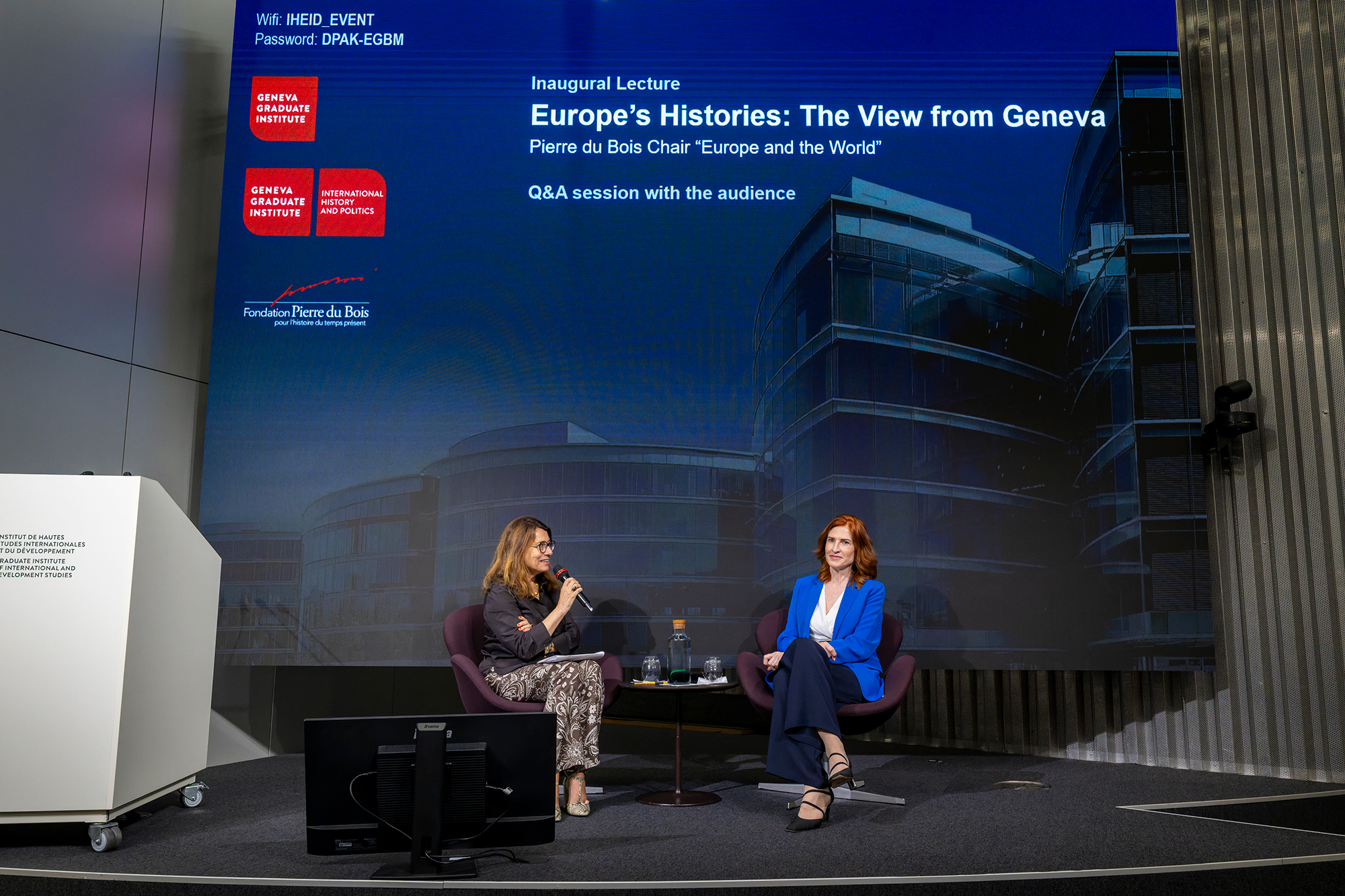
Your inaugural lecture of the Pierre du Bois Chair was entitled “Europe’s Histories: The View from Geneva”. What did you want to make us see differently about Europe from Geneva?
I wanted to turn the question around. We are accustomed to looking at Europe from its great capitals, or from the perspective of the European Union as it exists today. But what happens if we look at Europe from Geneva — a place that has stood outside the traditional centres of European power, yet has repeatedly been a setting for diplomacy, negotiation, refuge, and attempts to make peace?
From this perspective, Europe appears less as a fixed entity than as something whose boundaries, meanings, and political forms have repeatedly been imagined and reshaped. This raises a question that has recurred throughout European history: how can politically diverse states live together without turning their differences into conflict or their relations into domination? From Enlightenment plans for perpetual peace to the Congress of Vienna, the League of Nations, and European integration, Europeans repeatedly sought answers to this question. None were inevitable, and none settled it once and for all.
The larger point is that no single perspective can capture Europe in its entirety. Each reveals some things and obscures others. The view from Geneva makes visible a continent continually shaped by encounters, choices, and negotiations. It reminds us that the Europe we know today was not predetermined: some possibilities were pursued, others abandoned, and some outcomes could not have been foreseen. That is why looking at Europe historically matters — not to find a blueprint for what comes next, but to understand the present and to think more clearly about the choices ahead.
The theme of this 2026-2027 year’s Pierre du Bois Chair public lecture series is entitled “Europe, Peace and the World”. What kinds of conversations do you hope the series will open up?
The theme brings together three questions that are difficult to separate: how Europe has sought peace, how it has related to the wider world, and what kind of role it can play in a changing international order. The two forthcoming lectures approach these questions from quite different directions. On 20 October, my UCLA colleague Anthony Pagden, Distinguished Professor of Political Science and History, will ask whether the European Union, born out of Europe’s imperial past, might become a model for a new kind of world order. On 9 December, David Armitage, Lloyd C. Blankfein Professor of History at Harvard University, will take us somewhere rather unexpected, bringing together the history of treaties and Western opera.
That range is deliberate. I hope this first series of the Pierre du Bois Chair public lectures will open up conversations that look beyond familiar categories, question assumptions we often take for granted, and show what becomes visible when we approach Europe and the wider world from unfamiliar quarters.