
news
Albert Hirschman Centre on Democracy
10 June 2026

EXPLORING SWISS DEMOCRACY IN A GLOBAL CONTEXT

A public panel discussion on the upcoming vote in Switzerland was enriched by a wide range of contributions from researchers and students.

As Switzerland prepares to vote on the so-called “No to a Switzerland with 10 million!” initiative on 14 June, questions surrounding immigration, population growth have once again come to the forefront of public debates. 

Exploring the politics around this initiative isrelevant not only to Switzerland but also to the broader global context, whereby migration governance has increasingly been politicized and used by populist parties.

The panel discussion organised on 3 June by the Albert Hirschman Centre on Democracy was titled “Exploring Swiss Democracy: The 'No to Ten Million Switzerland' Initiative and Beyond”. It was moderated by Christine Lutringer, Executive Director of the Centre, and featured interventions by Laura Bullon-Cassis, Postdoctoral researcher at the Centre, Marceau Schroeter, Author of the book “Swiss Made Democracy” (2026), and Master’s students at the Geneva Graduate Institute Mateo Bilbao, Valentin Gloor, and Wang Luoqianhui. 

The panel began with an overview of Swiss semi-direct democracy by Marceau Schroeter. He outlined the different levels of governance – federal, cantonal, and municipal – as well as the various types of referendums and popular initiatives available as instruments of direct democracy, explaining how they function. He also presented the content of this particular initiative, situating it within Switzerland’s long tradition of citizen-led political participation.

Laura Bullon-Cassis then drew a stimulating connection with a previous roundtable convened by the Centre on Democracy, Multilateralism and Migration, in collaboration with the Kofi Annan Foundation. She emphasized how migration is a stress test for democracies and an early indicator of their health. The treatment of those who do not have access to representation is, in fact, highly revealing of the inclusiveness and resilience of a political system.

The contributions by some of the students of the Master in International and Development Studies (MINT) who attended the class “Democracies in context” this semester contributed to current shifts in democratic practices within the broader international landscape.
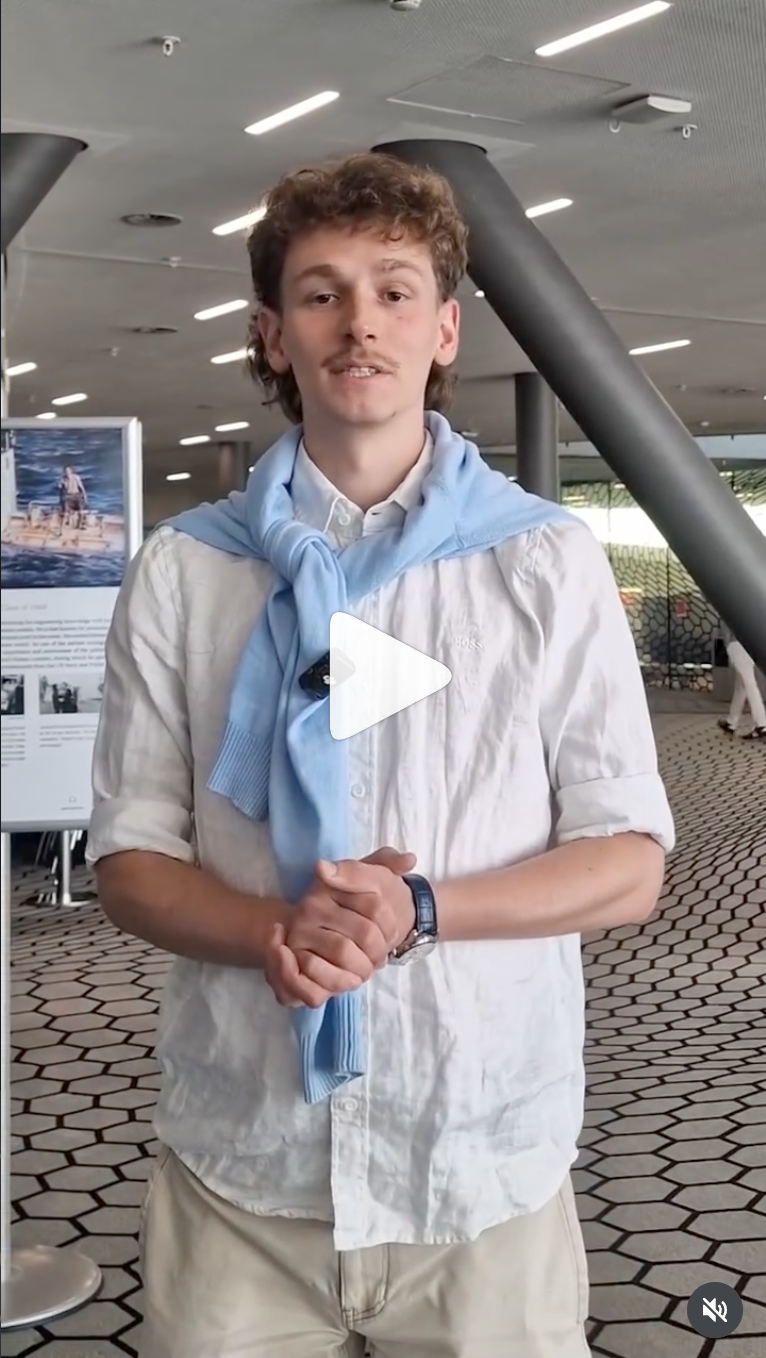
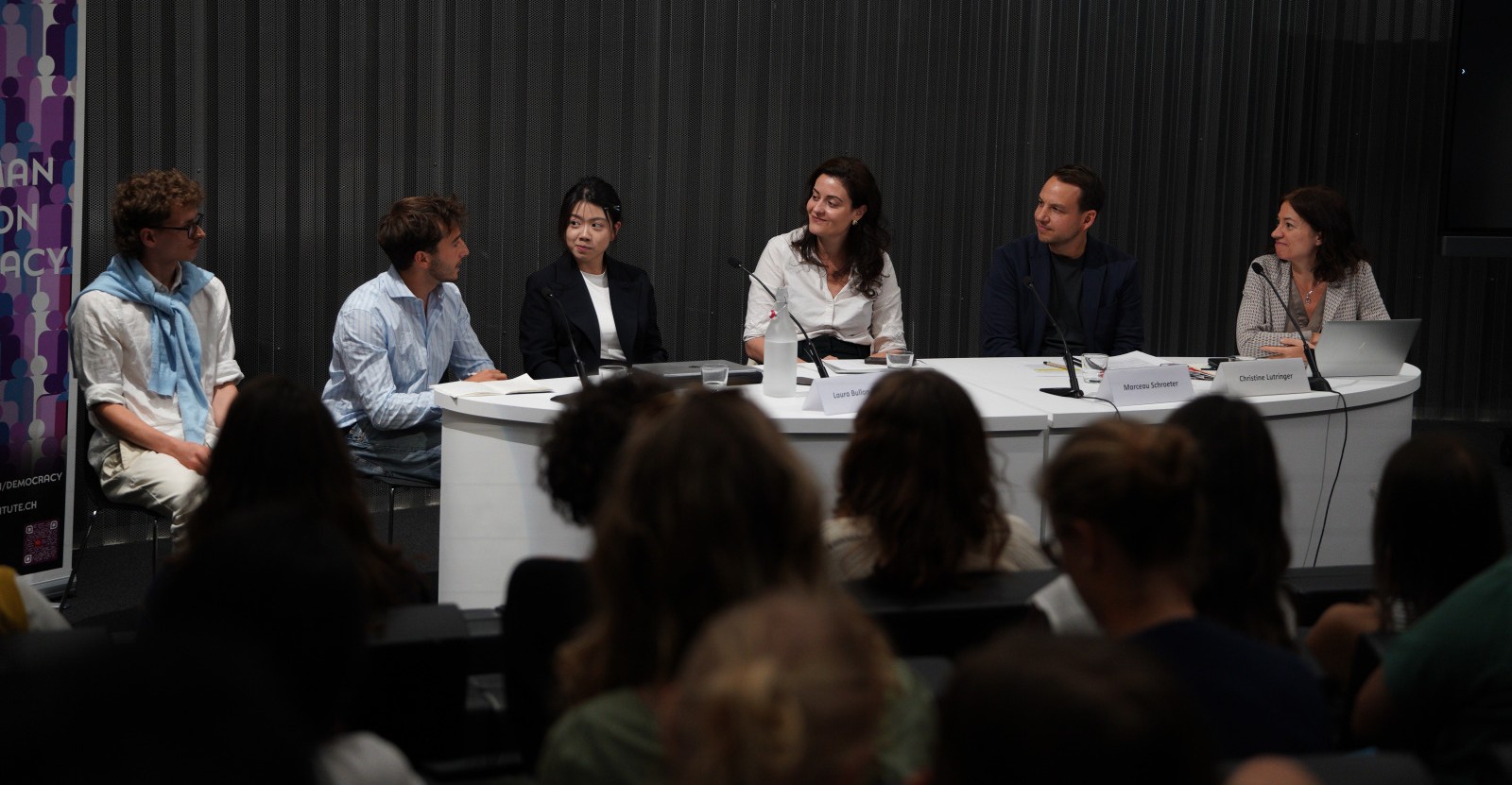
The contributions by some of the students of the Master in International and Development Studies (MINT) who attended the class “Democracies in context” this semester contributed to current shifts in democratic practices within the broader international landscape.

Mateo Bilbao brought to the discussion a parallel with the Spanish context, where similarities in discourse with the Swiss initiative can be found in the stigmatization of people immigrating from North Africa and of Muslim communities, who are frequently portrayed as a security threat despite representing a small share of the population. Narratives centred on sustainability, similarly to the framing of the initiative in Switzerland, often gain traction by appealing to genuine grievances about housing, employment, affordability, and access to welfare. The underlying logic is framed in nationalistic and populist terms. However, he noted that alternative solutions to these problems should be pursued, as their root causes lie in broader societal structures.

Offering the perspective of a Swiss voter, Valentin Gloor outlined several key reasons for opposing the initiative. These included potential international repercussions and economic consequences, particularly given that Switzerland’s prosperity depends on access to international talent, which supports its healthcare system, research institutions, startups, and multinational companies. Switzerland’s relationship with the European Union – its largest trading partner – could be affected, while enshrining a population cap in the Constitution would set a precedent with potential consequences beyond the country’s borders. He also expressed concern about the initiative’s impact on Switzerland’s humanitarian tradition and the risk of legitimizing exclusionary or discriminatory sentiments through a sustainability framing.

Reflecting on the discussion from the perspective of an international student, Wang Luoqianhui, who contributed questions to the panelists, said the event deepened her understanding of both the upcoming vote and the broader debates surrounding it. What stood out most to her was not the search for complete agreement, but rather the way Swiss democracy creates space for competing viewpoints to be expressed, debated, and taken seriously. She noted that democratic institutions can help manage disagreement while still encouraging dialogue and the search for common ground.

The discussion ultimately highlighted that Switzerland is not an isolated case. Concerns about migration, economic insecurity, and national identity are shared across many democracies. What distinguishes the Swiss context – according to Valentin – is the ability of citizens to bring such issues directly onto the political agenda through democratic instruments.