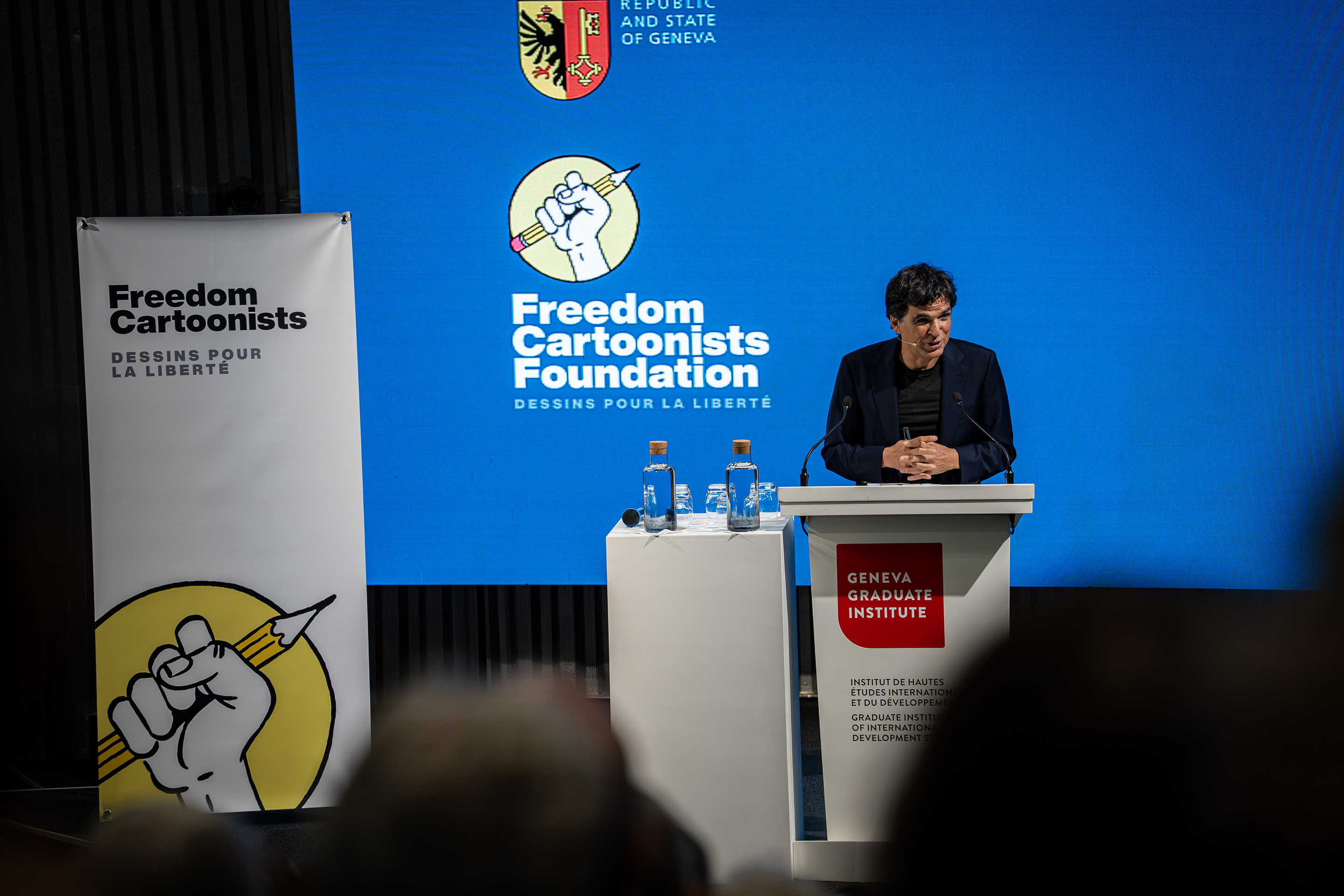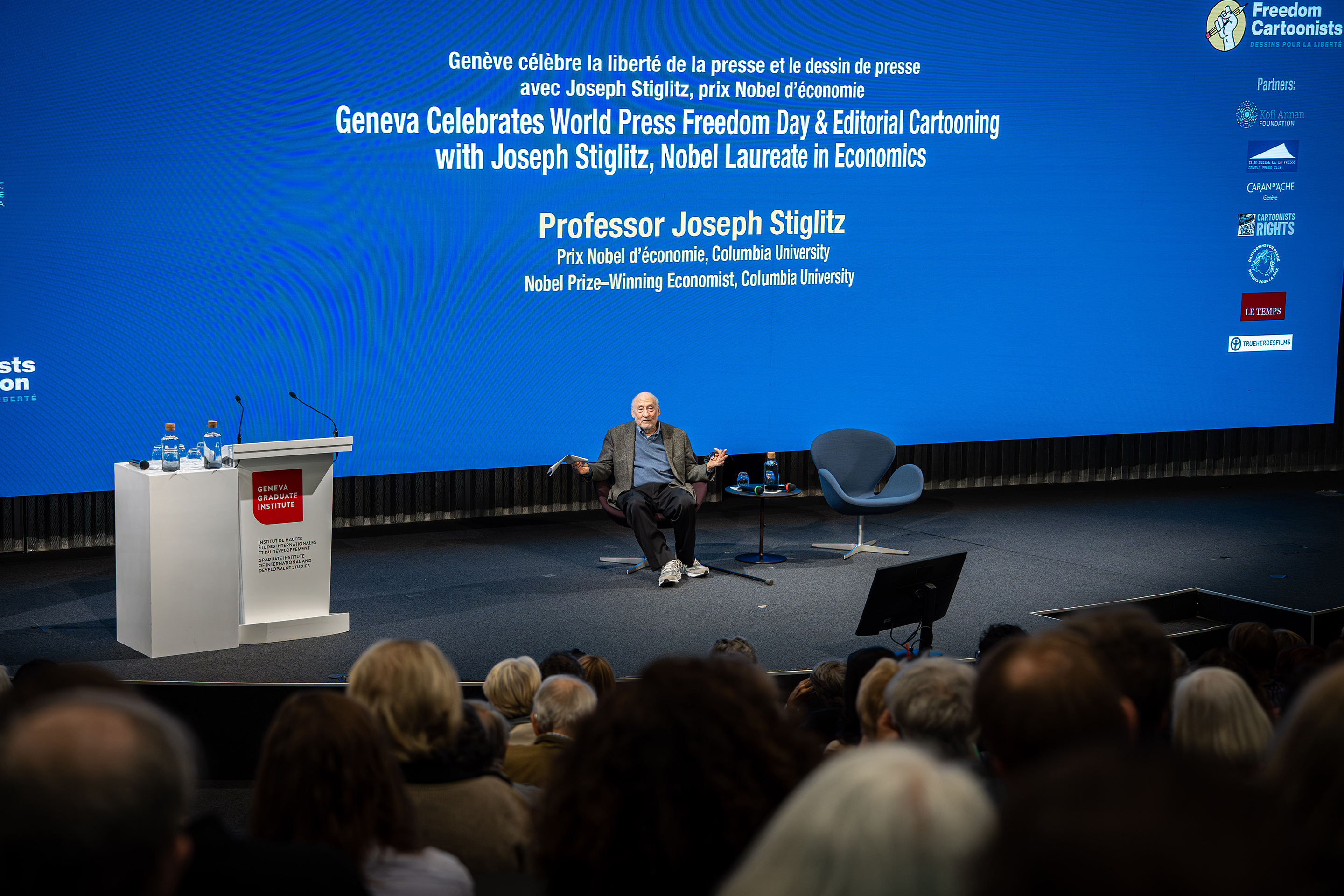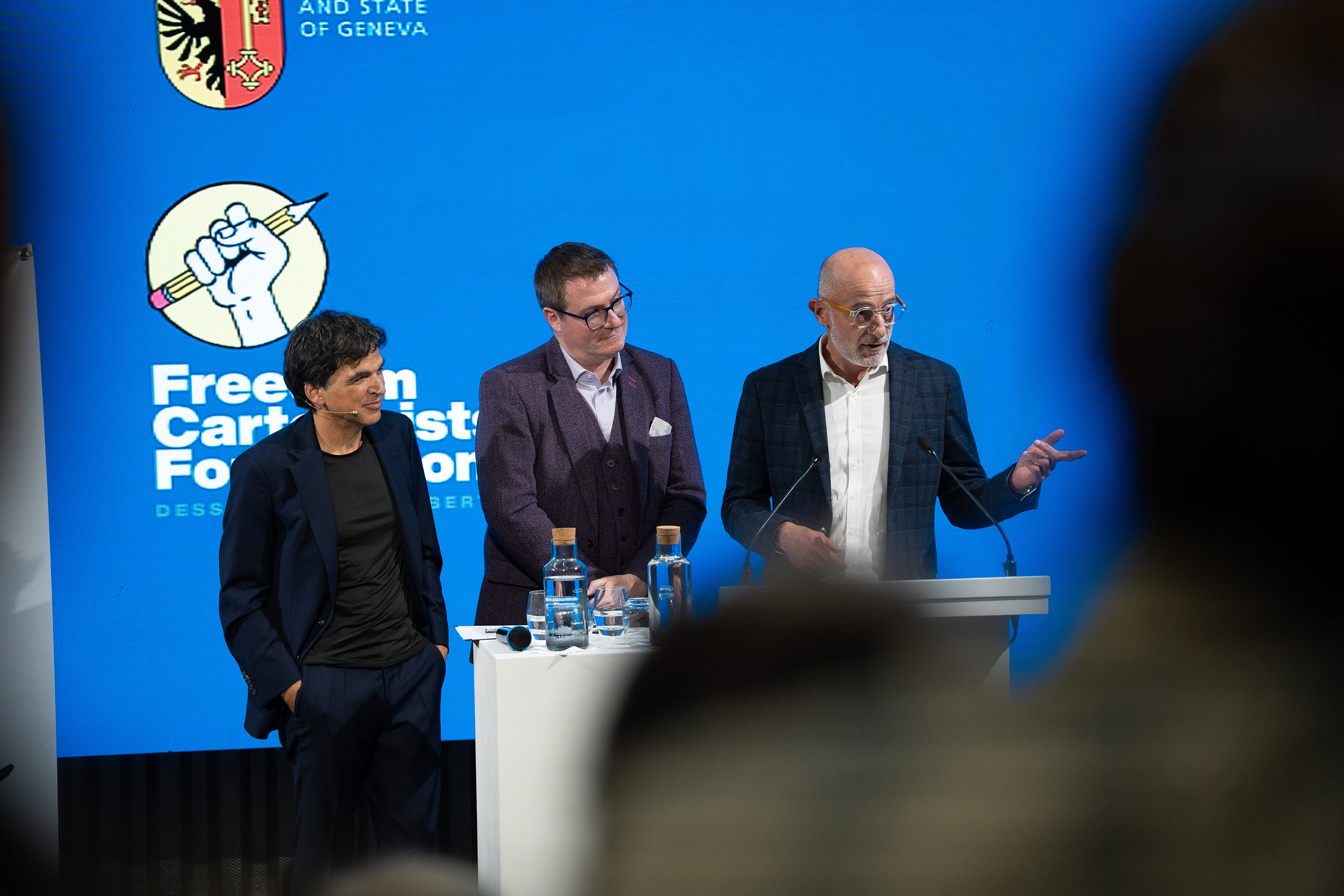


We stand for a free press as a pillar of democracy of which political cartoons are a vital element. We defend freedom of speech in a spirit of dialogue. This is our mission. And in an age of information manipulation, in an age where new technologies distort reality, in an age where propaganda takes the guise of humor and sarcasm, we think it's quite an important mission. [Together with its network of friends and and allies, Freedom Cartoonist Foundation] wishes to help make Geneva, city of human rights, also a place for the defense of press freedom.
Patrick Chappatte, President of the Freedom Cartoonists Foundation
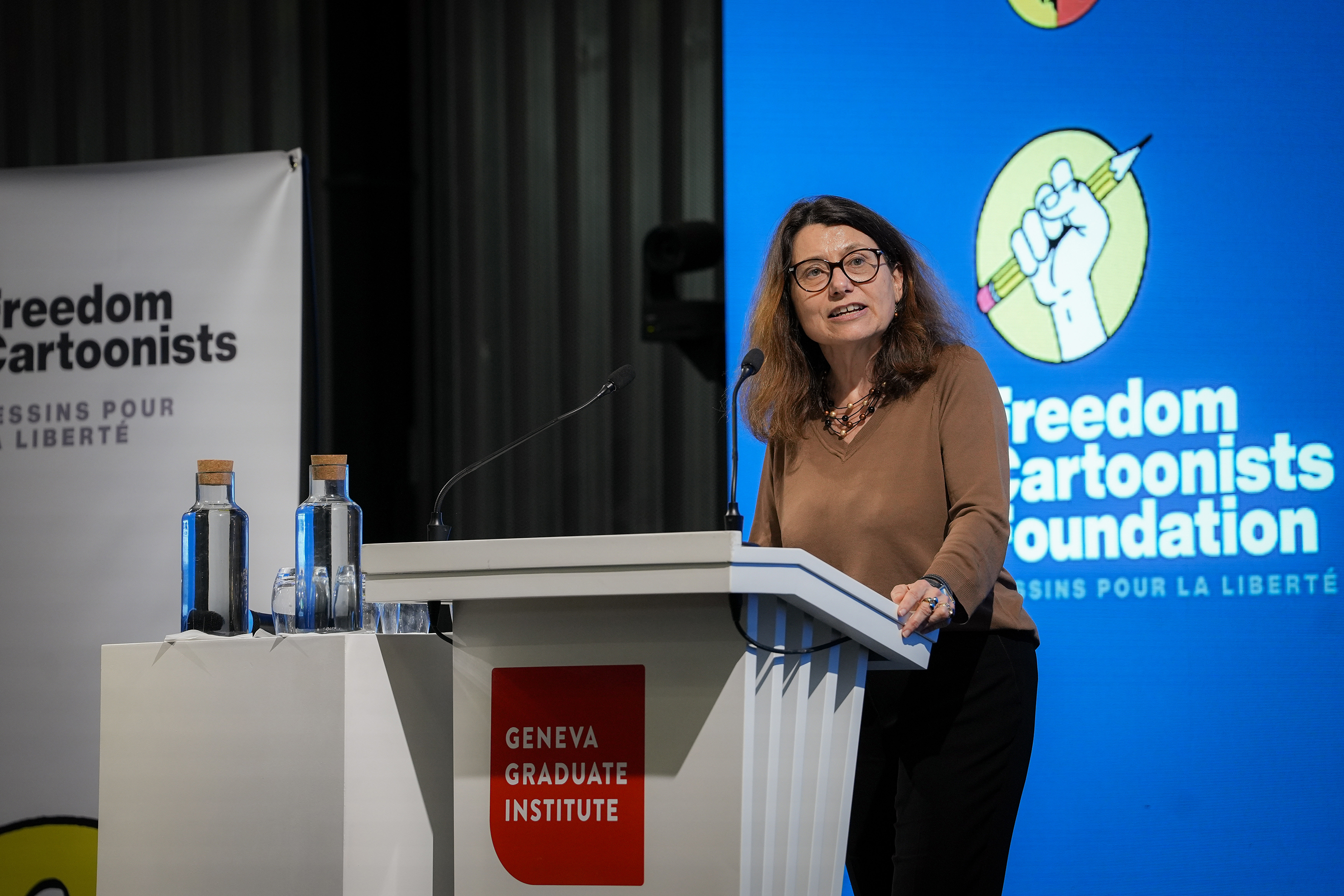
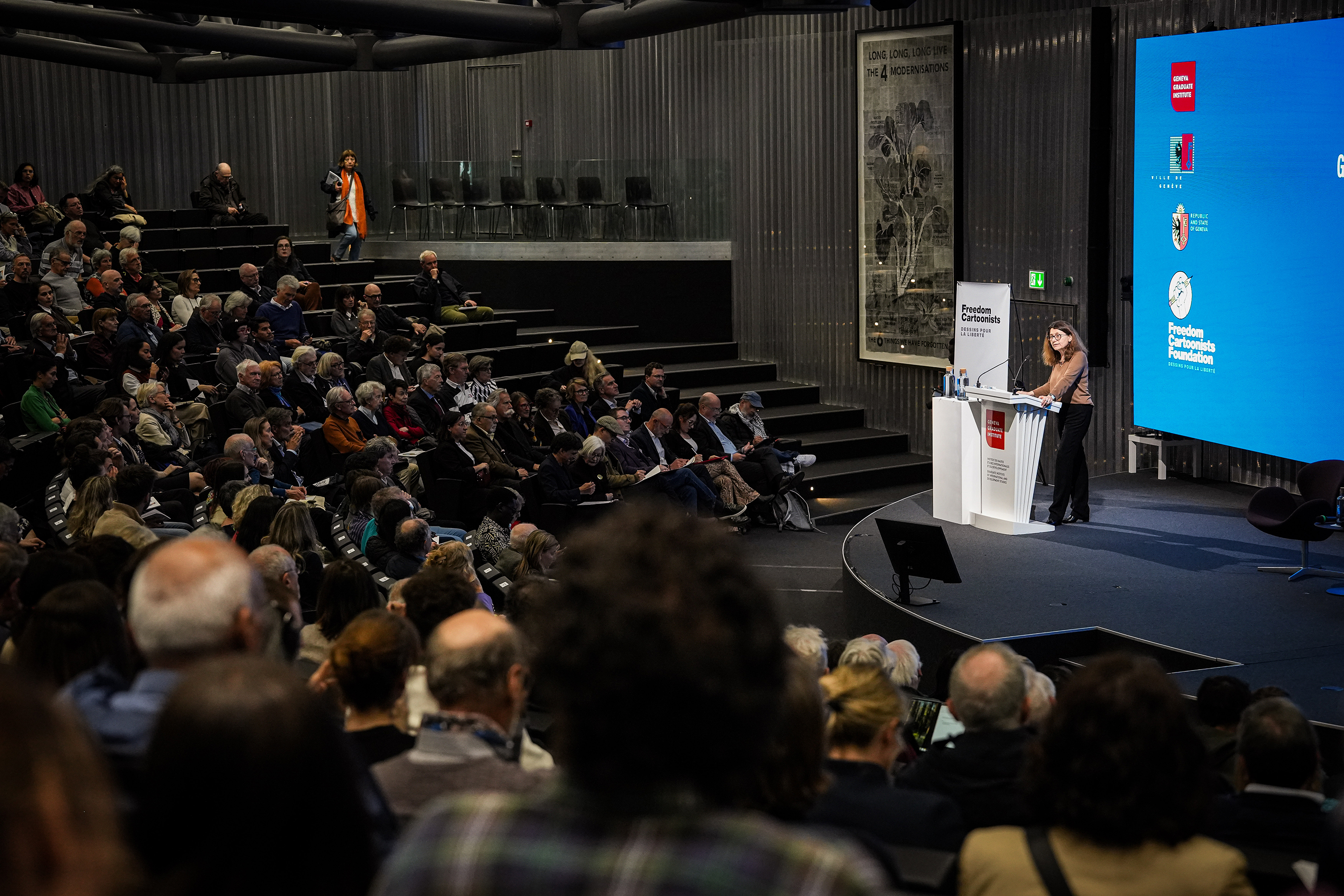
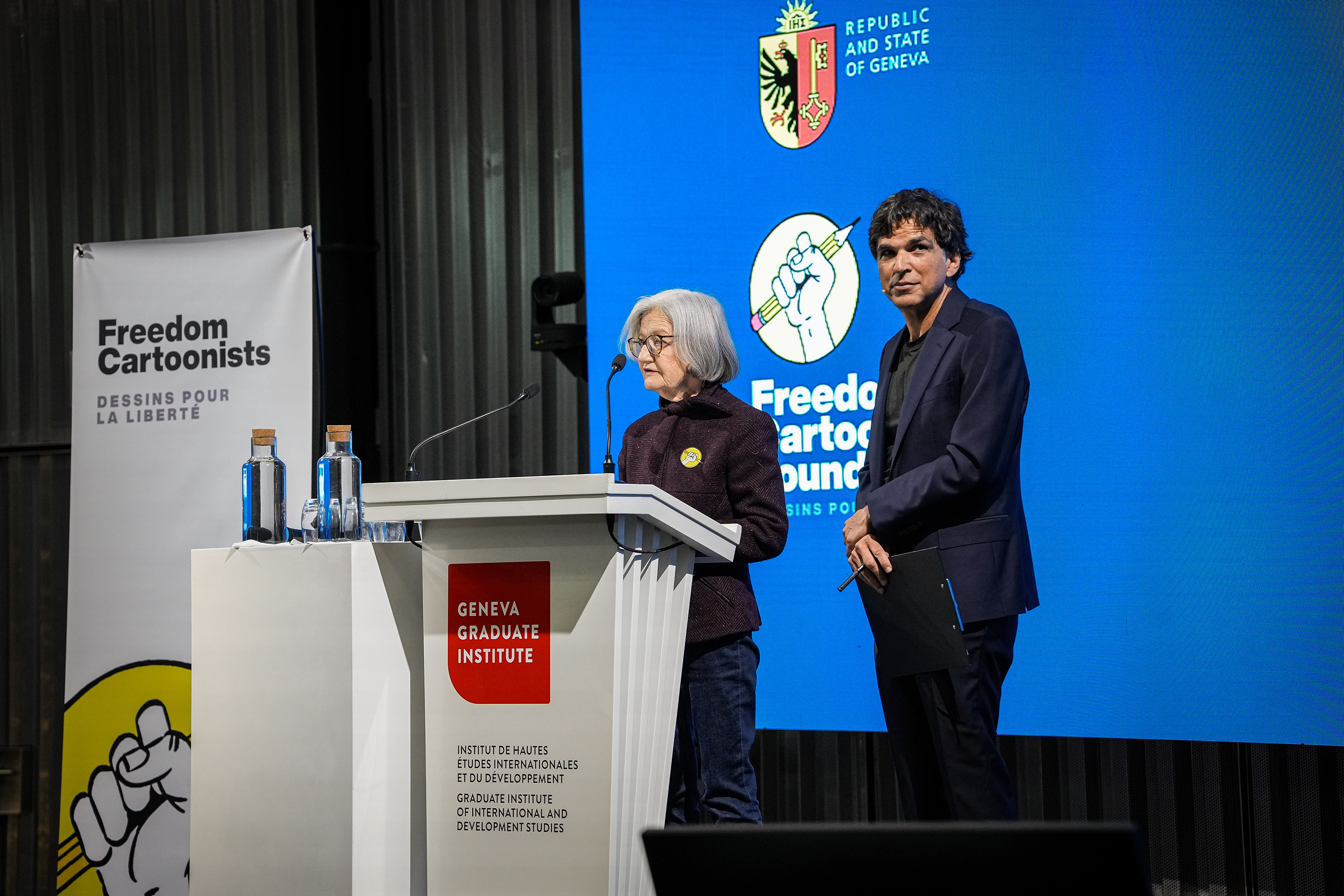
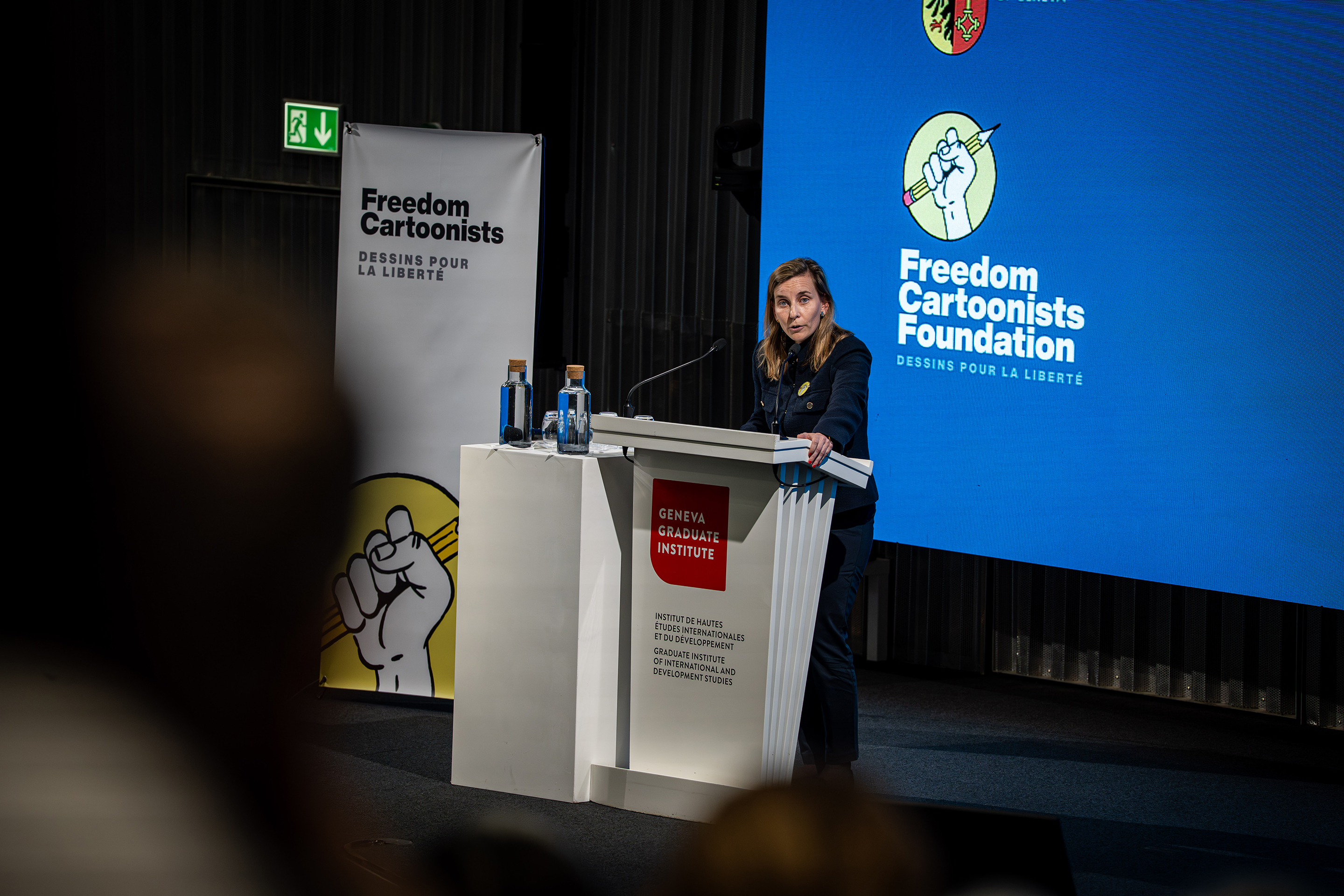
Marie-Laure Salles, Director of the Geneva Graduate Institute, made welcome remarks, noting the deteriorating conditions of press freedom in the world today and noting that “affirming and supporting those who sustain freedom of expression and information day after day — not just on World Press Freedom Day, often under the most harrowing conditions and often under the risk of their own lives — is more vital than ever.” She celebrated the key role that cartoonists play in that respect by mobilising the “key marker of our humanity” that is laughter as catharsis and resistance:
We are celebrating their courage, but also learning from them for a battle that is also ours. Through their powerful illustrations, cartoonists play an essential role in questioning power structures, initiating conversations, and holding those in authority accountable. Their courageous quest for truth serves as a guiding light in an era where disinformation and censorship pose significant threats to the integrity of our societies and to our individual and collective ability and freedom to think, to speak, and to organise.
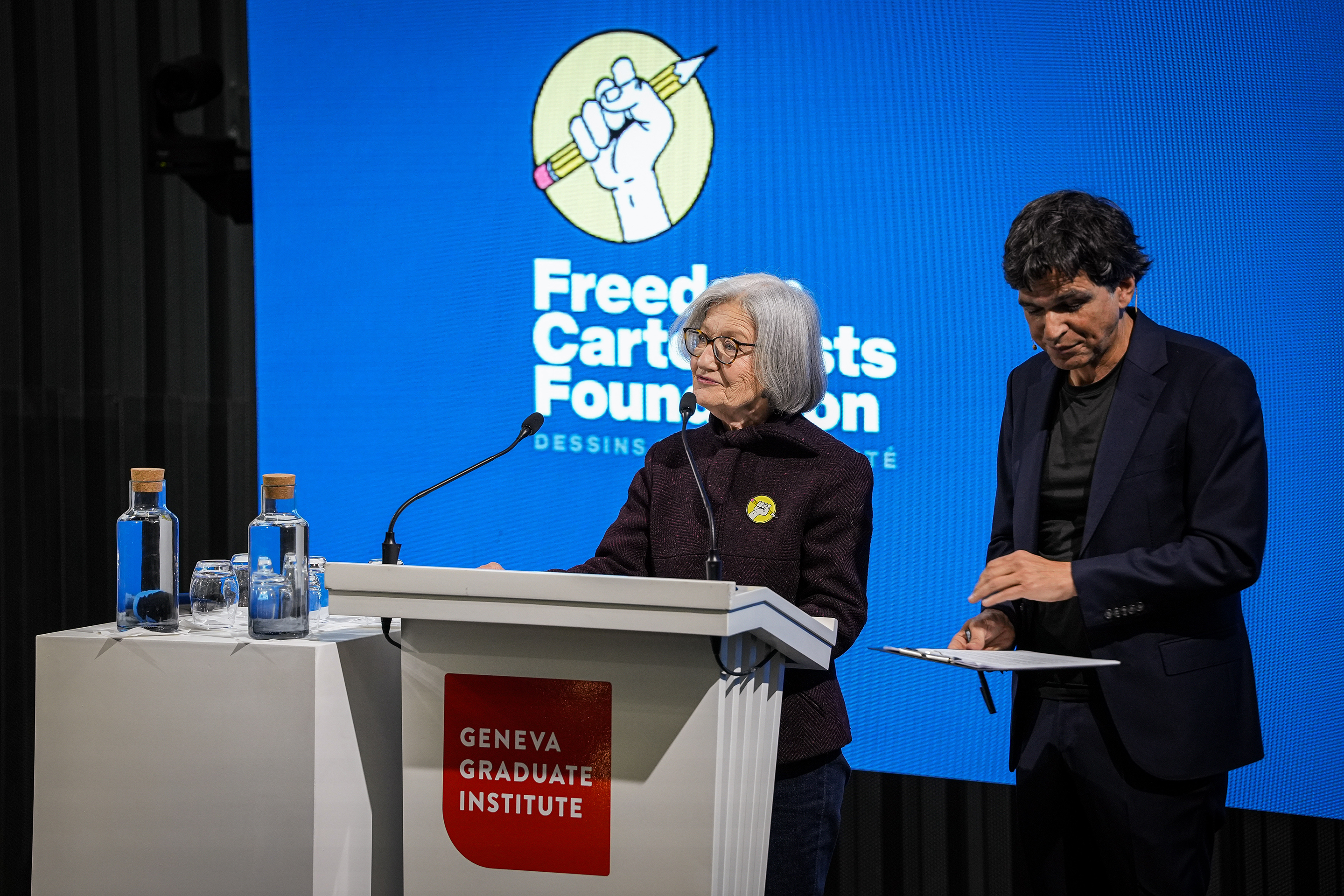
Introductions followed by Marie Barbey-Chappuis, Administrative Councillor for the City of Geneva, Marie Heuzé, Vice-President, Freedom Cartoonists Foundation, and Patrick Chappatte, President of the Freedom Cartoonists Foundation, who spoke throughout the evening as host of the event.
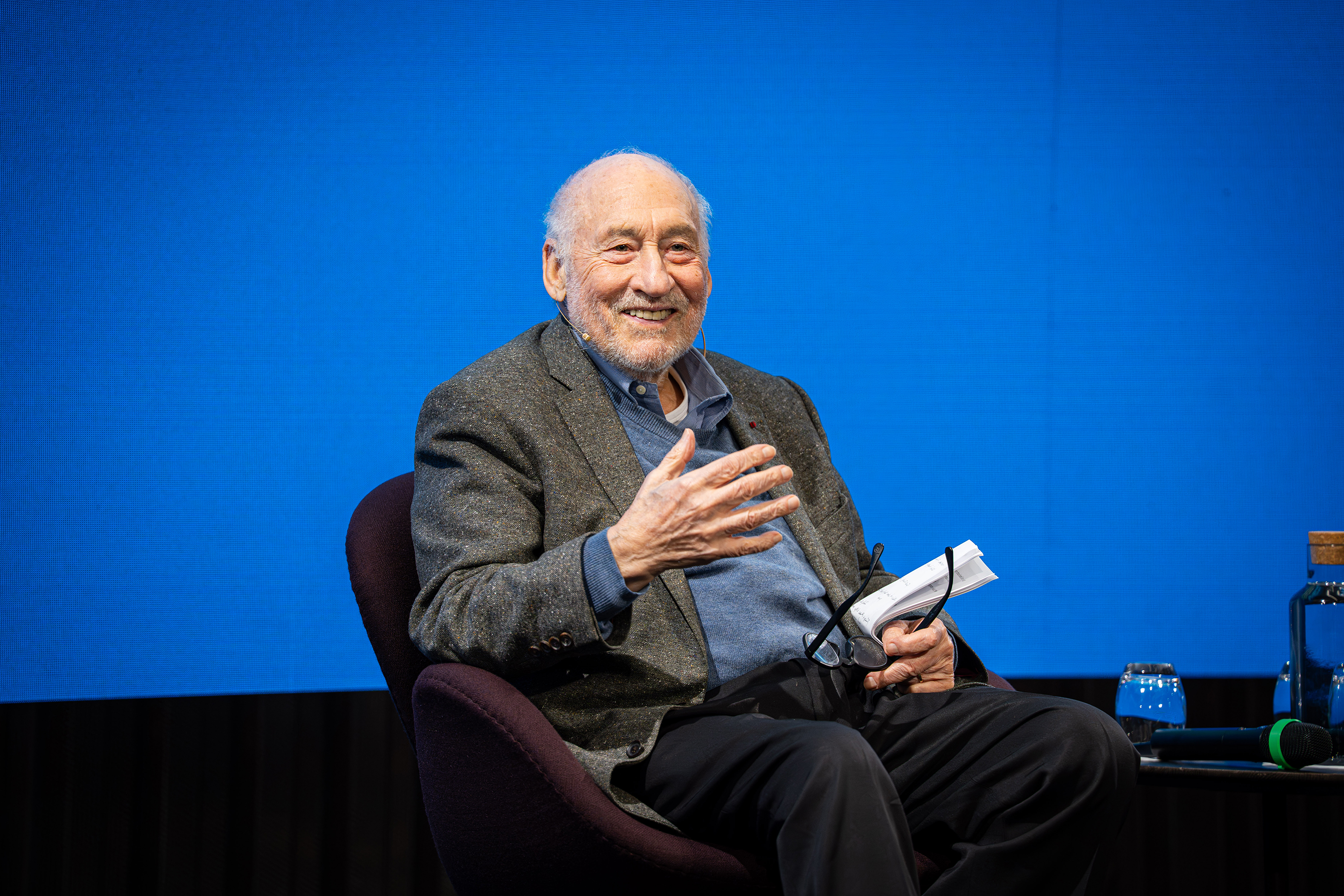
The keynote speech by Joseph Stiglitz celebrated the truth that is to be found in humour, and decried the elaborate collapse of press freedom and freedom of speech in the United States. Like the earlier speakers in the evening, he tied press freedom and freedom of speech to academic freedom and centred the philosophies of the Enlightenment in his approach. Memorably he stated that, “Academic freedom isn’t in the First Amendment to the Constitution — it should have been — but it is implicit.” Explaining why academic freedom needs to be enshrined, he said that, “When we have free speech, free press, we also need to be sure that we have good arguments.” thereby drawing attention to the lack of reasoning and thought in political actions and even in political pushback in 2026.
“Academic freedom provides the basis from which you can have meaningful conversations, discussion in the press, but if we just did our research and there’s no access to the press, we’re just talking to ourselves, so the two are really partners.”
In the second half of his speech, he considered the three lessons to be learned from the “quick erosion of democracy in the United States.” The first was the importance of not capitulating to the demands of fascism — as individuals and as institutions. The second is the unfortunate realisation that fewer people care about the erosion of democracy than hoped. “We thought our democracy was strong. We now realise we have not done a good job making the case of how important democracy is.”
The third resulting lesson is that Institutions such as the Constitution, are nothing more than “words on a piece of paper” but need instead to become part of the collective mindset and an integral part of society’s sense of belief in order to be lived. “Our objective should be to deepen that commitment of why democracy and associated human rights are so important.” Cartoons, he insisted, play an important role in helping people understand and embrace these values.
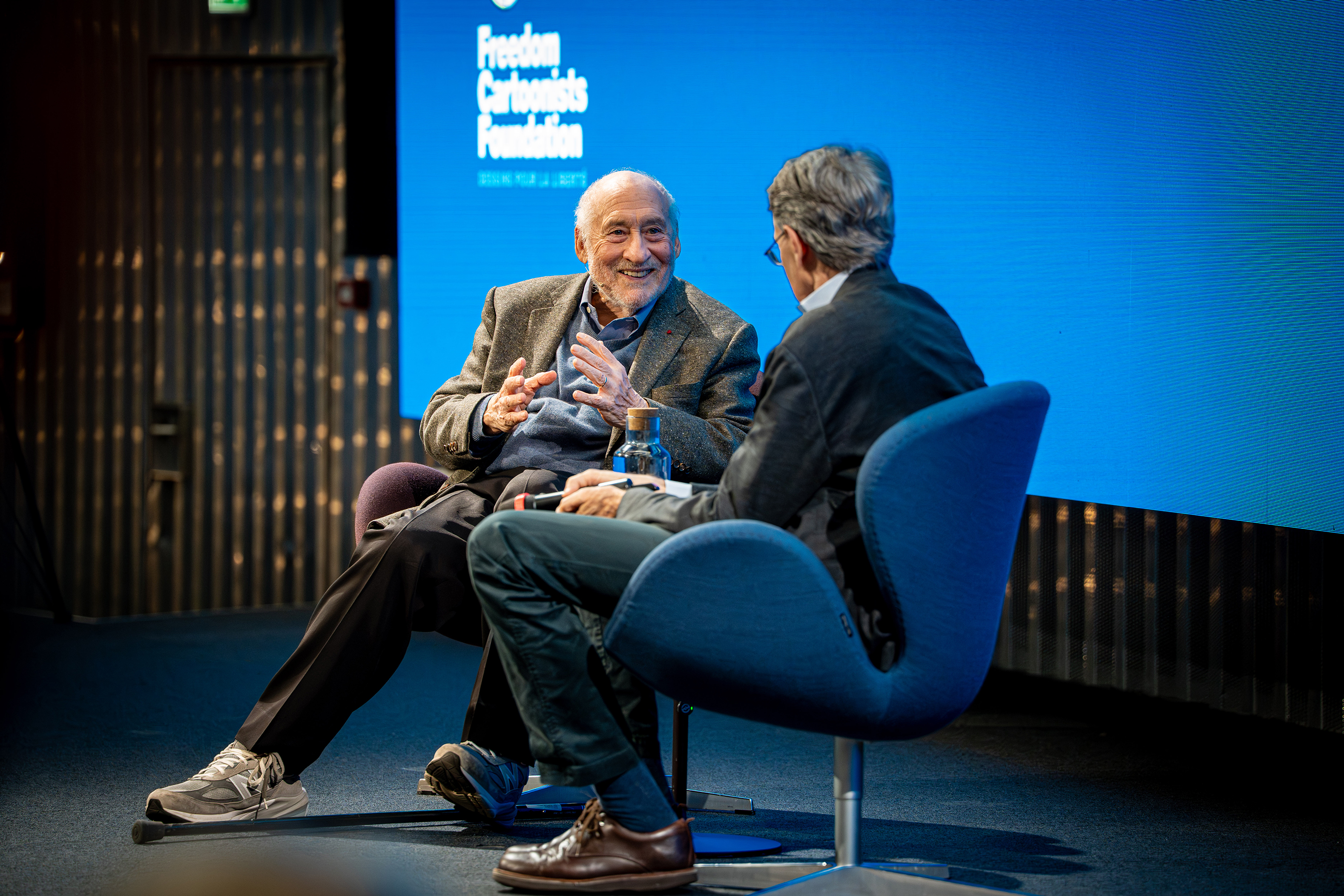
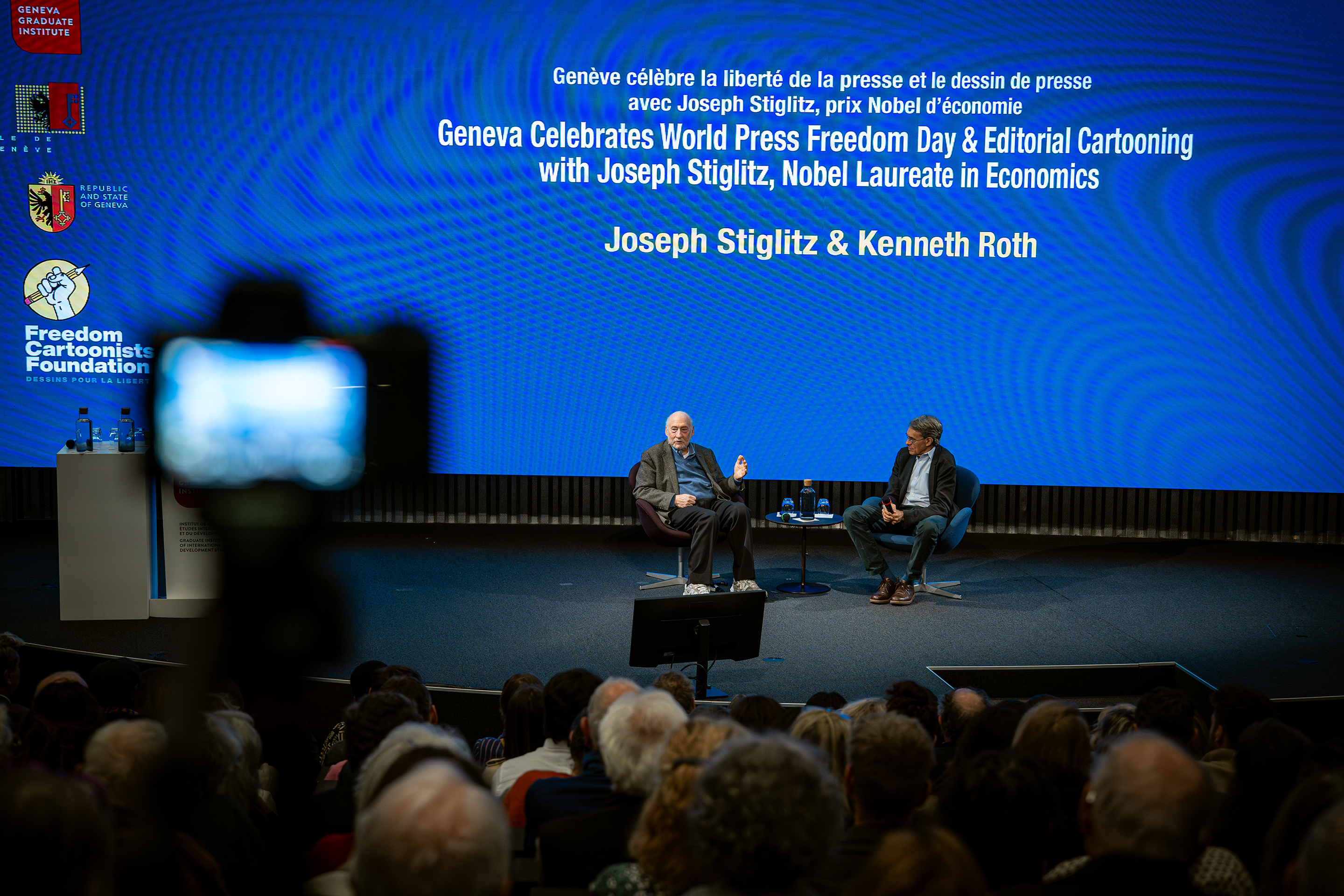
Kenneth Roth, Visiting Professor at Princeton University and former Executive Director of Human Rights Watch, joined Joseph Stiglitz on stage following his speech, for a discussion on the state of American democracy six months before the midterm elections. They considered the role of economics in the rise of the far right, the threats facing the country’s system of checks and balances, and the examples of positive pushback coming from Minneapolis and New York.
________
The Freedom Cartoonists Foundation’s International Cartoonist Award is named after Kofi Annan, Nobel Peace laureate, former UN Secretary General, and alumni of the Geneva Graduate Institute, in recognition of his role as inspiration for the Swiss foundation, of which he was also honorary chair.
Before awarding this year’s laureates, Patrick Chappatte “salute[d] the talent and the courage of cartoonists working in difficult circumstances” around the world. Terry Anderson and Kak, of the sister associations Cartoonists Rights (USA) and Cartooning for Peace (France) joined him on stage to present “Under Pressure: Report on the Situation of Threatened Press Cartoonists Worldwide (2023–2025)” on the declining state of press freedom.
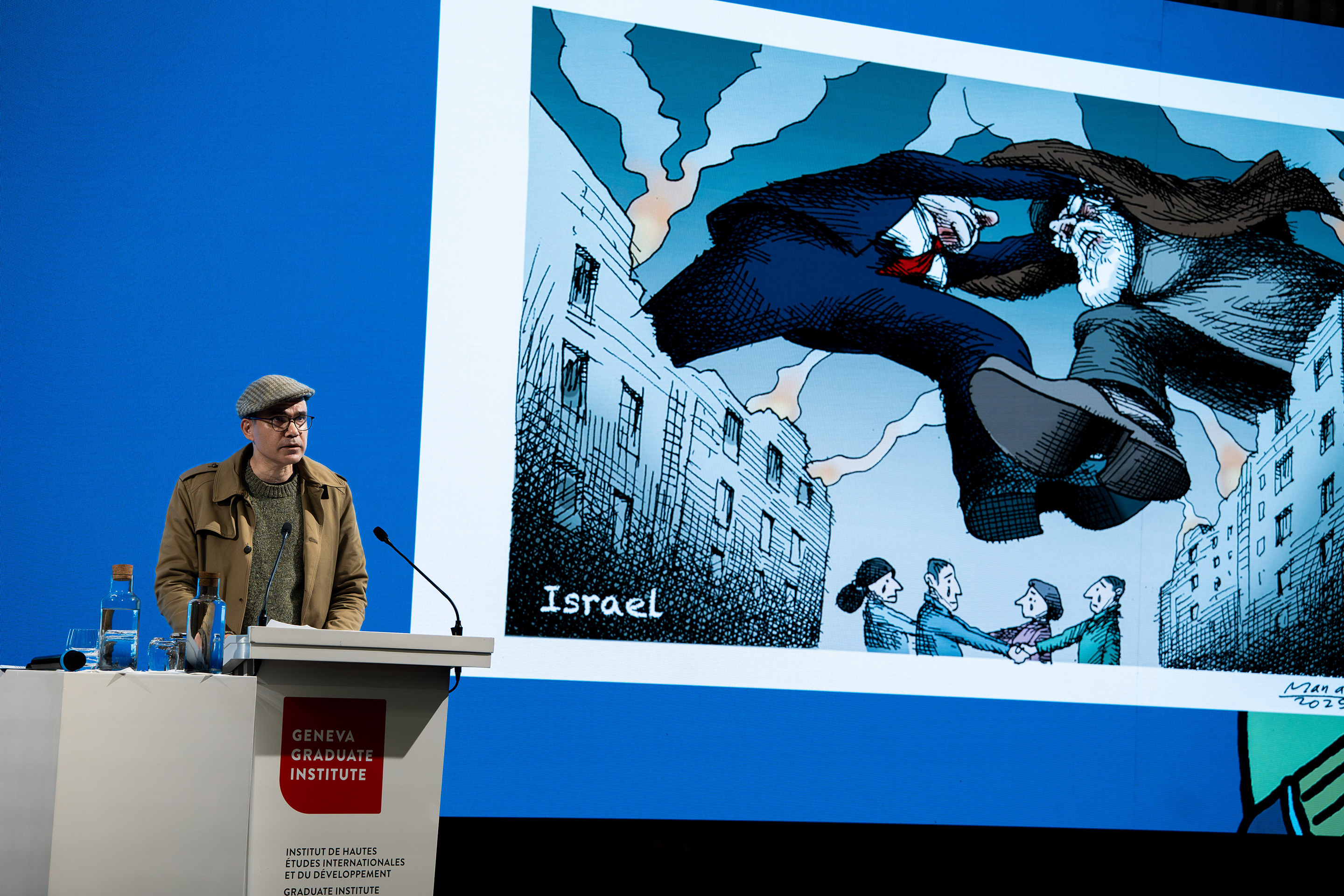
Patrick Chappatte invited 2012 laureate Mana Neyestani on stage to address the further crackdown on freedom of expression in his home country of Iran, in the face of the January massacres and the ongoing war.
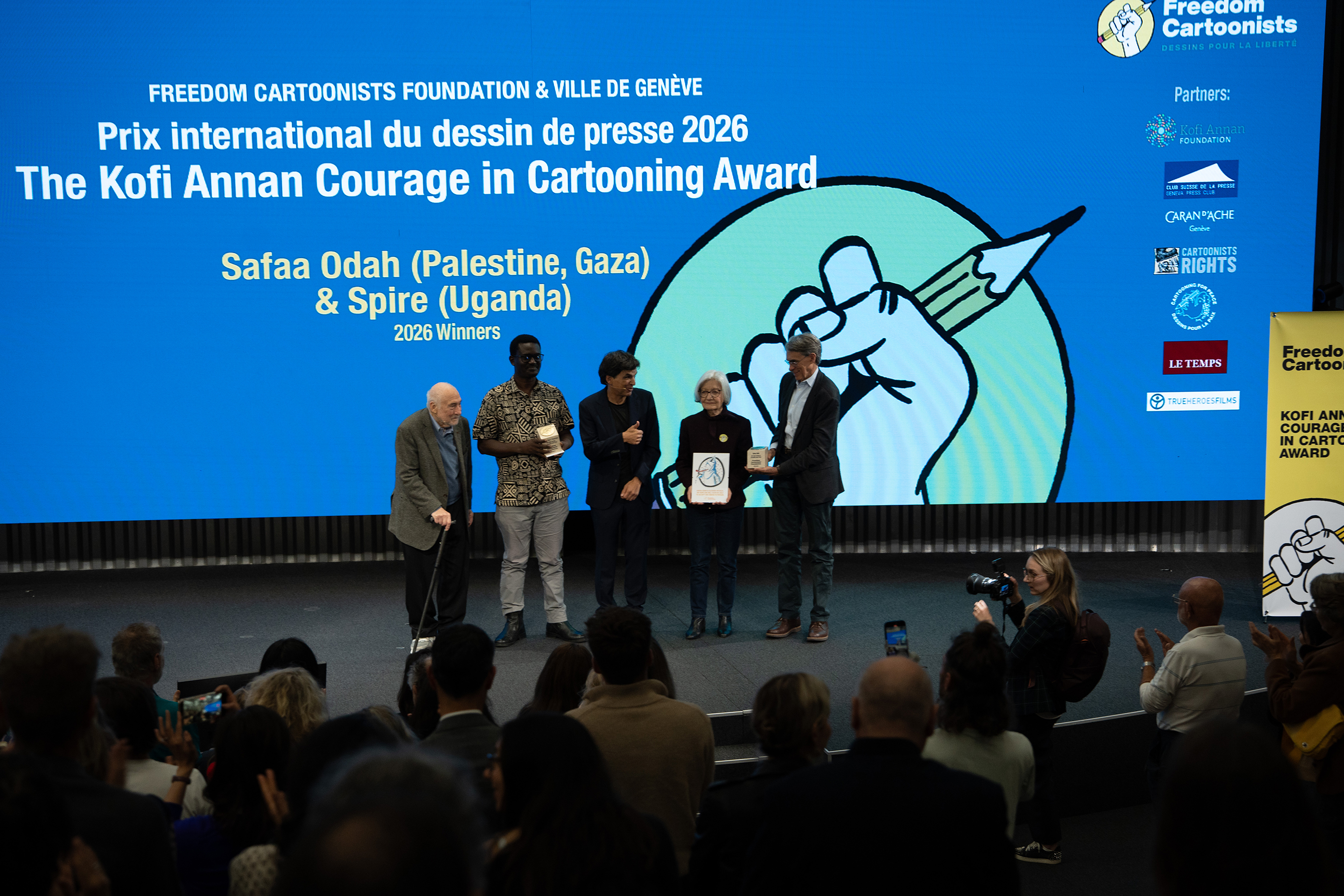
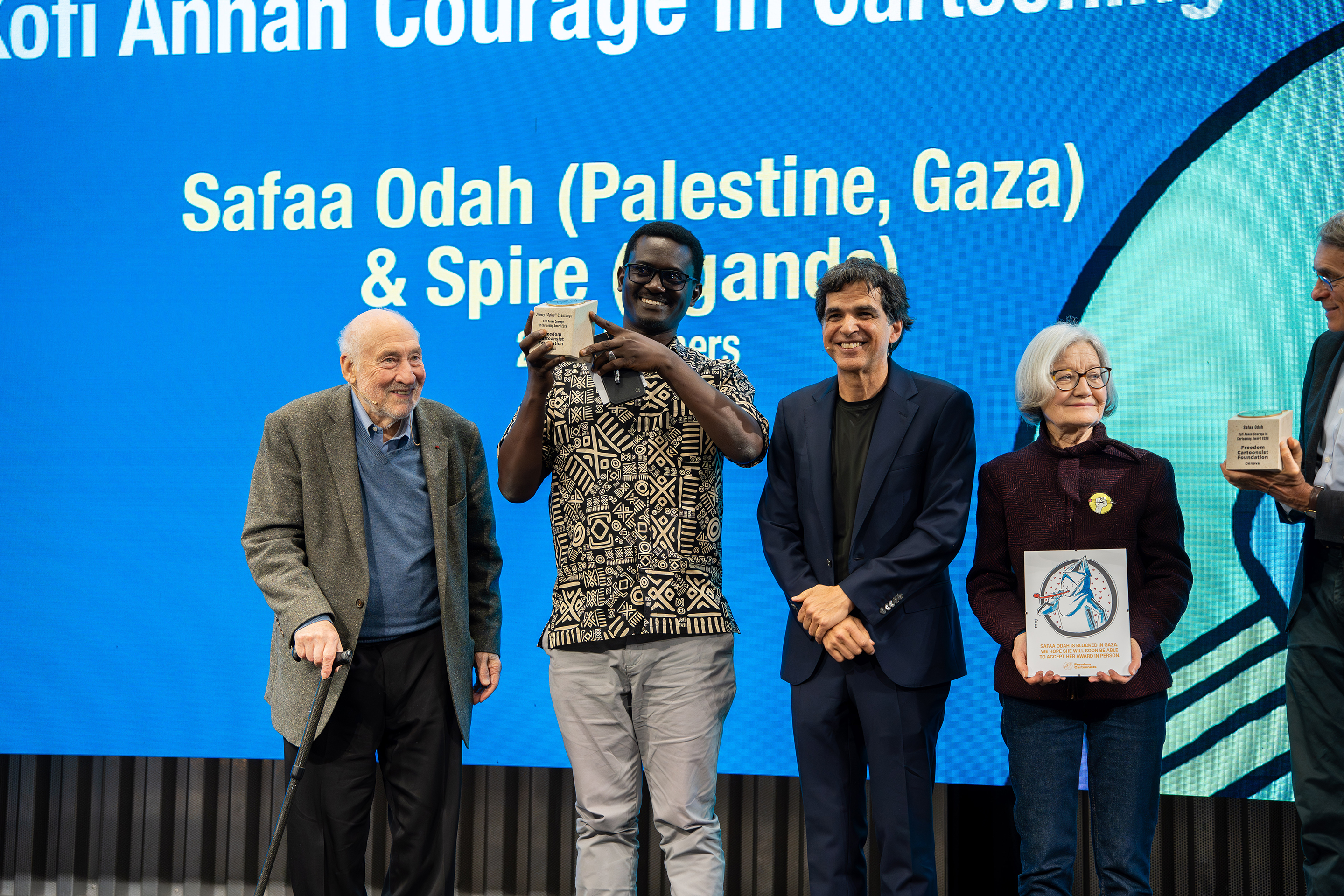
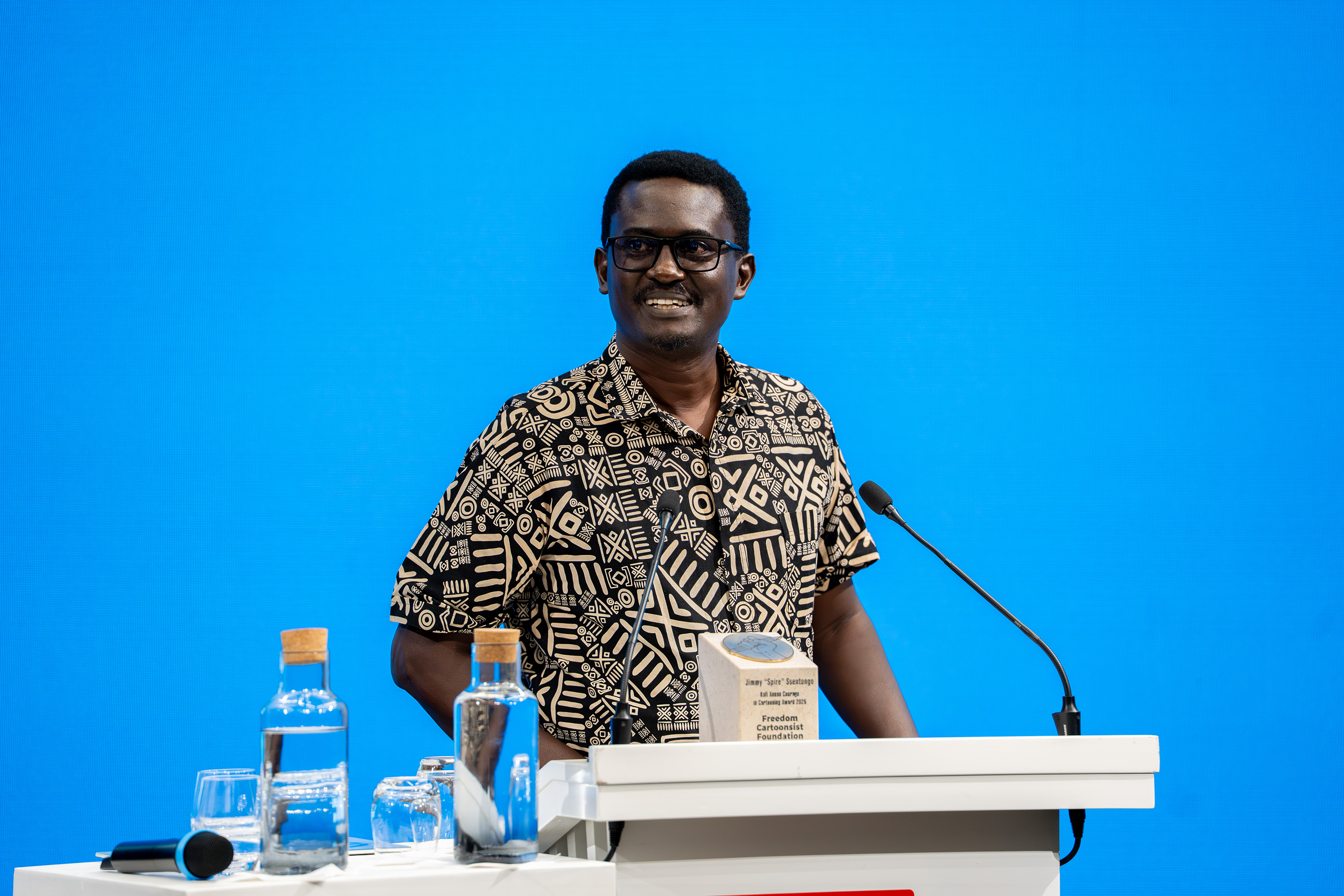
The Kofi Annan Courage in Cartooning Award 2026 was awarded to Safaa Odah from Palestine and Jimmy “Spire” Ssentongo from Uganda. Of this year’s laureates Patrick Chappatte said, “The 2026 Prize laureates embody the fight of cartoonists for freedom – on one side, Spire, who stands up to power in Uganda, and on the other, Safaa Odah, whose moving work expresses a profound humanity in the heart of hell.”
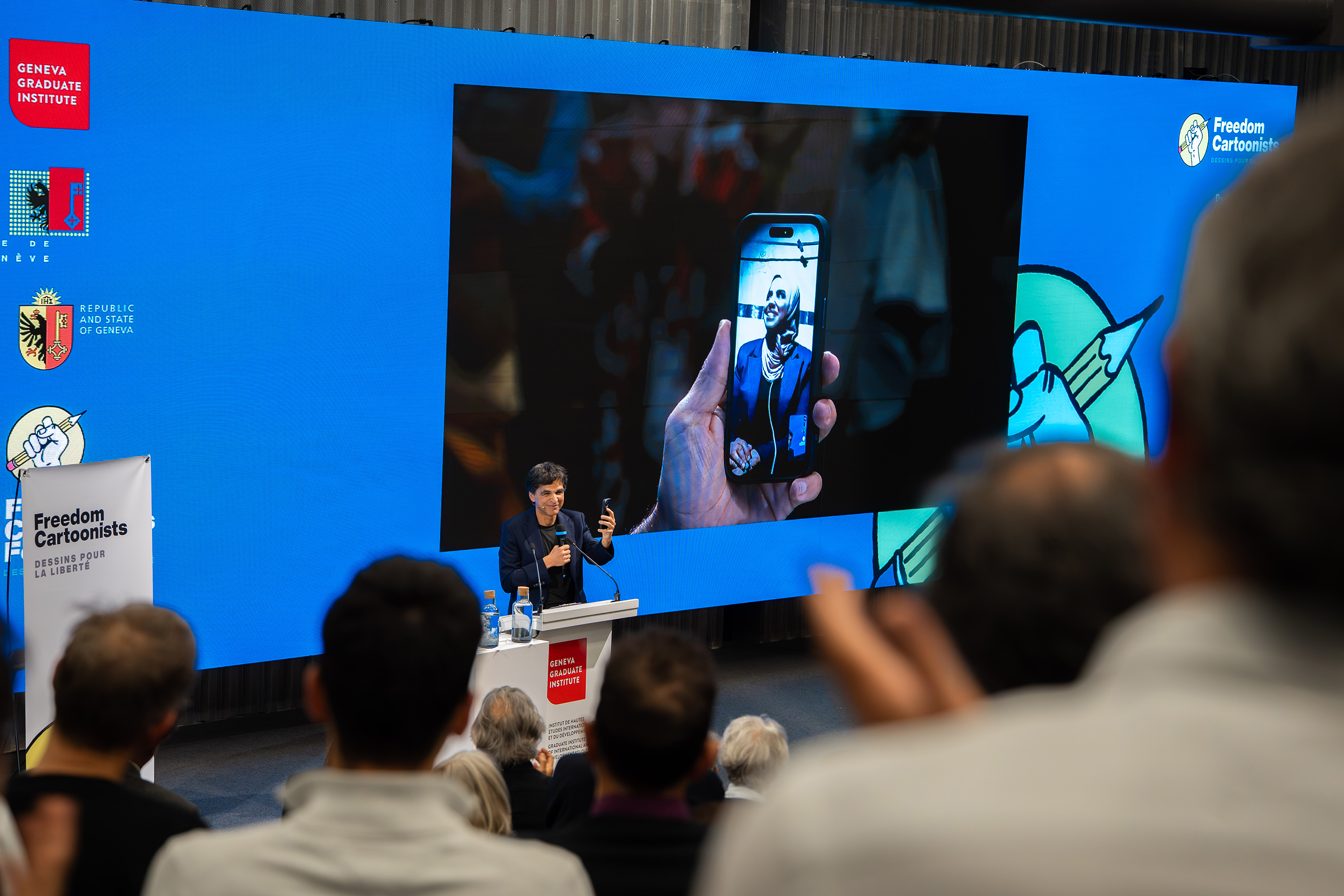
Spire joined Patrick Chappatte, Joseph Stiglitz, Kenneth Roth, and Marie Heuzé on stage to accept his award. While Safaa Odah was not able to leave Gaza, Patrick Chappatte included her in the event through a live video call.
In the spirit of the Geneva Graduate Institute’s dedication to bilingualism, the evening’s event was in English and French.