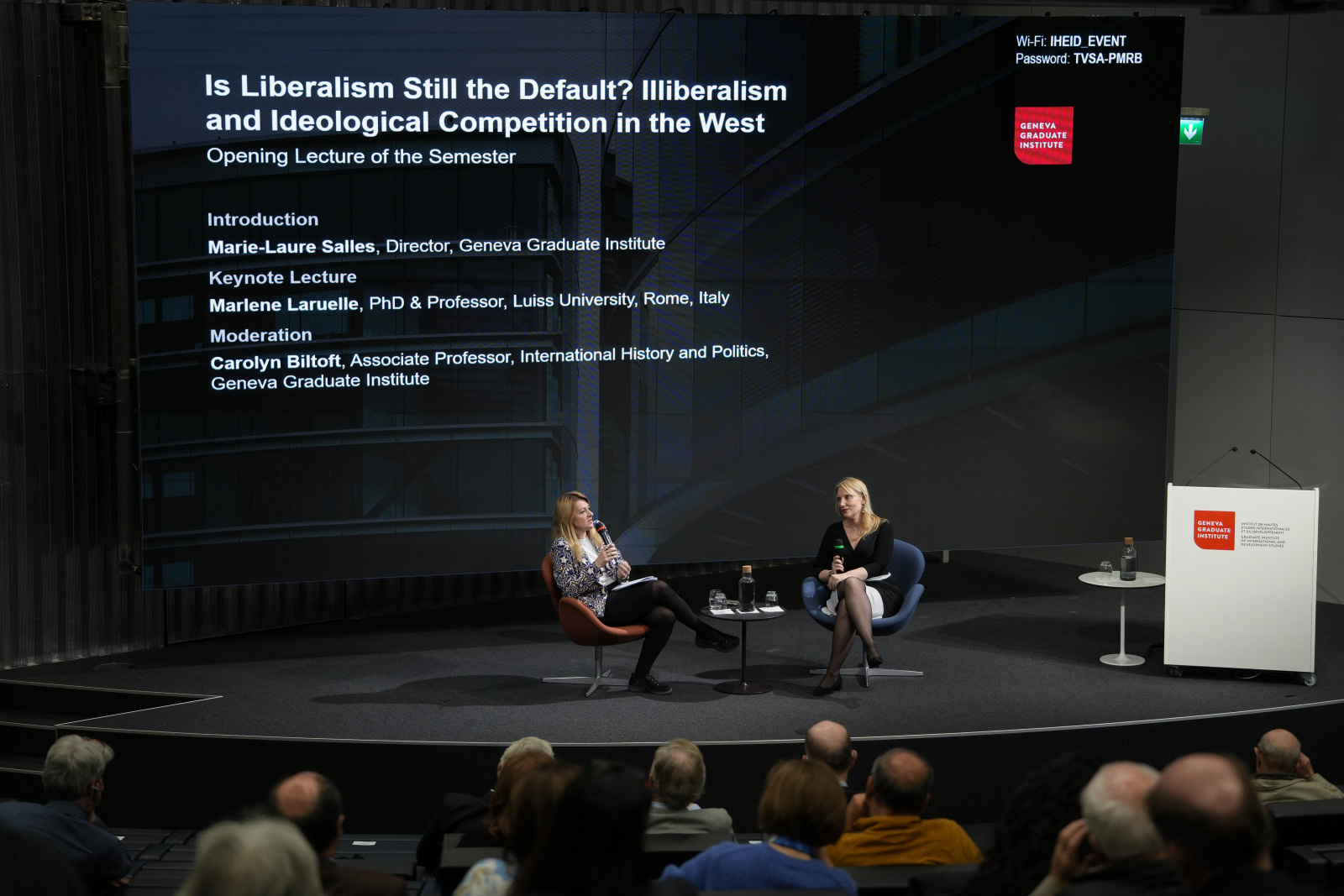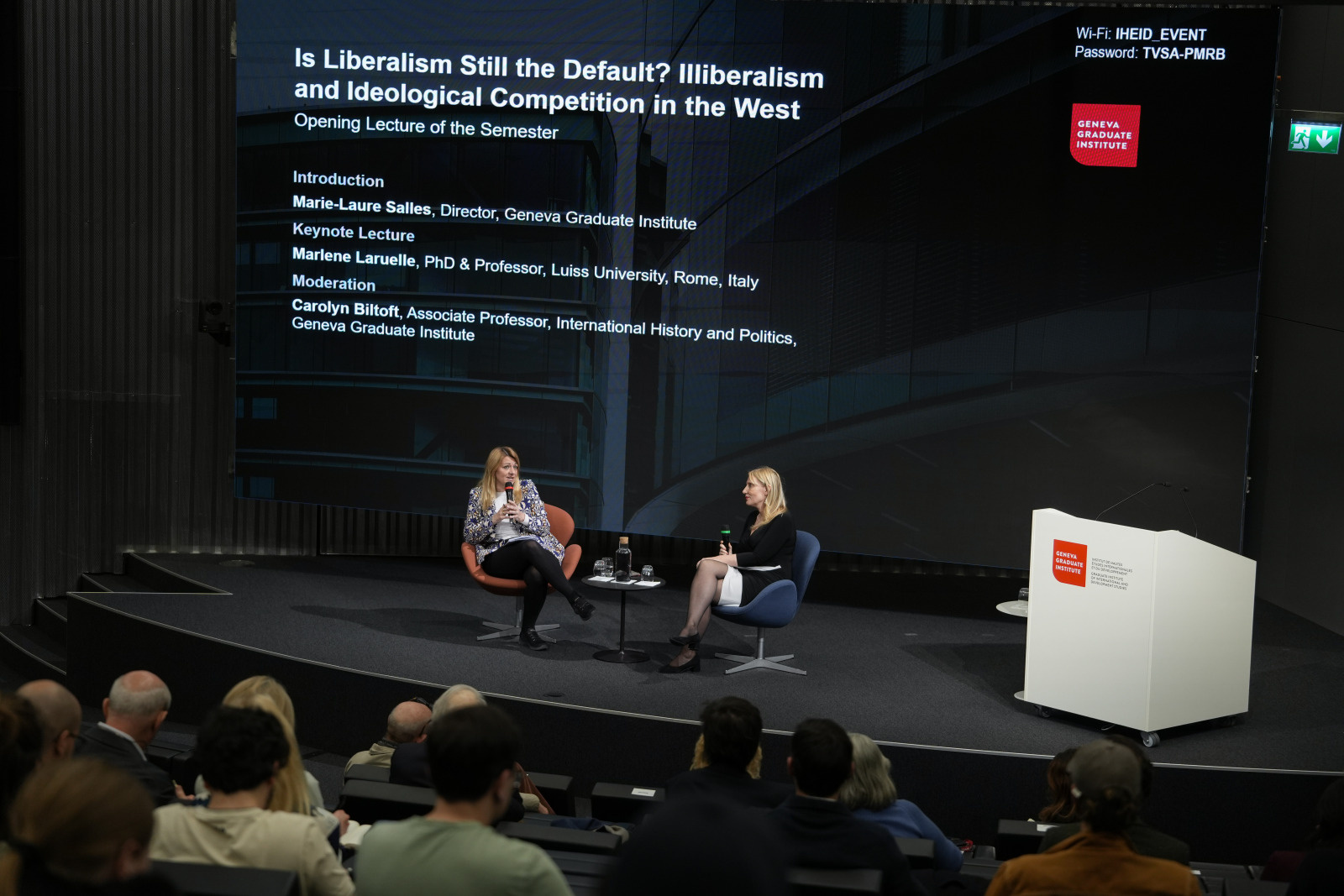


Over the past decade, liberalism has increasingly ceased to function as an unquestioned horizon of political life in Western democracies. Electoral shifts, cultural polarisation, and the growing appeal of illiberal actors suggest that what is at stake is not a temporary crisis or a series of political accidents, but a deeper transformation of the normative foundations of contemporary societies. Liberalism’s former cultural hegemony is eroding, and it is now openly challenged by competing political imaginaries that present themselves as more rooted, more protective, or more realistic.
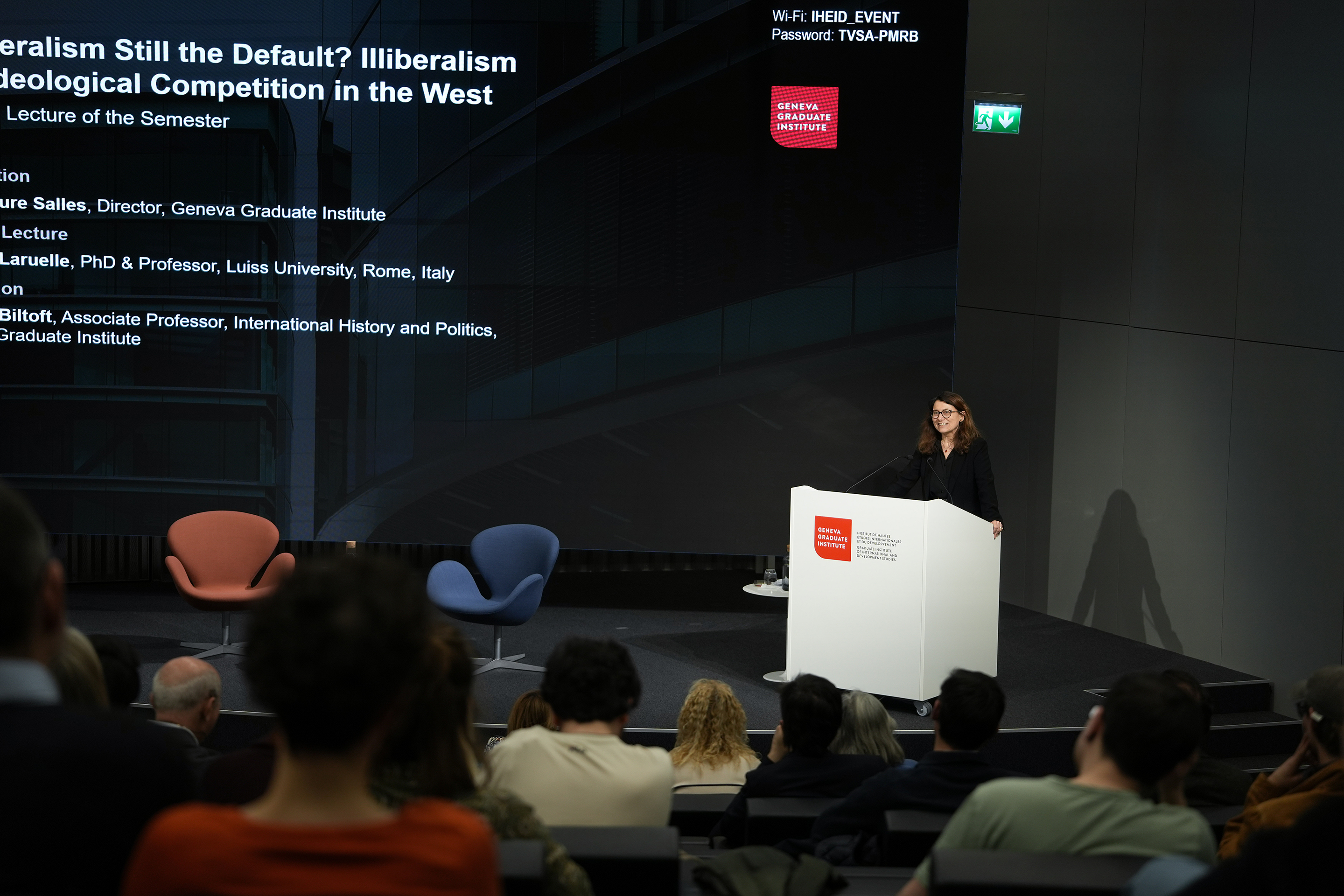
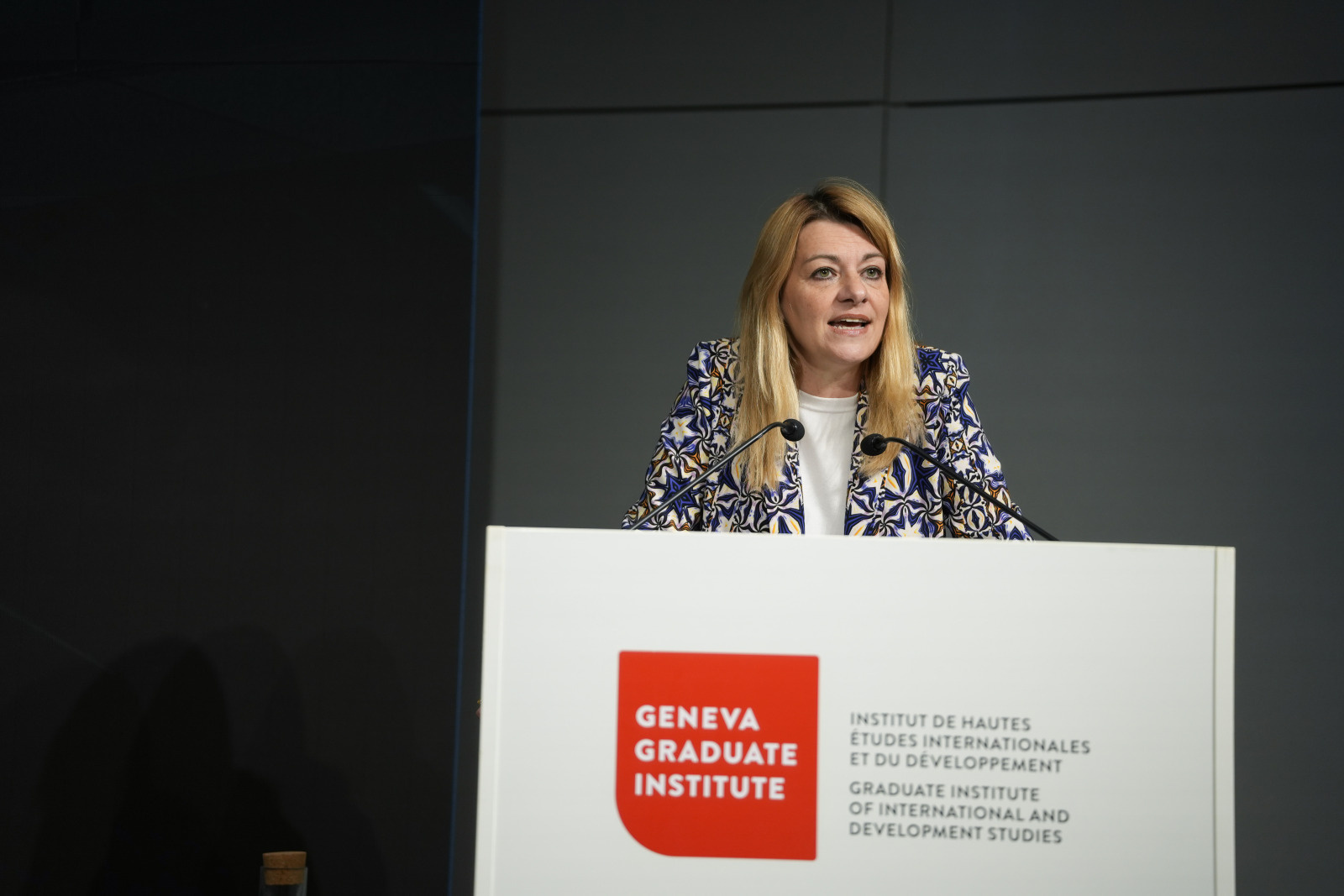
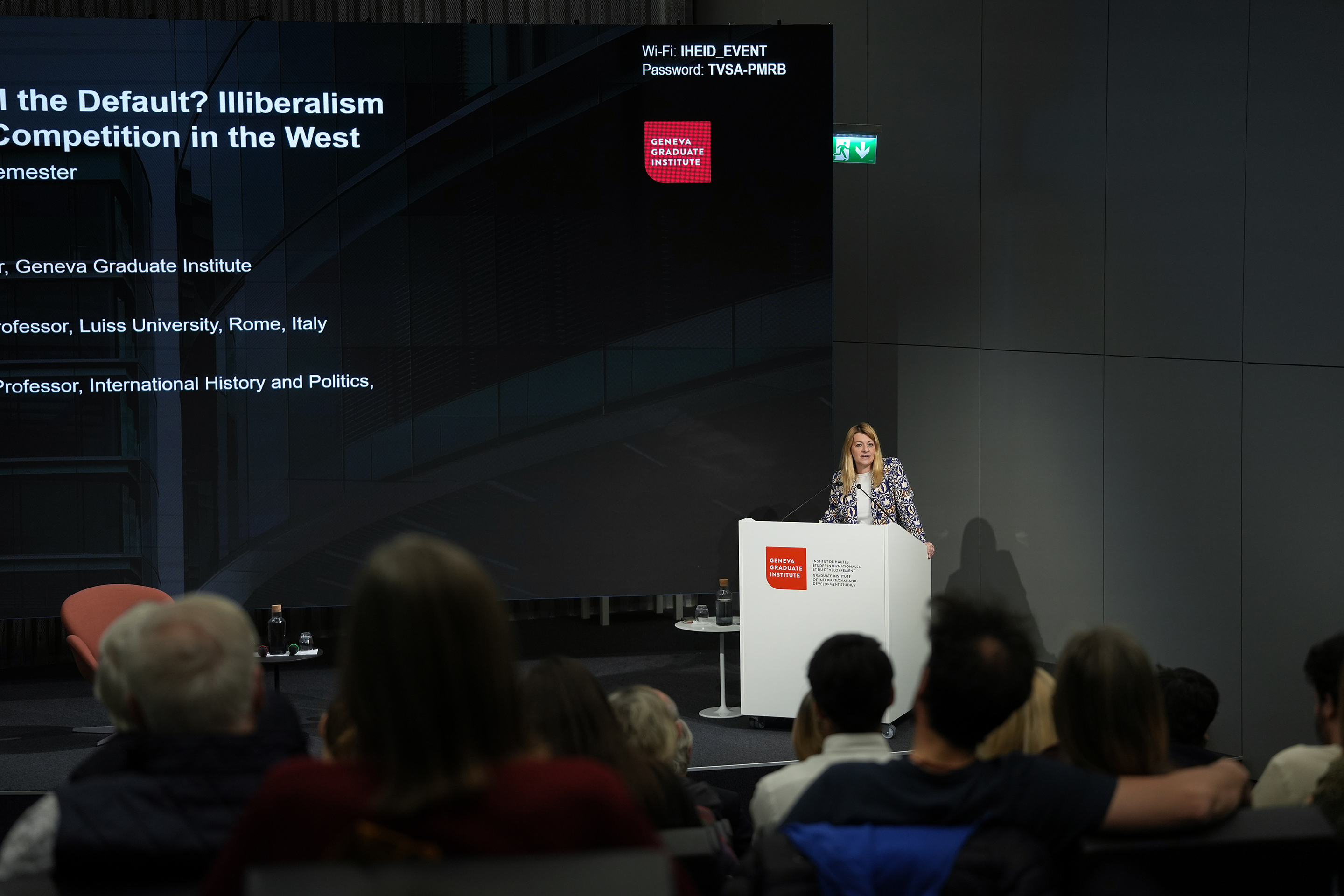
Marie-Laure Salles, Director of the Geneva Graduate Institute, introduced the lecture as well as the context of the “reactionary international” propelling the illiberal wave at the centre of the evening’s discussions: “The unsettling question we are confronted with, in the West in particular, is that of the erosion of assumptions that were, for decades, taken as self-evident. Liberalism is not the default anymore — and an alternative, old-an-new, weltanschauung is coming our way. What are its defining features? And, in parallel, what is it that we wish — and need — to hold on to here in Geneva, the cradle of a certain understanding of humanist universalism and of international collaboration for peace?”
In her lecture, Marlene Laruelle examined the nature of the post-liberal moment we are entering by asking whether liberalism is simply in need of reform, whether it is being fundamentally reconfigured, or whether we are witnessing the emergence of a new ideological landscape altogether. She considered the multitude of structural conditions that have enabled illiberal ideas to gain traction, including socioeconomic inequalities, technocratic governance, cultural dislocation, and the weakening of shared narratives of progress through what she calls “atomised individualism”:
“In a time where people are stressed by economic stagnation, demographic anxiety, geopolitical uncertainty, and climate fear, the fact that progress is no longer seen as a shared narrative means that we are losing some of this kind of glue that was making us as an individual being part of this kind of collective identity and that is pushing politics to become a competition between different identities, different storytelling that are telling us what is worth conserving, what must be restored what must be must be defended.”
Marlene Laruelle paid particular attention to the rise of new right-wing political imaginaries in Europe and the United States, their relationship to democratic norms, and their implications for both domestic politics and the international order. Rather than treating illiberalism as a deviation or anomaly, the lecture invited a broader reflection on ideological competition in contemporary democracies and on the possible futures now opening before Western societies.
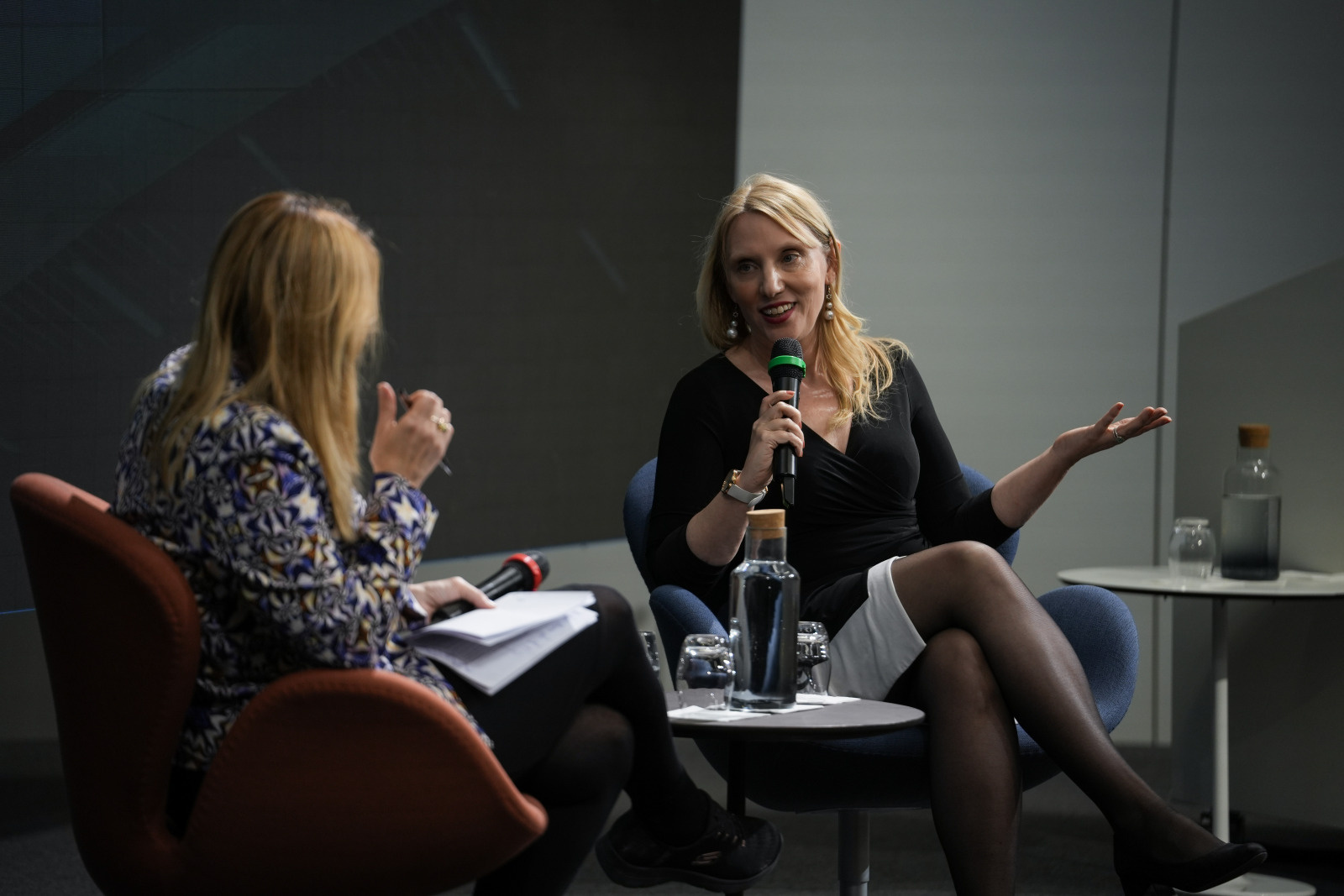
The opening lecture was followed by a panel discussion moderated by Carolyn Biltoft, Associate Professor in International History and Politics at the Geneva Graduate Institute. Together, she and Marlene Laruelle touched on the gaps between technocratic governance and liberal and illiberal ideology, as well as on the roles of universities in providing ideological pushback against anti-intellectualism, before opening up the discussion to the public.
Watch the Lecture and Discussion
Marlene Laruelle, PhD, is Professor at Luiss University, Rome, Italy. She also serves as Director of the Illiberalism Studies Program, a transatlantic initiative based in Washington and Paris. Before joining Luiss, Marlene Laruelle was Research Professor at The George Washington University for 15 years and the Director of the Institute for European, Russian and Eurasian Studies (IERES) there. Trained in political theory, her research explores contemporary ideologies in Russia, Europe and the United States, as well as the transnational nature of illiberalism. She has recently edited The Oxford Handbook of Illiberalism (Oxford University Press, 2024).