news
TRIBUTE
27 November 2026

In Memoriam André Liebich (1948-2026)

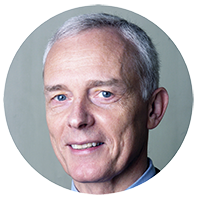
André Liebich

In Memoriam


André Liebich was a professor from another era, a scholar who kept a monocle in his pocket and lived his profession as a vocation. He was an erudite man, but one who never made the people around him feel the weight of his knowledge. He carried his vast expertise around lightly and shared it with humour and style. He acquired and honed these skills throughout his life as a cosmopolitan intellectual. Fluent in multiple languages, André was a specialist in Central and Eastern Europe who made key contributions to the international history of the area, as well as to the history of political thought, nationalism studies, and the history and politics of minorities. Above all, he was a patient and devoted, albeit demanding, supervisor, who spent an unreasonable amount of time reading his PhD students’ drafts. He was a community builder and a true believer in interdisciplinarity.

André was born in Great Britain, but grew up mostly in Montreal within a family of Polish origins. He obtained a degree in Political Science and Economics at McGill before moving to Cambridge to join the Soviet Studies programme at Harvard. There, he later obtained a PhD in Political Science with a thesis on the nineteenth-century Polish philosopher August Cieskowski. Between Ideology and Utopia (D. Reidel), which he published along with a collection of selected writings by Cieskowski (Cambridge University Press, 1979), thoroughly examined this philosopher’s futuristic interpretation of Hegel, as well as his decisive influence on later thinkers, notably Karl Marx. In his proverbial modesty, André in class would often joke that writing a thesis on a philosopher with a name that only Polish speakers could pronounce did not help the book’s sales. In Boston, André also met the love of his life, the art historian Hayat Salam, with whom he lived for the following 42 years, until her premature death, and had two daughters.

After a stint at St. Anthony’s College, in Oxford, André returned to Montreal, where he taught for the following sixteen years. There, he started his next big project: a history of Russian emigration that turned into a major study of the Mensheviks. From the Other Shore: Russian Social Democracy after 1921 (Harvard University Press, 1997) is a sweeping, award-winning account of the exile of Russia’s social democrats that reads like the biography of a family and has been translated into several languages. Driven by his eager curiosity and need for new challenges, in 1989, André joined the Geneva Graduate Institute’s Department of International History and Politics as holder of the Chair in “the communist world”. In class, he often stressed the ironic timing of his appointment. It certainly was a major turning point in his career. Confronted with what he saw as the utter failure of political science to predict the fall of the Soviet Union, André turned ever more towards history. As he used to say: in autumn 1989 in Geneva, “I discovered that I was a Historian”. 

His move to Geneva also coincided with a new orientation of his research. At the Graduate Institute, André began working on minority questions and the issue of nationalism. His interest in these topics kept him busy for about two decades, during which he published multiple works on the subject, in both English and French, taught seminars based on his research, and supervised a generation of young scholars who made major contributions to this and adjacent fields by bringing intellectual history, political theory, and the historical experience of Central and Eastern Europe into conversation. Rather than treating nations and nationalism as self-evident or timeless categories, he was interested in how ideas of nationhood emerged, how they related to political statehood, and how they shaped questions of citizenship, minority rights, and political belonging. 

 Among his publications, it is worth mentioning the edited volumes L’Europe centrale et ses minorités: vers une solution européenne ? (Presses universitaires de France, 1993, with André Reszler) and Citizenship East and West (Kegan Paul, 1995, with Daniel Warner and Jasna Dragović-Soso), as well as the articles “Must Nations Become States?” (Nationalities Papers, 2003), “Was Herder a Nationalist?” (Review of Politics, 2007, with Dominic Eggel and Deborah Mancini-Griffoli), “Roma Nation: Competing Narratives of Nationhood” (Nationalism and Ethnic Politics, 2007) and “Minority as Inferiority: Minority Rights in Historical Perspective” (Review of International Studies, 2008). From 2012 onwards, he was involved in a multi-country interdisciplinary research project focused on regionalism in Ukraine, which resulted in the edited volume Regionalism without Regions: Reconceptualizing Ukraine’s Heterogeneity (Central European University Press, 2019).

After his retirement in 2013, André surprised all those who thought he would rest by going on a publication spree. He returned to the genre of biography, which had influenced his early scholarship, and wrote an engaging account of the life and work of the British journalist, and specialist in Central and Eastern Europe, Henry Wickham Steed (Peter Lang, 2018). He went on to publish The Politics of a Disillusioned Europe (Springer, 2022), a history of post-Soviet Eastern Europe up to the present, and Cultural Nationhood and Political Statehood (Routledge, 2023), one of the best works on the history of self-determination currently available. In these restless years, he also wrote a number of academic articles and book chapters. Only his deteriorating health managed to stop his prolific mind. 

During his time at the Graduate Institute, André was a living incarnation of some of the most original features of the department and institution in which he was working, notably his bilingualism and interdisciplinarity. During his classes, he would smoothly move between English and French to accommodate the linguistic preferences of his audience. When the Department of International History and Politics had to drop “politics” from its name, André did not hide his disagreement. As the decision coincided with the conference organised to commemorate his retirement, he gave a memorable speech entitled “History and Politics: A Happy Marriage and Unhappy Divorce”. There, he argued that “history and political science are too important to be left to the other in the study of international relations” and pleaded for an “an ‘intellectual pluralism’ which allows issues to be examined from a variety of perspectives”. A few years later, the International History Department regained its old name, “International History and Politics”. 

André also made an important contribution to public debates in the international and local Geneva. He was a regular contributor to Le Temps and the Tribune de Genève, and participated in discussions on television programmes and at international and local institutions, bringing his insights to bear on key developments in Eastern Europe and Russia. More broadly, his office and home were always open to students, colleagues and journalists. They also were an integral expression of his cosmopolitan, multilingual and open-minded personality. They housed rare books in multiple languages as well as precious and beautiful pieces of furniture and objects of art. These objects, many of them also a tribute to his wife, Hayat Salam-Liebich, scholar of Islamic art and architectural history, reflected different cultures and memories, bringing together the many layers of his life journey across countries and cultures.

André often said that what counted most for him in academia were his students. He consistently showed this throughout his career. He was a strict and demanding supervisor, one that some would probably define as “old-school”. Yet he was also immensely generous. He spared no effort and missed no footnote. Even if the topic he was supervising was at the margins of his expertise (and sometimes even beyond), he would still “think with” his students and help them safely navigate their research adventures. The generation of scholars he formed probably is his greatest legacy. For this legacy, his students and his colleagues at the Department of International History and Politics and the Geneva Graduate Institute are immensely grateful. We will always carry his memory in our hearts.
tributes from former students and colleagues

Mario Apostolov

André Liebich was an accomplished scholar and a generous teacher. We will miss being able to draw on his encyclopedic knowledge, whether the subject was the role of the Mensheviks in history or the evolution of the nation-state. His books are still with us. At a time when artificial intelligence can supply quick answers and fewer people seem to make time for books, let us hope readers will continue to turn to his work and learn from history as they think about the future.

I was André’s second PhD student. Halfway through my doctoral studies, he told me that we were not formal collaborators but we had become friends. At the conference marking his retirement, and at the many dinners his former students organized, one could see how many of us had formed the same kind of friendship with him. Since last week, I have been thinking about all the instances he went out of his way to help us. He supported our applications for research programmes, helped us see publications through to print, and took pleasure in inviting us to celebrate a master’s degree or a doctorate. When I decided to publish my PhD thesis, André offered to do the final edit himself. He went through it chapter by chapter. I am still touched, and more than a little humbled, by the time he gave me alongside his other commitments.

What I will miss most are our conversations about the state of the world, especially about the countries of Eastern Europe and Eurasia that we had both studied for years. The only place I have set down my thoughts on why and how the Soviet Union collapsed is in the volume marking his retirement. At André’s insistence, both the conference and the volume were entrusted entirely to his former PhD students. My contribution grew out of years of conversations with him. In early 2014, he wrote several courageous, eye-opening articles on Ukraine for Le Temps. I wish more people had listened to him then. Many young lives might have been spared had his words been heeded.

In 2018, I told André that he reminded me of one of my favourite writers, Joseph Conrad, a Pole born in what is now Ukraine who made his literary career in the West, becoming a classic in English, a language he had learned as an adult. André brought up Under Western Eyes, Conrad’s 1911 novel set partly in Geneva, and lent me his copy. I was struck by Conrad’s psychological insight as he traced the fate of a young Russian student drawn into the world of the Tsarist secret police, émigrés and spies. André had a rare instinct for finding the link between history and the present.

In 1996, when I contributed to one of André’s publications, he told me it would be the first of many things we would accomplish together. Thirty years later, in early 2026, he wrote an endorsement for the back cover of my book on regional integration in Europe and Asia. It turned out to be our last collaboration. I am proud to have his words on that book, and grateful that our friendship lasted long enough for him to become one of the key formative persons in my life and career.

Emmanuel Dalle Mulle

I will always remember when André invited me for lunch at an elegant restaurant in Geneva the day after my PhD defence. Until then he had called me Mr Dalle Mulle. From that day on – he told me – he would call me Emmanuel and I could call him André. 

A few years later, during a conversation in French with other people, I realised that, although he did call me Emmanuel, he was still addressing me as “vous”, something I had not noticed in our conversations in English. Only in recent years did he switch to “tu”. André was like that. He was formal and could sometimes seem distant, but in fact he was generous and treated his students with respect. Relations with him had to be earned, but he felt a real responsibility towards others. He was elegant and never lost his composure, yet he was intellectually irreverent and liked to go against the grain. He never hid his opinions and could be harsh at times, but he expressed them politely and with the intention of helping. I will always carry his memory and his example with me.


Sabina Donati
 

Thank you, Prof. Liebich

"Homo doctus in se semper divitias habet"


With love and respect
Cécile Druey

Dear André, thank you for being my mentor and supervisor, I could not have wished for a better one and will always keep a place for you in the bottom of my heart. And thank you for teaching us the art of critical thinking and of paying precise attention to words and logical connections. 

Jaci Eisenberg 

This week, the world lost a great scholar and human being.

André was my PhD supervisor and I feel incredibly fortunate to have been able to work with him. My research was an odd fit for his expertise – and indeed for the department – but I never once felt I was in the wrong place. He brought rigor, accountability and care to his stewardship of the next generation of scholars, something rare in an era where education is increasingly commoditized. I remember talking to one of my undergraduate professors, and she was shocked that a PhD supervisor would take the time to meet weekly with an advisee and read and provide regular, thoughtful feedback on drafts, fully along on the journey with the scholar. 

André was an onion: if you only encountered him in one course, you may have thought he was a scholar from another era, with a downward tip of his monocle indicating he found your reflections dubious. But the more you got to know him, the more you saw the many, delightful facets of his being. You might catch him on his bike on the way in Voie Creuse. You might overhear him talking about the trapeze lessons he took on a recent cruise. Or catch the excitement in his eyes when talked about spending time with his grandson. You might discover that he, and his beloved wife, Hayat, were truly excellent hosts. Or that he would help you in the moment when you couldn’t even articulate what you needed, like when he went out of his way to get me to the airport early one morning for a family emergency abroad.

In 2013 I had the honor of co-organizing a scholarly colloquium for André’s retirement. The conference and resulting book were astonishing and noteworthy for the breadth and depth of scholars he had supervised, their geographical reach today, and, more important, the truly wonderful people he inspired and brought together. His final remarks at the reception were a full-throated defense of history and politics as sister disciplines, and to me this interdisciplinarity, along with his investment in his scholars, are his legacy. 

He is sorely missed.

Dominic Eggel

My first encounter with André Liebich dates back to the academic year 1999–2000, when I joined his DEA seminar on Ideas and Identities in Russia. I found myself immersed in the fascinating world of Russian thinkers and writers. The seminars were demanding, with an imposing weekly reading list, but they were also wonderfully stimulating. Together with a group of fellow students, several of whom have remained close friends, we explored Herzen, Lavrov, Lermontov, Pisarev, Turgenev, Gogol, Chernyshevsky and Dostoevsky. Moving effortlessly from reflections on the Russian soul to the sociological analysis of the mir, we could suddenly find ourselves in a reconstructed Politburo, with André brilliantly impersonating the interventions of Comrades Bukharin or Trotsky. These seminars were an intellectual experience unlike any other.

What André conveyed above all was a particular conception of academic life. A true polyhistor, endowed with an extraordinary breadth of knowledge and an insatiable intellectual curiosity, he combined the ambition of a scholar devoted to the advancement of knowledge with a permanent willingness to question received wisdom. He instilled in his students a sense of scientific rigour, intellectual independence and critical inquiry that went far beyond the subjects he taught. His meticulous preparation and masterful conduct of seminars, his insistence on precision and his remarkable attention to the smallest details of scholarly writing set standards that many of us have carried throughout our academic lives. It was André who awakened and nurtured in me a lasting passion for the history of ideas, for the contextual reading of intellectual and literary texts, and for the patient reconstruction of the worlds of thought in which they emerged.

Yet André's intellectual demands were accompanied by a wonderfully irreverent wit, a fine sense of irony and a generosity of spirit. Over the years, my admiration for an exceptional scholar developed into intellectual collaboration and, above all, a lasting friendship. André's constancy as a friend and mentor, his unfailing availability and his genuine commitment to his students are qualities I will remember with particular gratitude. He leaves behind not only an impressive scholarly legacy, but also something less tangible and perhaps even more enduring: the intellectual curiosity, critical independence and love of learning that he instilled in generations of students.

Merci André !

Jussi Hanhimäki

André was one of the first people to welcome me when I arrived in Geneva, and I feel very fortunate that our paths crossed. Over the decade and more that followed, he became a mentor, a trusted colleague and, above all, a friend. I learned a great deal from him, both intellectually and personally. He was extraordinarily generous with his time, advice and knowledge, and I always knew that I could turn to him, whether for a serious conversation about an academic or personal matter, or simply for a good exchange of views.

André was a wonderfully stimulating intellectual companion. His knowledge was vast, his interests eclectic, and his capacity to make unexpected connections often illuminating. But what made him particularly special was the way he combined this intellectual seriousness with a sharp, sometimes wonderfully sarcastic, sense of humour. He had little time for pretension, was never afraid to speak his mind, and could invariably be relied upon to offer a suitably irreverent perspective when one was needed. Our conversations were all the better for it.

I will remember André with enormous affection and gratitude. He was one of those people who make an institution more than simply a place to work, and who make one's years there richer and more rewarding. I will miss his advice, his wit, our conversations and, above all, his friendship. I am grateful to have known him.


Anna Mkhoyan

Préparer une thèse de doctorat sous la direction d'André était de traverser une école remplie d'élégance, d'humanité, et, bien sûr, de rigueur. Les années de doctorat se sont écoulées, certes, depuis un moment. Toutefois, la précieuse contribution d'André à mon parcours est toujours là, présente. Et j'en suis profondément reconnaissante.


Oksana Myshlovska 

On 29 January 2019, André and I exchanged messages on the fifth anniversary of the death of his dear wife, Hayat. He told me that he had cried only twice in his life. The first time was at his father's funeral, and he added in Polish, his mother tongue: “Wieczny pokój racz mu dać, Panie”. The second was when he learned that his granddaughter would bear his wife's name, Hayat. He added: “I don't cry easily, as you might have noticed”.

This was a profound moment of living with grief and loss, but also of seeing the hope of legacies: the invisible connections between generations, ideas and people that give meaning to our lives. It was very special and precious to me that I had the chance to get to know Professor André Liebich not only in professional settings, but also as a human being, and to develop friendship and trust over the years.

In the professional setting, I knew him as a professor, doctoral thesis supervisor and research and writing colleague, a lifelong intellectual interlocutor and a mentor. His seminal course, "Must Nations Become States?", which examined the history of nationalism, was a formative experience for several generations of students and later resulted in André's last book in 2023. The course took place in the basement of the former International Labour Organization headquarters, later becoming the Centre William Rappard, which many of us remember as marking the different historical eras in the development of IHEID, still HEI at that time.

I remember his touching words at my PhD defence, recalling my PhD journey as part of my life, together with turning points such as the loss of my own father. Beyond academic rigour and attention to the smallest details, he taught me to persevere, repeating his famous phrase: “La meilleure thèse est la thèse finie”. And then, after the PhD defence, came the memorable email: “From today on you can call me André”. It took me some time to get used to this new chapter in our relationship.

I also came to know him as a co-author and co-researcher, and I was always in awe of his English style and the richness of his language. On a project focused on regionalism in Ukraine with the University of St Gallen, we travelled all over Ukraine, to Odesa, Dnipro, Chernivtsi, Uzhhorod and Myrhorod, to name just a few places. We co-authored a book chapter and several articles. All these experiences were accompanied by André's profound knowledge of the region and his humour.

The most difficult moments were in the last years, seeing André confront the terrible disease and loneliness, which made one rethink many fundamental things in life. It makes me think that, in the end, André managed to build and leave behind the legacies of what matters most in life: being with other people, giving, mentoring, building profound relationships, being kind and supportive, and accepting the help of others. I will always remember him and be grateful for the journey together.

Francesca Piana

I was saddened to hear of the recent passing of my former PhD supervisor, André Liebich, a remarkable and curious scholar whose work, professionalism and integrity left a lasting mark. André supervised me through my Master’s and PhD at a crucial time in my personal and scholarly identity formation, showing by example how to navigate the challenges of a career path I knew nothing about. Looking back, I realize how rare it is to find a mentor who treats supervision as a genuine moment of exchange and always makes time for it. 
 

Whenever I returned from the archives with my latest “discovery,” he met my ideas and enthusiasm with patience and sharp insight. He read the various versions of my chapters—written in less-than-perfect French and English—with dedication and generosity. Watching him craft a brand-new course in the final year of his career, organizing the weekly readings and laying them all out across his office carpet, is an image that has stayed with me ever since. That foundation has guided both my research and my teaching; without noticing at first, I realized that I now pass on some of his pedagogical approaches to my own students. Over the years, we also crossed paths in Oxford and New York City—including a visit to the Cloisters—and he was always an enthusiastic guide on which museums to see. I remain deeply grateful for the care he invested in my early development and for the example he set as both a thinker and a teacher.

Davide Rodogno

André was one of examiners during my licence years at HEI. He taught the compulsory course in international history and politics for master's students in 1994. When I entered the PhD program, I served as his teaching assistant for a year, back when the Institute was still at Villa Barton and the HPI offices were tucked into the basement of the GATT, now the WTO. I vividly remember André's office—his library, and the barred window looking out onto the grass and the lake.

When we became colleagues in 2008, he remained deeply bienveillant toward me, always bridging the distance between mentor and peer. His office door was always open whenever I needed guidance or simply a conversation. Years later, it was both a delight and a true honor to edit his Festschrift upon his retirement.

I will never forget his sharp, curious gaze, nor his sophisticated and subtle sense of humor. I will remember the effortless grace with which he moved through the world, completely at ease wherever he was and whomever he was with. And, of course, I will not forget the familiar sight of him with his scarf, his coat, and his bicycle.

André played a defining role in shaping the HPI department into what it is today. I shall never forget it, and I will not forget him

Barbara Martin Ustinova 

I was lucky enough to become Professor André Liebich’s last doctoral student, and for this, I will be thankful my whole life. He was a perfectionist at heart—highly selective and demanding both with himself and his students. However, once you made it onto his team, he was the most dedicated supervisor one could ever dream of having, patiently reading and copyediting countless versions of my dissertation while offering thoughtful comments and advice. Like other students, I loved his tongue-in-cheek British humor and fascinating lectures. I always fondly remember him joking that he had switched from political science to history in the fall of 1989: he was teaching a class on the Soviet bloc, and with each passing week, another country was leaving it—something hardly any political scientist could have predicted!

He was a true intellectual and a citizen of the world, fluent in five languages and able to read five others, with deep connections to three continents and with four citizenships. As a specialist on Russia, I deeply appreciated his thorough knowledge of the region, his broad network, and his unbiased views in a field that was already highly politicized. 

Over the years, and especially since the passing of his wife a month after my own mother's, what began as a purely professional bond turned into a lasting human connection. 

My deepest condolences to his family, and my eternal gratitude for these years of mentorship.

In Memoriam André Liebich (1948-2026)