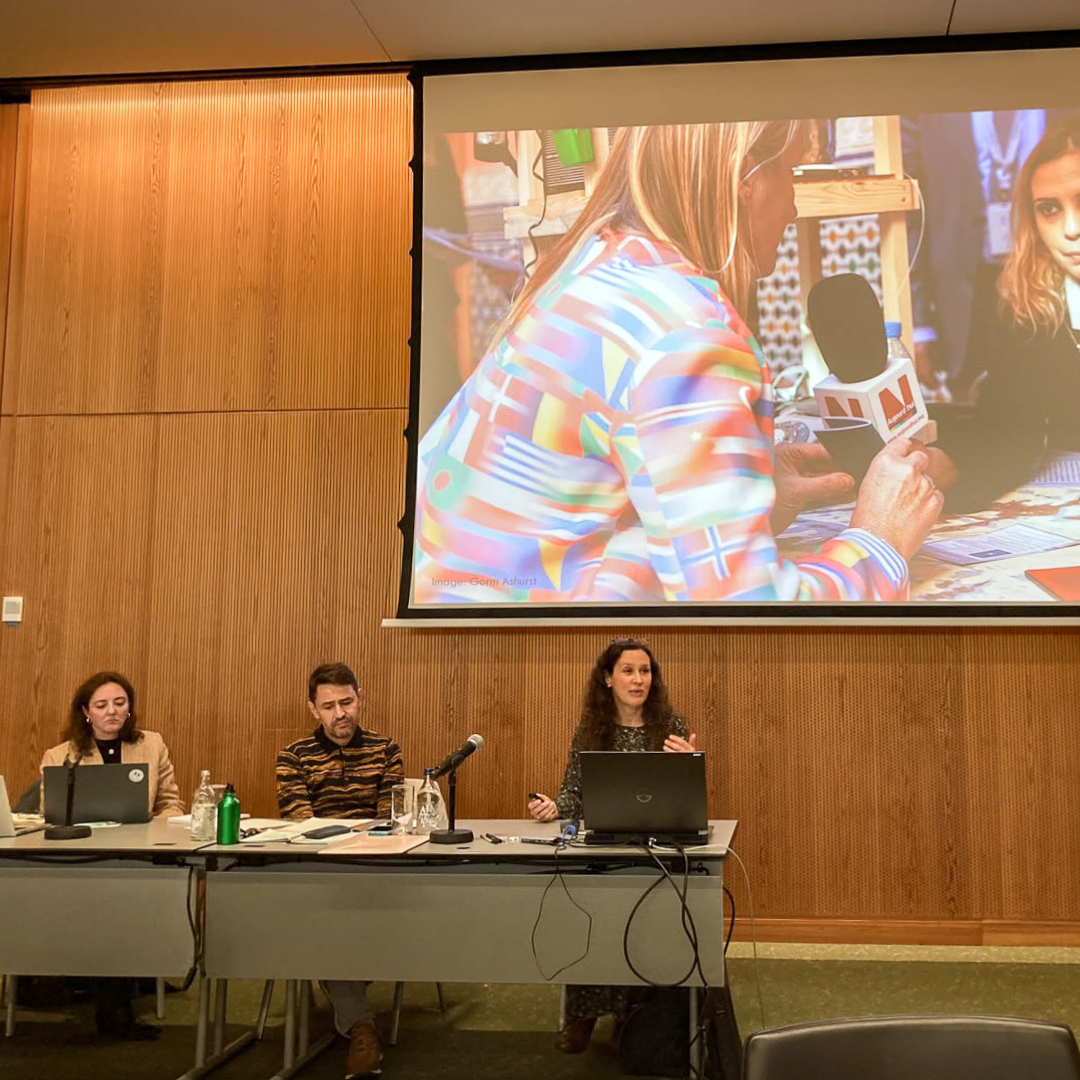


Attracting a diverse audience comprising activists, artists, educators, academics, economists, policy advisors, psychiatrists and more, the panel began with individual presentations, delving into how and by what means policy processes become sites wherein situated knowledges and artistic approaches can provide fresh approaches to multilateralism in practice. Wilhelmina Welsch introduced the panel by focusing on navigating familiar policy spaces equipped with unfamiliar protocol, for example, poetry and the spoken word. Richard Le Quellec discussed, among other topics of promoting care and inclusion through art in policy, the dually creative and disruptive opportunities that artist residency programmes provide in pairing artists in projects with professionals in other disciplines, such as science or policy-making. For her part, Hannah Entwisle-Chapuisat provided concrete examples of installations of policy art to get the group thinking about what policy-oriented curating can look like in practice.
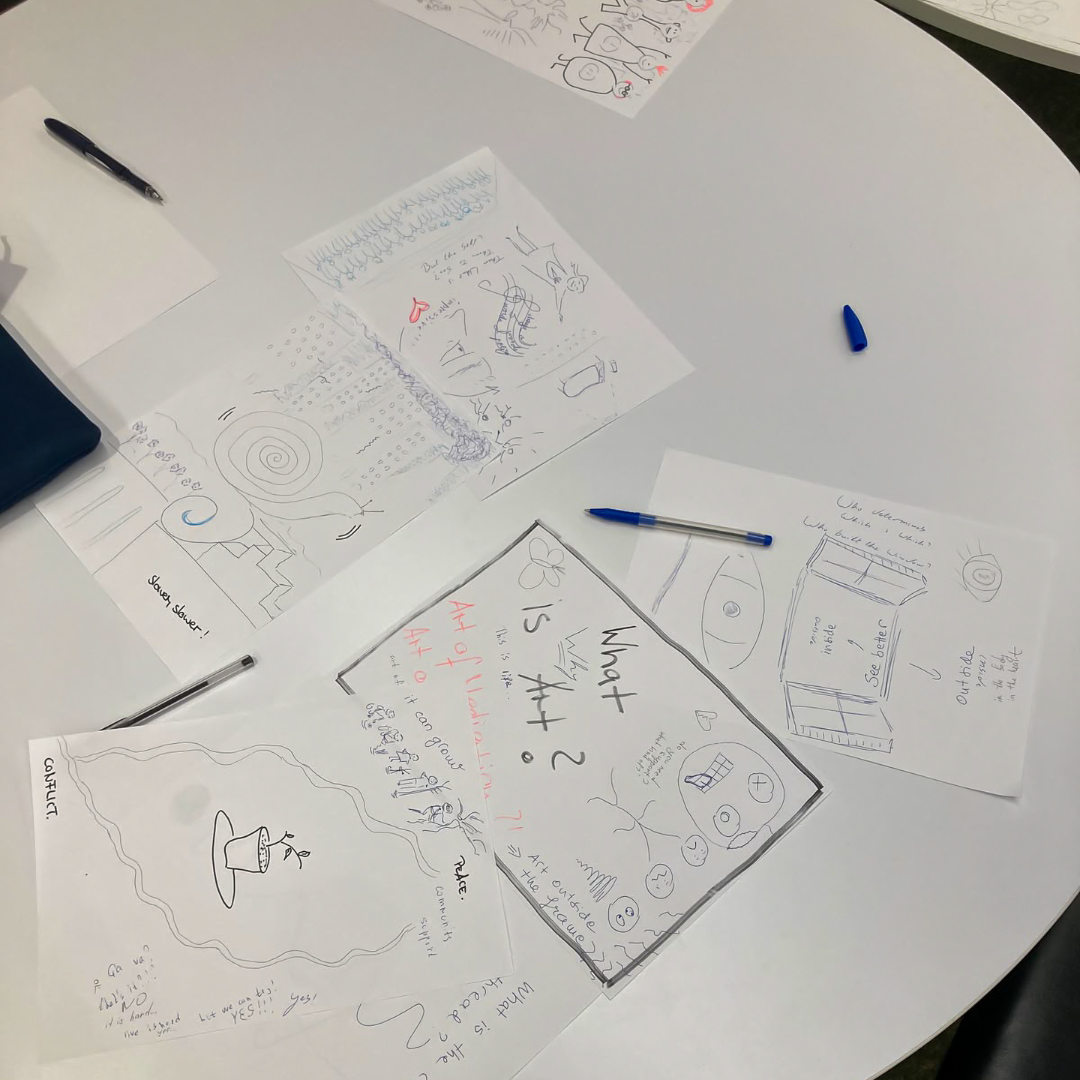
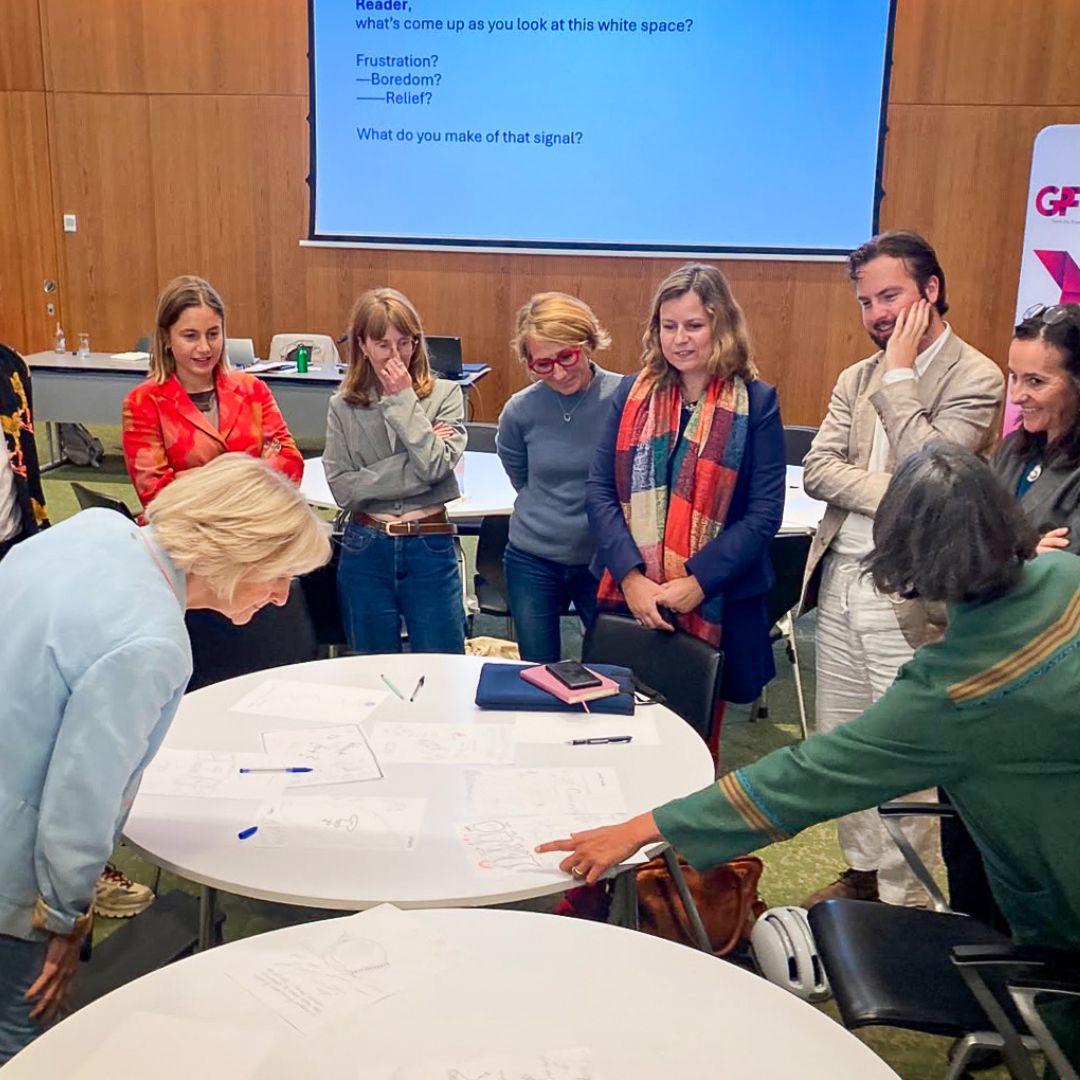
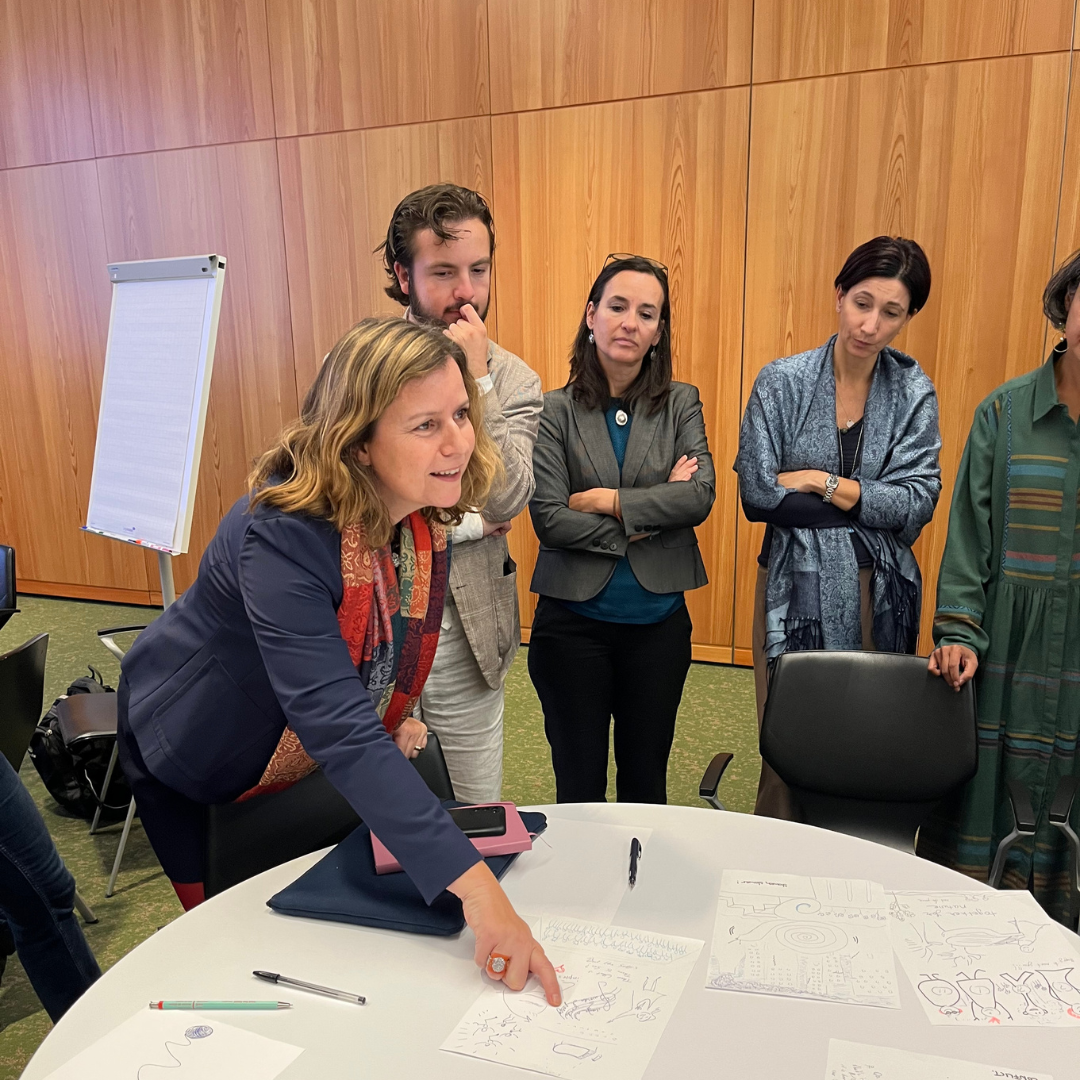
Following the presentations, the audience split into smaller groups for a silence-based activity to explore how exchanges toward shared understanding may be cultivated among diverse actors – visually, empathically, cognitively, in both play-based and conceptual frameworks. The results were then discussed at length by the room, opening up opportunities for future exchanges in follow-up to the panel.
The takeaway from this engaging GPF session was that art is a means of both creating shared vision and challenging established perceptions. By recognizing art as a socially engaged practice offering meaningful ways to integrate other people and external views into the inner processes of policy, one may re-imagine governance structures capable of addressing pressing global issues better informed by inclusive publics.
The EoFA is a partner of the CDHM and will jointly welcome an artist in residence to continue working on these themes in spring of 2027.