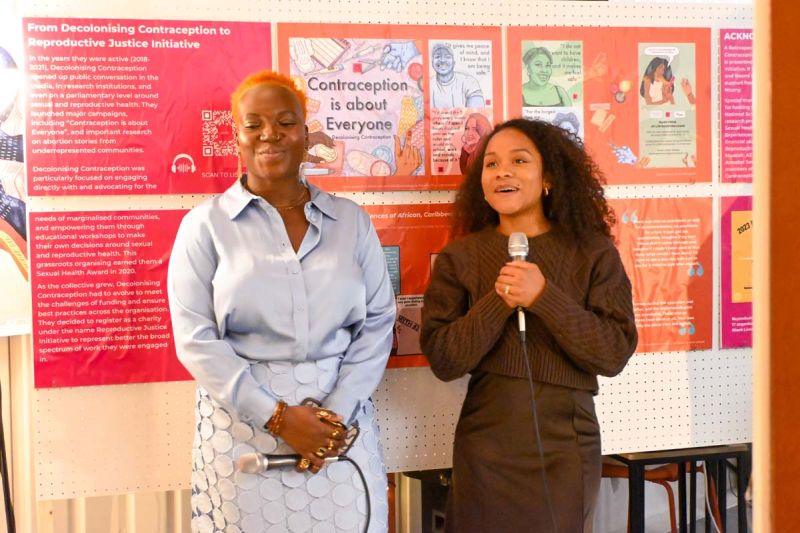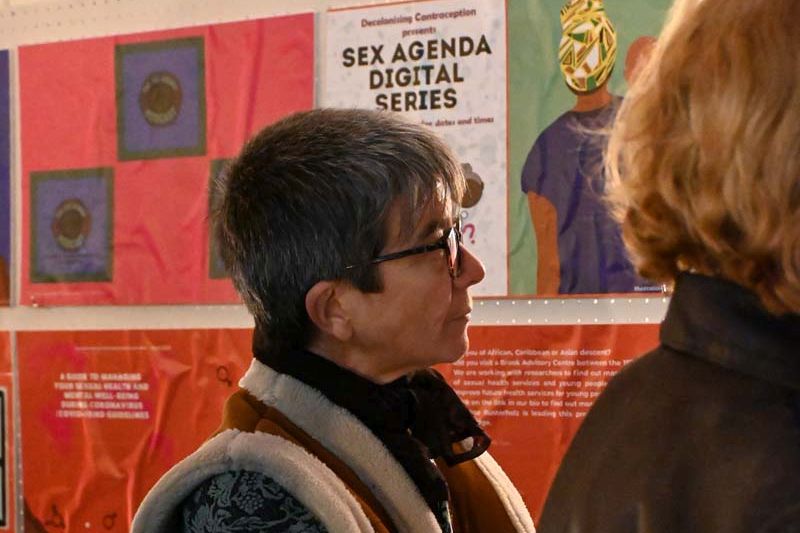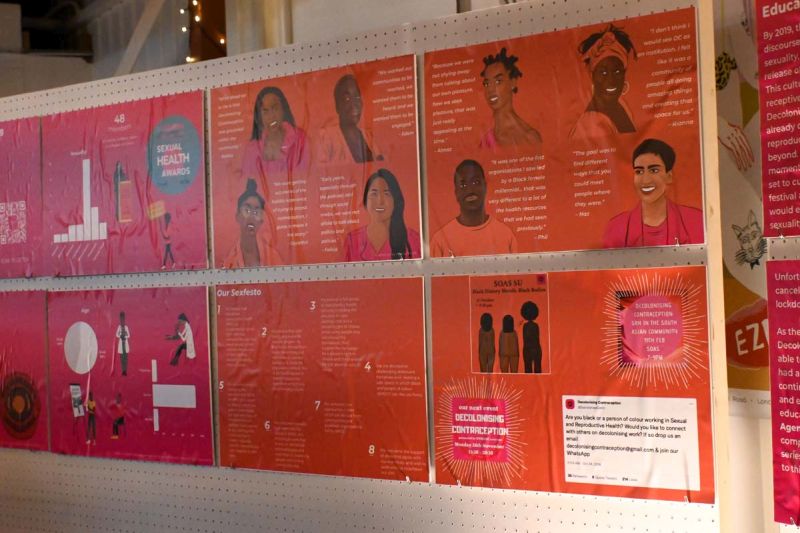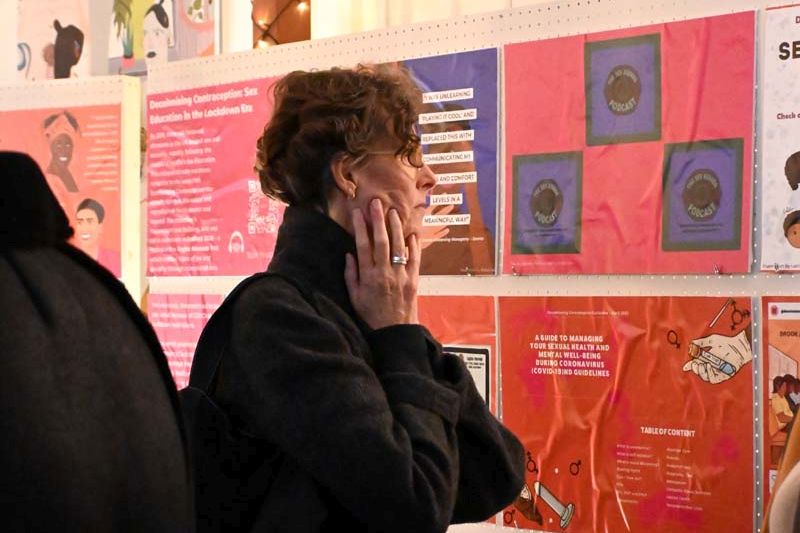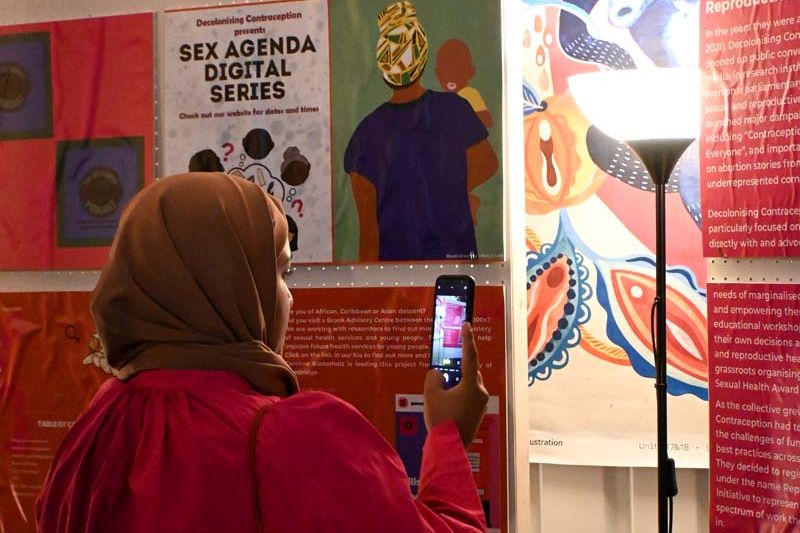



This past October, Gender Centre research affiliate, Naomi Samake-Bäckert, in collaboration with the British sexual and reproductive health charity, Reproductive Justice Initiative (RJI), organized an audio-visual installation at the Vagina Museum in London. The installation was entitled A Retrospective on Decolonising Contraception and served as a living archive of materials that chronicles the work of and the people involved in Decolonising Contraception, a precursor to RJI.
When Decolonising Contraception emerged on the scene in September 2018, it sparked vital public conversations about colonialism's enduring impact on sexual, reproductive, and wider health inequalities in the UK. This interdisciplinary collective of sex educators, medical professionals, campaigners, journalists, and researchers worked together to disrupt colonial narratives that continue to oppress marginalized genders and racialized communities.
This exhibition grew from Naomi’s ongoing collaboration with the CEO of RJI, Edem Barbara Ntumy. Edem and Naomi shared over 15 hours together in the form of oral history interviews to document Edem’s life history with a focus on her experiences of activism and sexual and reproductive health advocacy. Over the course of a year, Edem and Naomi learned that they shared a value and interest to document the efforts of Black organizing. And so, when Edem reached out to Naomi this past summer asking to document and archive the development and evolution of Decolonising Contraception, of course it was an immediate ‘YES!’.
Over three months, Naomi conducted individual and group interviews with former collective members, creating historical sources. Throughout this period, conversations of consent and use of these interviews were continuously revisited - offering opportunities for all to co-create and co-imagine the evolution of the interviews. The immediate output of these interviews became a 3-part audio guide (now accessible on spotify and apple as a podcast series) accompanied by visual materials— from campaigns, events, and merchandise—that bring their movement's energy and impact back to life. The interviews, as a historical source, are also planned to be donated to the British Library as part of a partnership established through the Swiss National Science Foundation funded research project on Race and Ethnicity: Sexual Health and Reproductive Experiences (RE:SHaRE) — to which Naomi’s doctoral research is part of.
For Naomi, it was essential that every aspect of the partnership with Edem and RJI embody social justice and reproductive justice principles. This means rejecting traditional hierarchical research models where data is simply extracted and interpreted within academic institutions without ongoing dialogue or benefit to participants. Instead, interviewing former members of Decolonising Contraception and exhibiting the outcomes as a community-building and public engagement event was the opportunity to share resources and to build sustainable, meaningful relationships grounded in dignity and respect.
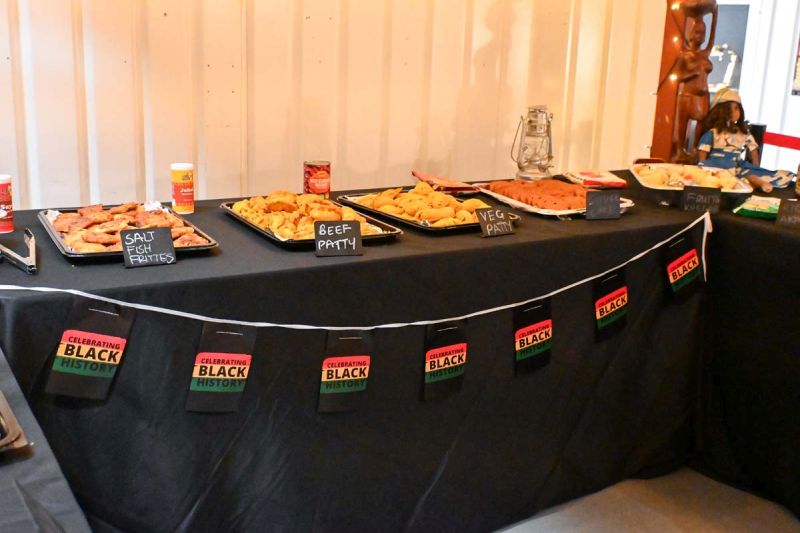
This commitment extended to every element of the exhibition. Those who participated in oral histories were compensated for their time and funding was able to secure space and refreshments. To be hosted at the Vagina Museum, a feminist and queer justice space busting the stigma of the gynaecological anatomy and shifting bodily shame to celebration, was a clear alignment thematically and also a longer-existing ally and collaborator to RJI (former Decolonising Contraception). On opening night, we worked with Sierra Leonean EH Scott Catering Services to ensure that guests didn't just see and hear the celebration of diasporic cultures and the spirit of Black History Month in Britain—they tasted and smelled it too.
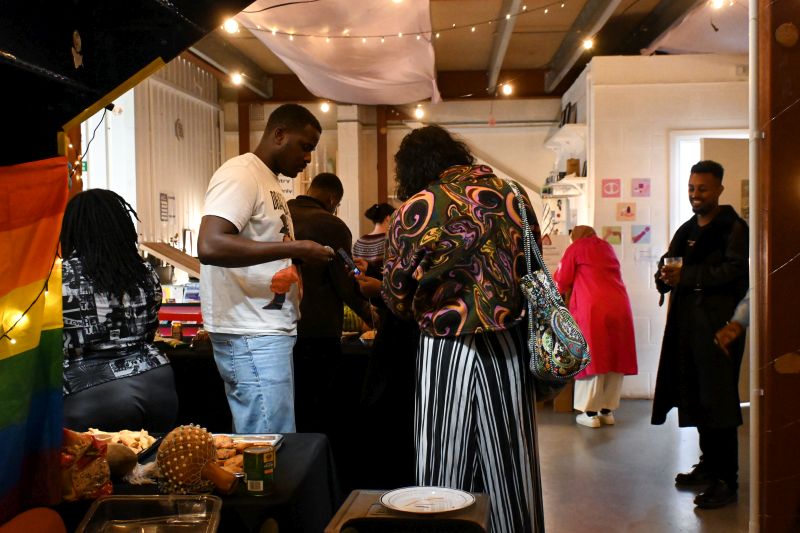
The opening reception brought together community members from across London and surrounding areas to reminisce, connect around common struggles and resistance, and celebrate. The response was powerful—a reminder of why this work matters and why centering community voices and experiences is not just methodologically sound, but ethically necessary.
This exhibition stands as a testament to what's possible when we approach research and collaboration with intention, care, and a commitment to justice - not just as abstract principles, but as practices woven into every decision, every partnership, every moment of creation.
Photographs are taken by Jada Giwa.