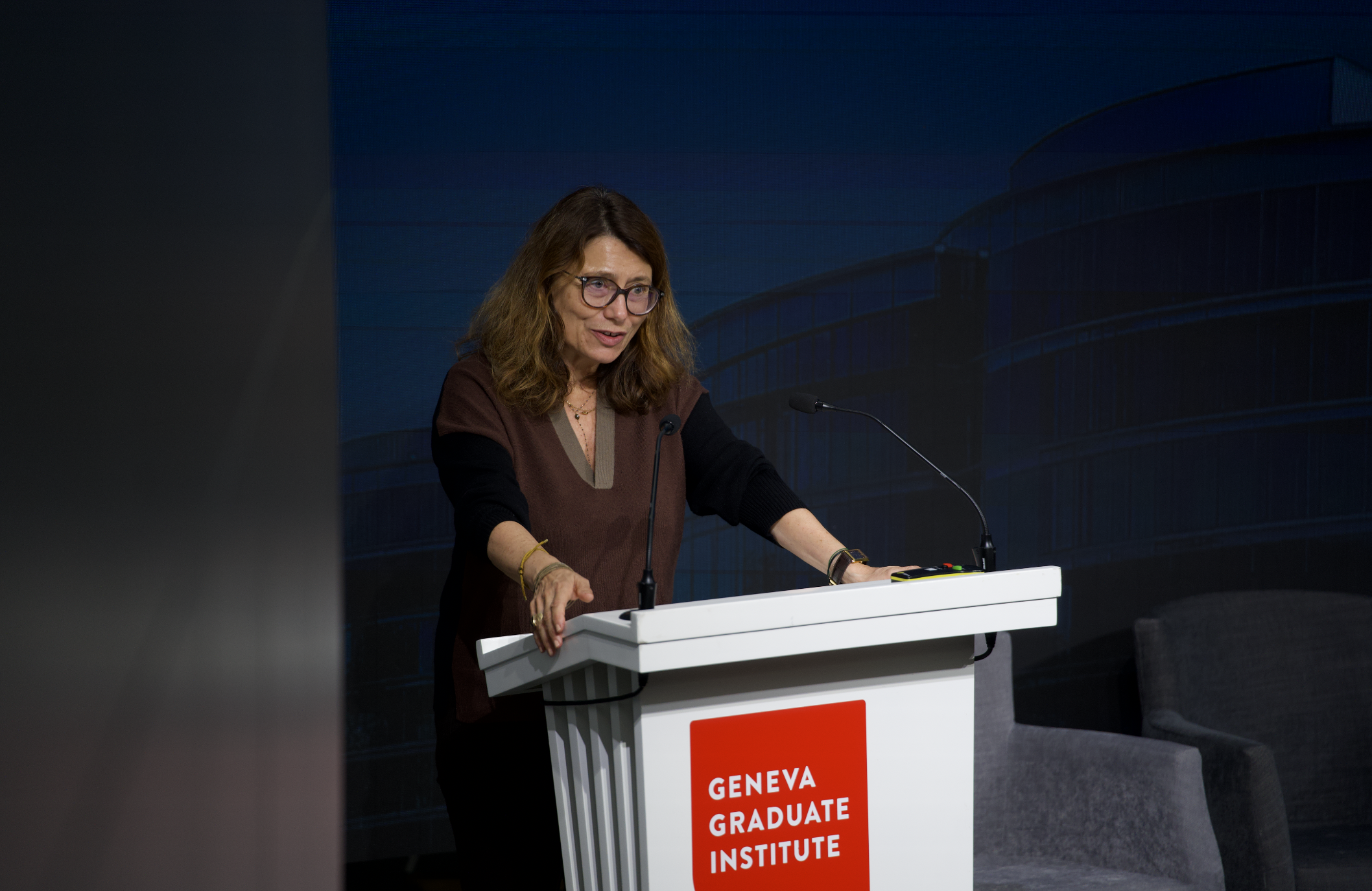


Carlo Ginzburg’s work is characterised by a remarkable combination of scholarship and interpretative imagination. This explains its unique influence not only within the academic world, but also amongst an audience that extends far beyond the boundaries of the discipline of history.
Marie-Laure Salles, Director of the Geneva Graduate Institute
Born in Turin in 1939, Carlo Ginzburg was one of the most celebrated historians of the past half-century, best known as a founding figure of microhistory. Alongside colleagues at Quaderni Storici in the 1970s, he helped pioneer a method that turned away from sweeping structural narratives toward small-scale, richly textured studies of individual lives and communities, as shown in his 1976 landmark oeuvre The Cheese and the Worms (1976). Ginzburg also theorised the "evidential paradigm," a method of historical inference built on clues and traces, drawing on detective reasoning, art connoisseurship, and psychoanalysis.
Bridging history, anthropology, and literary theory, he expanded the very definition of historical evidence, recovering the voices of marginalised and previously silent subjects, and reshaping how historians understand the relationship between the particular and the general. Throughout the evening, it was made clear that he changed the craft of history through his practices, influencing his contemporaries and those who came after him to consider sources, subjects, and angles that had previously been overlooked.
In an era increasingly marked by competing narratives and contested truths, his insistence on evidence, critical inquiry, and intellectual honesty is more relevant and necessary than ever.”
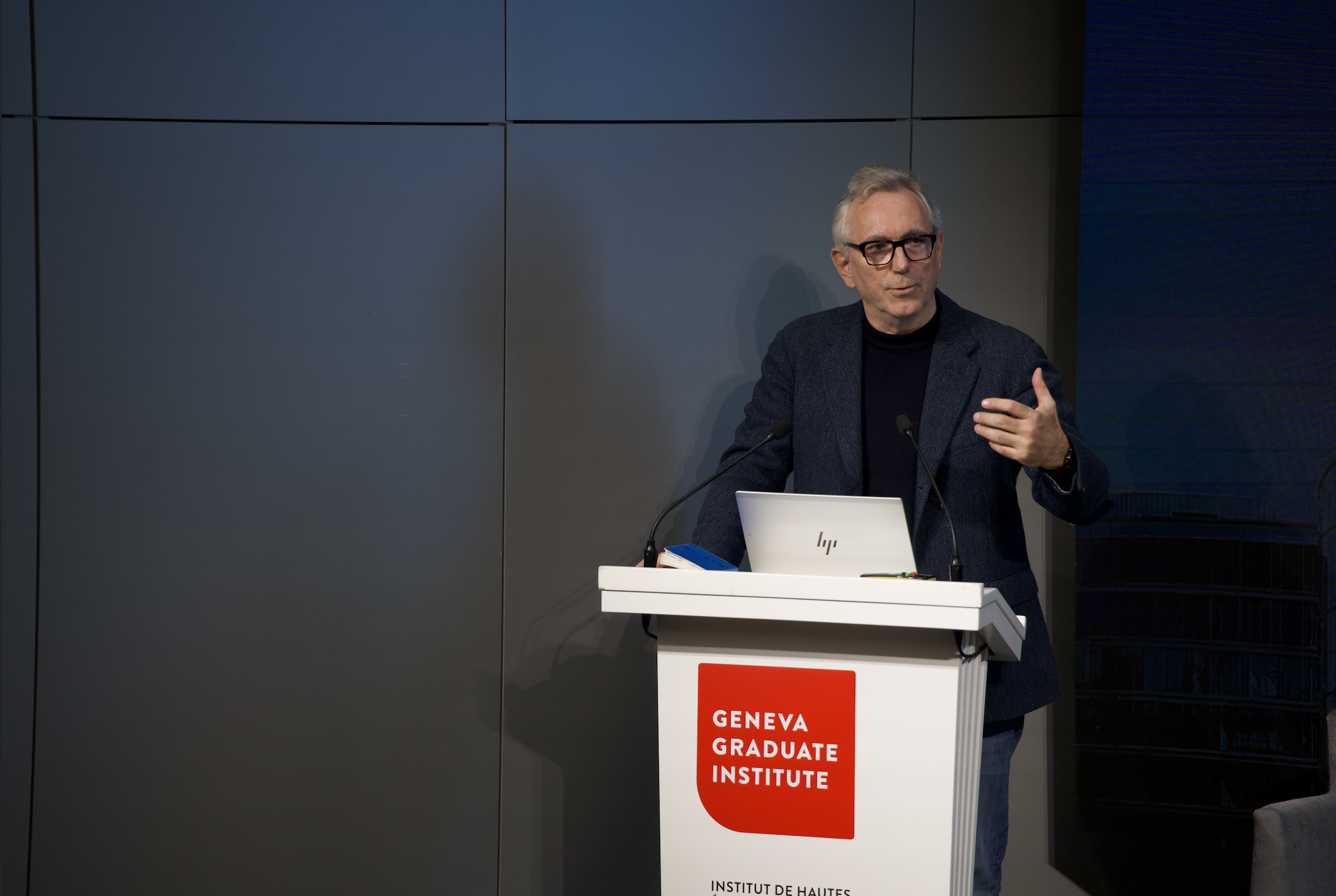
In her opening speech, Marie-Laure Salles, Director of the Geneva Graduate Institute, celebrated his interdisciplinary approaches and influences. Martin Rueff, Professor of French and Comparative Literature at the University of Geneva, gave a lecture on Carlo Ginzburg’s oeuvre, as what Marie-Laure Salles called “the French voice of Ginzburg”.
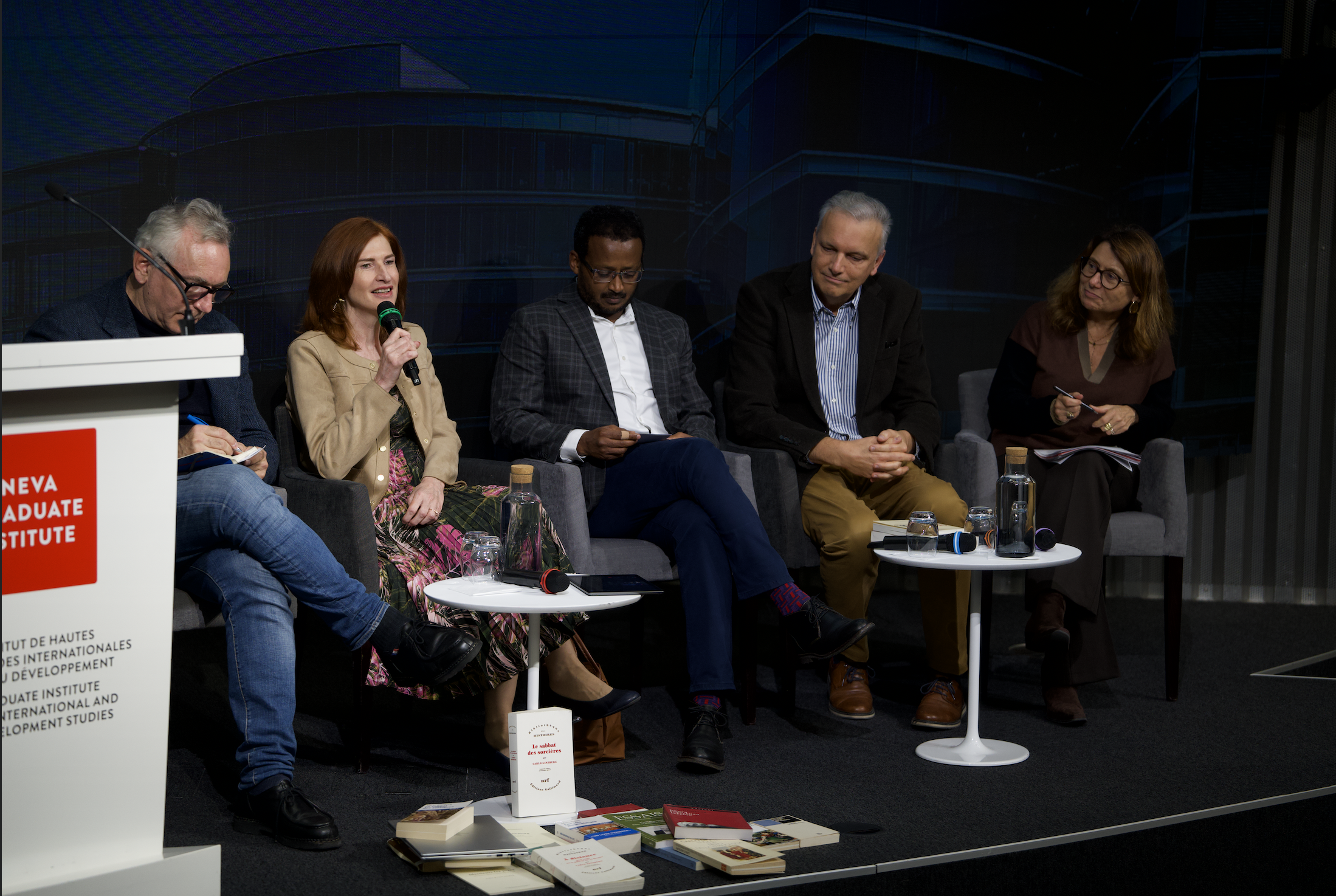
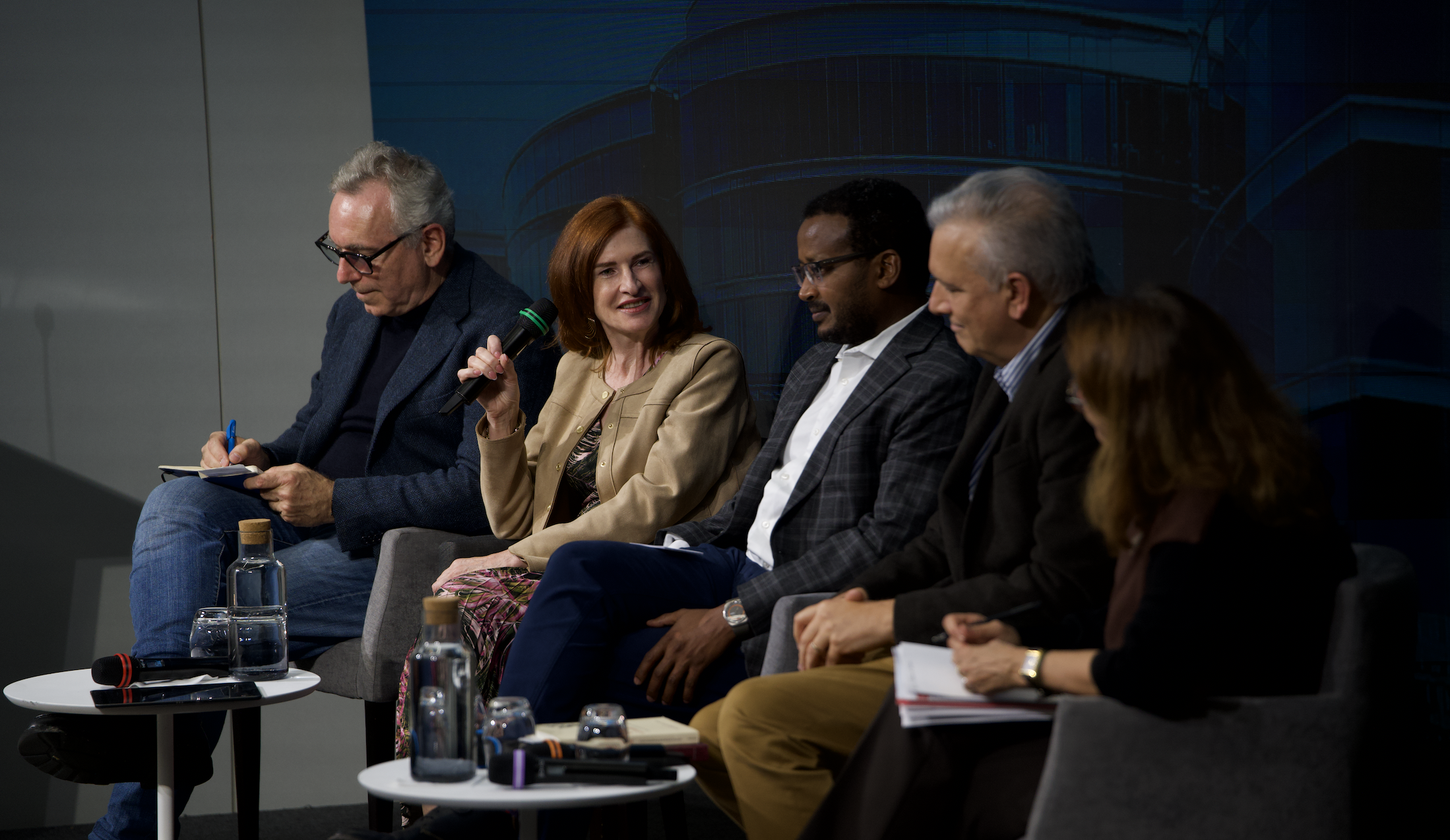
The lecture was followed by a roundtable discussion moderated by Marie-Laure Salles and featuring Martin Rueff and three of the Institute’s historians: Stella Ghervas, Pierre du Bois Chair Europe and the World and Professor of International History and Politics, Jan Kiely, Senior Lecturer of International History and Politics, and Awet Weldemichael, Professor of International History and Politics. Each shared how Carlo Ginzburg’s work has impacted them, influencing the way they approach their own practice of history.
The evening was originally organised on the occasion of the posthumous awarding of the 2026 Prix Nessim-Habif to Carlo Ginzburg at the University of Geneva’s Dies academicus on 9 October, where Marie-Laure Salles will present Carlo Ginzburg’s wife, Luisa Ciammitti-Ginzburg, with the award.
The Prix Nessim-Habif is awarded to a figure from the academic world who, through particularly original and in-depth research and scholarship, has made a significant contribution to a field within the exact sciences, medical sciences, or humanities.
In the bilingual spirit of the Institute, the event was held in English and in French.