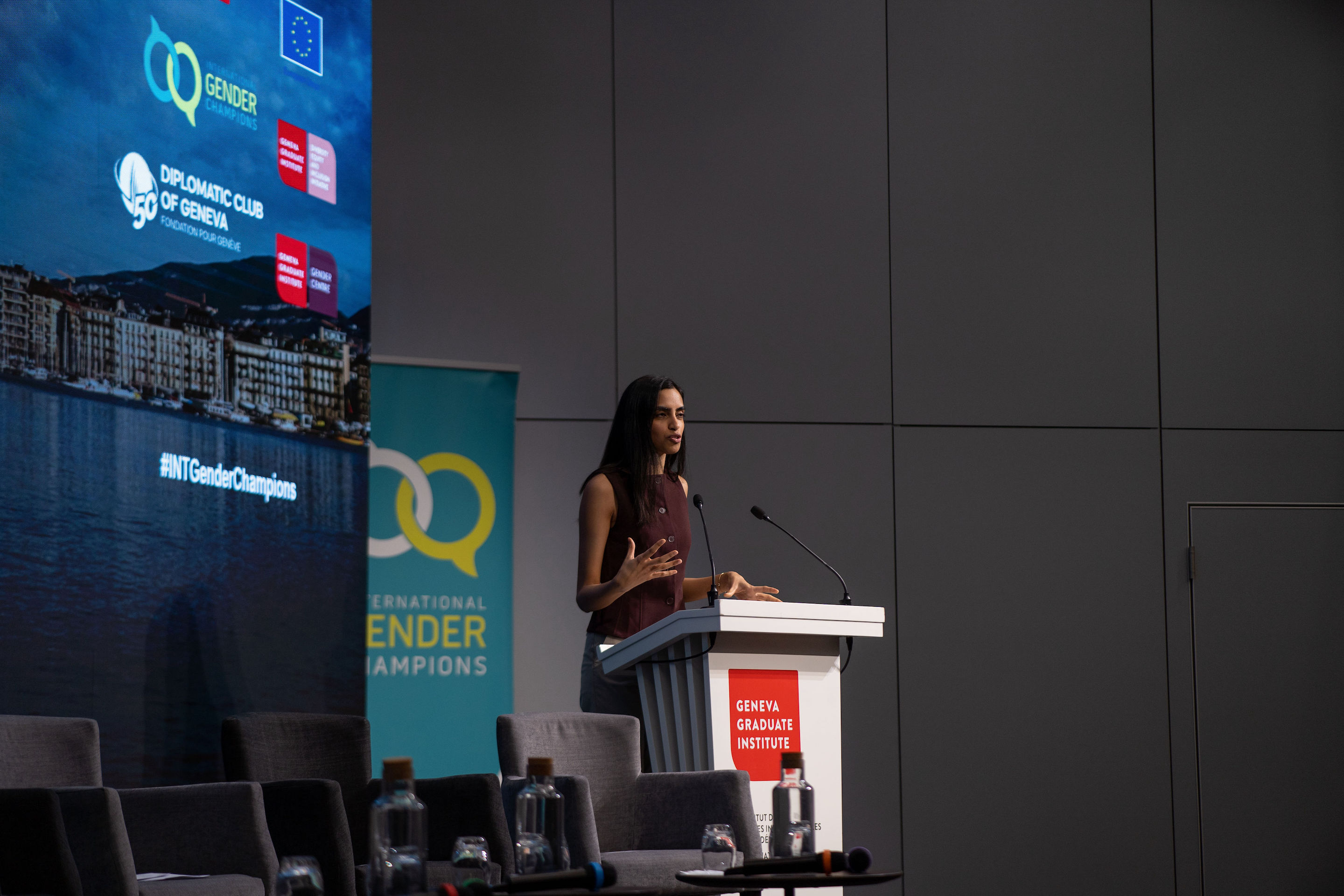



The 7th Geneva Gender Debate took place earlier this month on the heels of another war in the Middle East. In recent years, there has been a return to large-scale conventional inter-state warfare and cross-border aggression globally. Conflicts in Ukraine and Gaza continue to dominate international attention, and civil wars persist in Sudan, Ethiopia and Myanmar, among others. Meanwhile, risks linked to cyber warfare, climate change, and technological rivalries are reshaping the landscape of security. Research has shown that militaristic and state-centric approaches rarely lead to sustainable peace. They fail to address the structural drivers of violence and exclude women and marginalised others from the negotiating table. Instead, they put food systems, supply chains, energy resources, land, and life itself at risk.
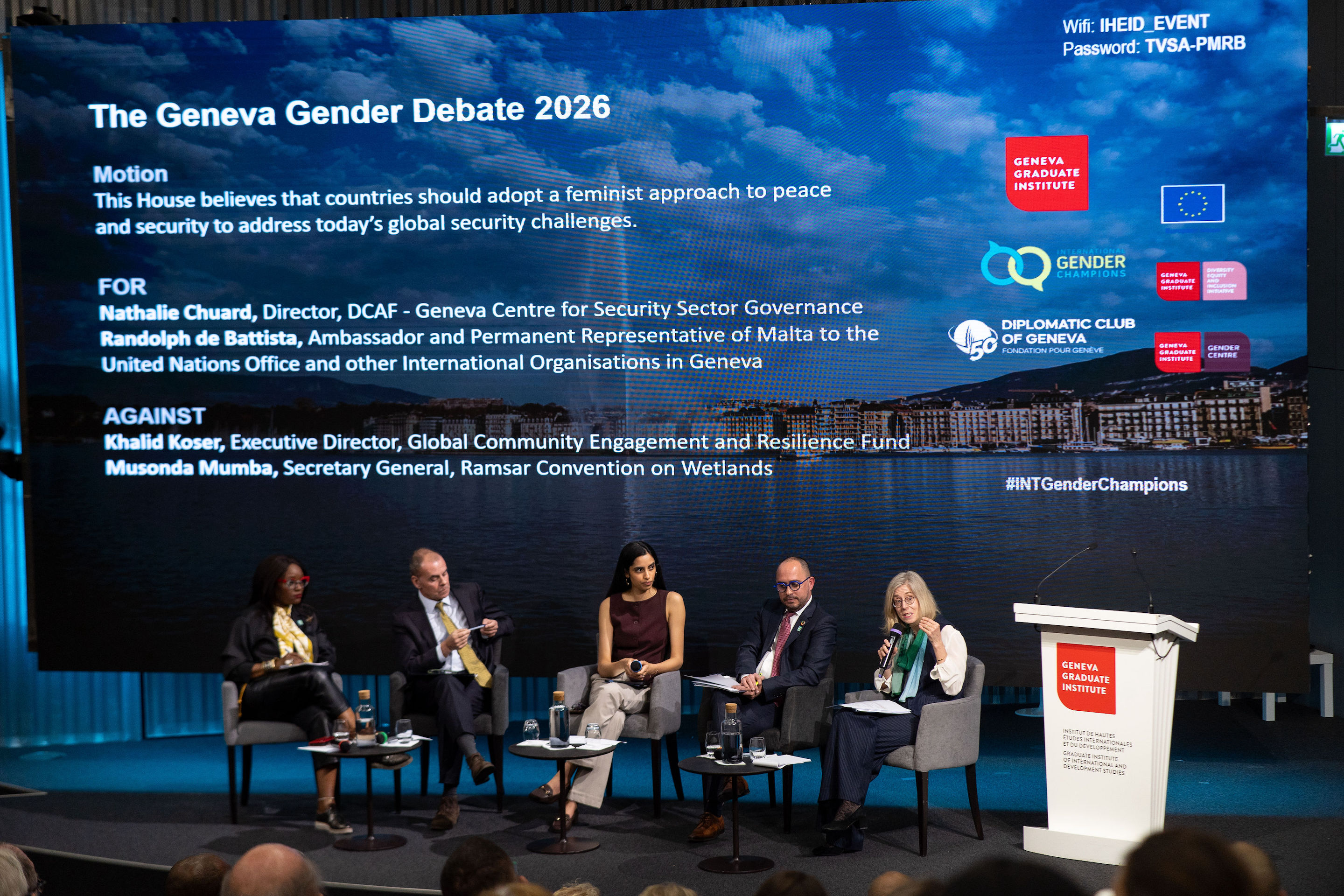
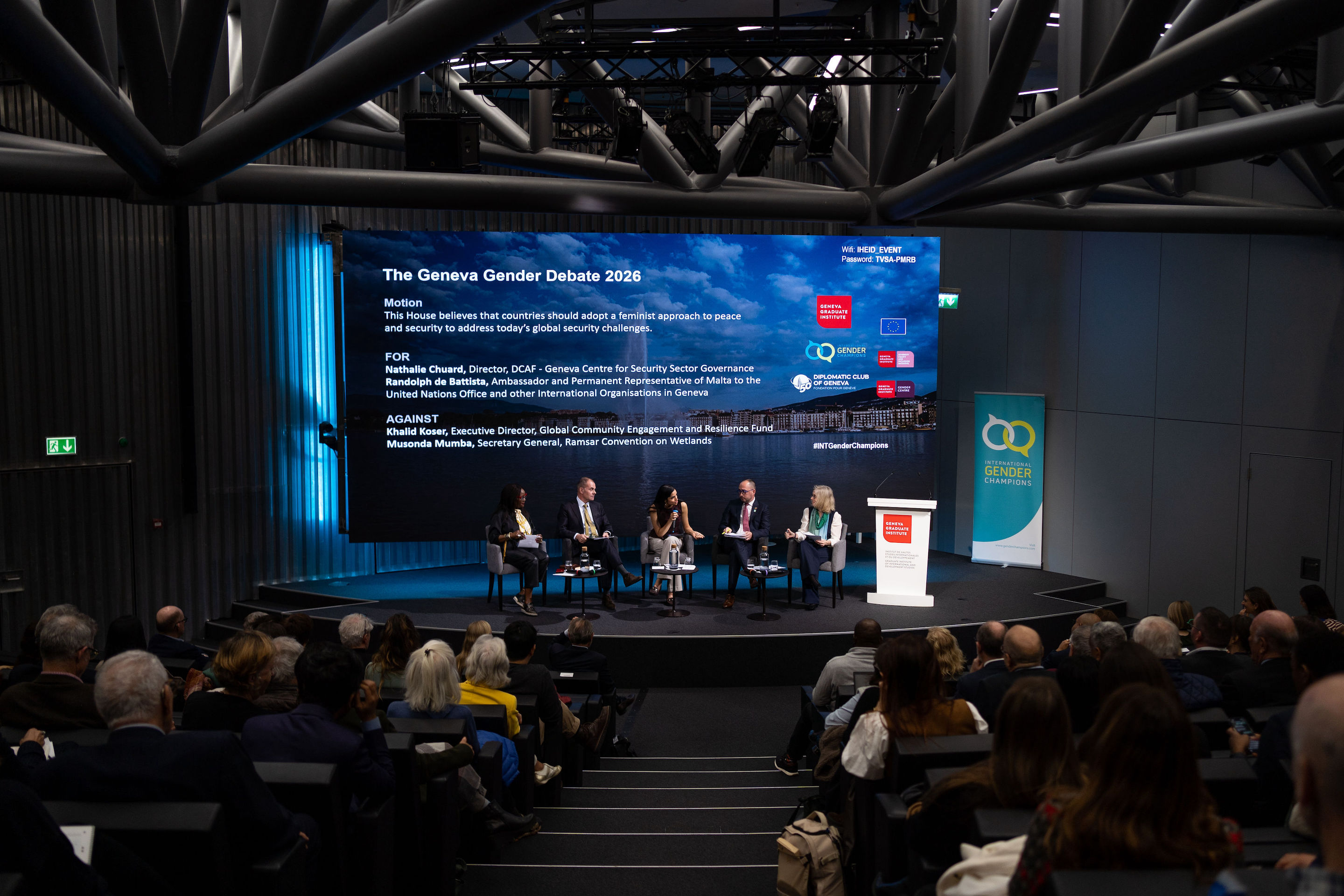
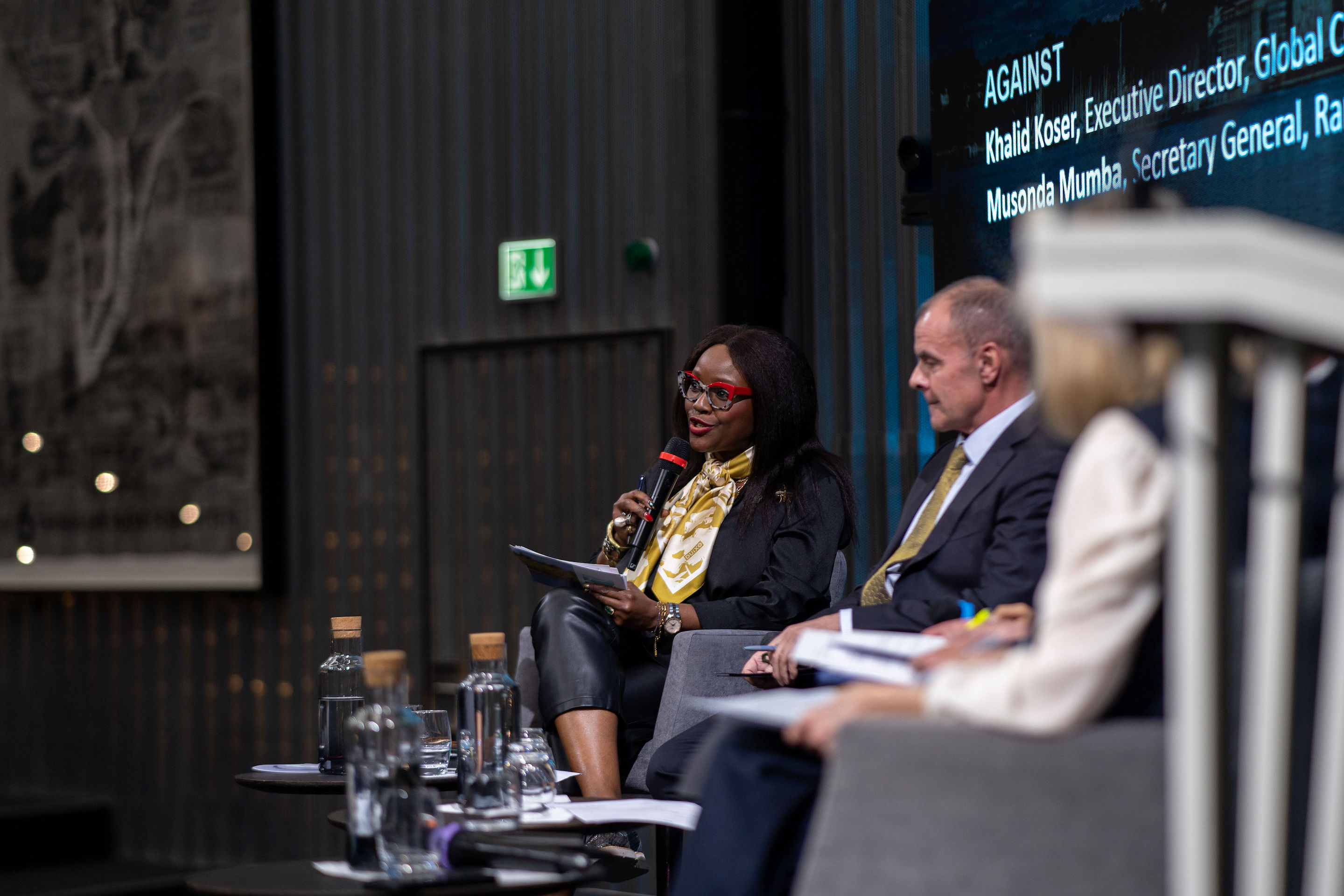
This year’s debate asked whether states should adopt a feminist approach to peace and security to address today’s global security challenges. In an Oxford-style debate, two teams, one for the motion (Ambassadors Nathalie Chuard, DCAF and Randolph de Battista, Permanent Representative of Malta to the UN) and one against (Drs Khalid Koser, GCERF and Musonda Mumba, Ramsar Convention on Wetlands), went head-to-head in rounds of fast-paced arguments to persuade the audience.
Feminist approaches require more than just adding women to existing security frameworks. They question the contours of security, expand its definition by attending to the gendered consequences of war and conflict, recognise the intersectional experiences of communities, and promote peace that goes beyond the mere absence of violence. A key contribution of these approaches is the notion of a “continuum of violence” that extends between peace and wartime, public and private spheres and international and domestic realms, linking violence against women to poverty, racialisation and depletion of planetary resources.
The debate put the unifying power of the “feminist label” to the test. Can feminism support the broadest possible coalition against missiles, militarisation, and nuclear ambitions?
When I was asked to moderate the debate, I went back to my own research with stateless Rohingya mothers living and caring for their families along the margins of states in South Asia. My research shows that women’s everyday survival, care practices, aspirations, and anxieties are tied to claims about security and peaceful futures. Security is most visible in mundane spaces of the Rohingya home, in hospital maternal wards, in anxieties over water infrastructure and electricity cuts, in dreams for a permanent home, in memories of lost land in Myanmar, and in daily negotiations with bureaucrats, police and NGO workers for welfare and rights. A feminist approach to security would mean prioritising listening to people most affected by state security policies. Just as there are plural feminisms, security is experienced and understood in multiple ways.
Historically, feminist movements gained momentum at moments of transformative global change: the fight for suffrage, decolonisation, environmental activism amidst developmentalism and peacebuilding efforts. While the aim of the debate was not to reach a consensus but to promote nuanced conversation, today’s security challenges make such conversations increasingly urgent and invite reflection on what security means.
Watch the 2026 Geneva Gender Debate
All photos by Patrick Anderseck.