news
Albert Hirschman Centre on Democracy
10 June 2026

Streetwise brings Indonesian and and Swiss artists into Geneva's Public Spaces

If you were asked to sum up what Streetwise was about, you might not have a clear answer. That is probably a good thing. After all, the programme touched on many issues from colonial history, environmental destruction, street art, traditional music, nickel mining, Indonesian cuisine, and at least one unidentified canine. 

Here's what we can say for sure: Streetwise was a series of public events running from 25 May to 5 June 2026 across Geneva, part of the SNSF-funded research project Imaging Invisibilities: Publicizing Historical and Environmental Injustice for Sociopolitical Change, led by Patricia Spyer and managed by Danishwara Nathaniel at the Albert Hirschman Centre on Democracy

The project builds on ethnographic research, archival study, and close collaboration with artists and activists across eastern Indonesia: from Makassar to the Maluku Islands (the original "spice islands," now facing far-reaching environmental destruction from nickel extraction) to the contested western half of Papua. Through a collaboration between Indonesian and Swiss artists, Streetwise brought these stories out of the archive and onto the streets, walls, and public spaces of Geneva.

But that's the summary. What it actually felt like depends on who you ask.
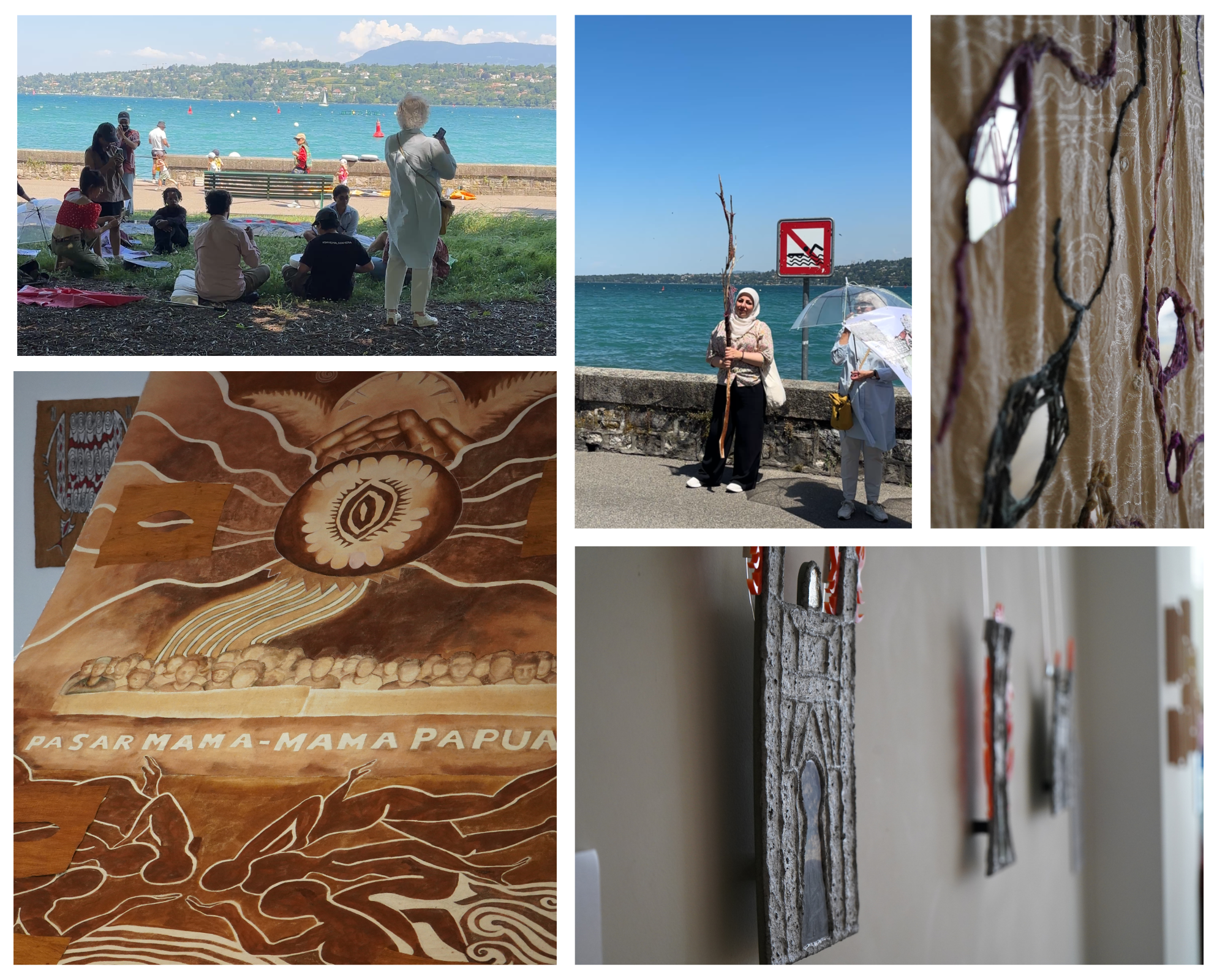
The Urban Garden Gallery parade (28 May) set off from Bains des Pâquis with artists Adlun Fiqri, Betty Adii, Fadrié, Wolve, and Zahra Hakim leading a colourful procession toward Parc Rigot, behind the Geneva Graduate Institute. A musician provided traditional instrumentation, and the artists proceeded with banners and signs all calling attention to the ongoing environmental crisis in the region. 

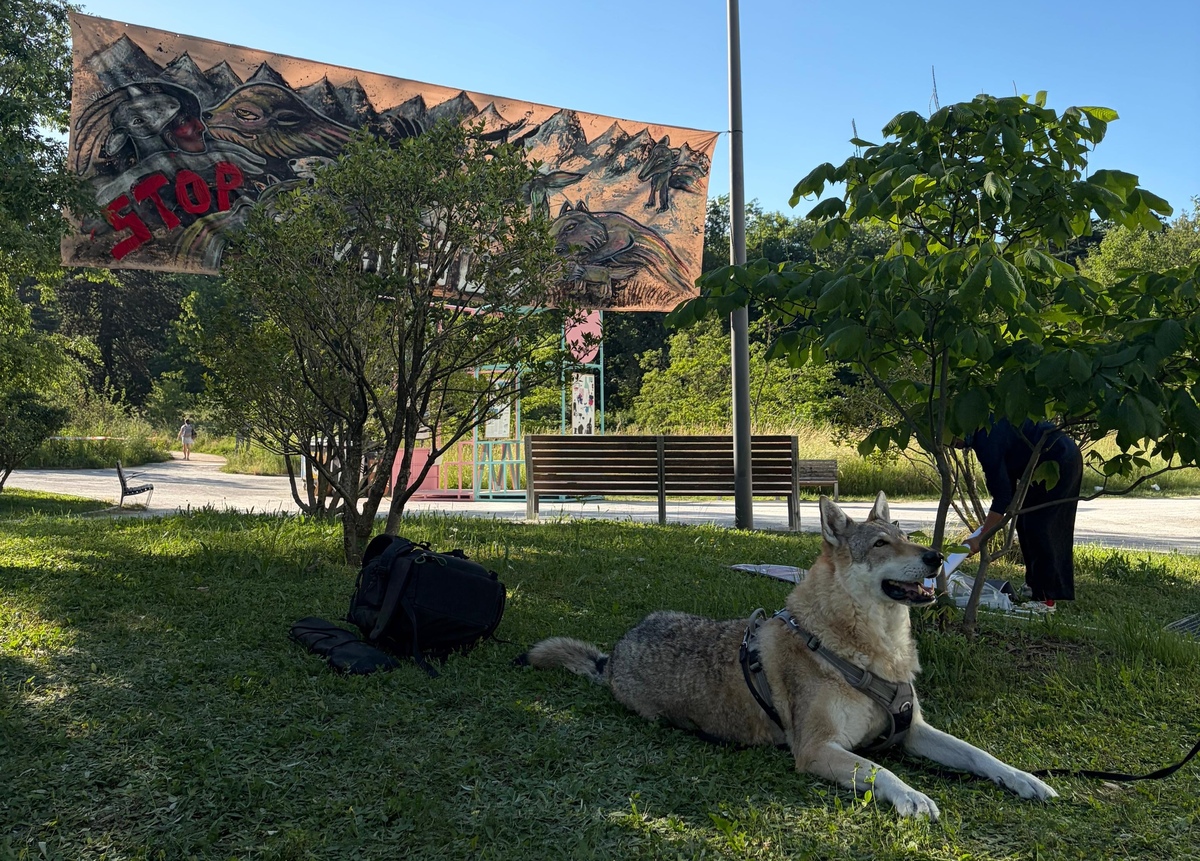
If you asked a passerby, they might tell you how much they learned about the issue that day. Of course, you might ask another and they might also tell you, with absolute certainty, that a wolf showed up. The unidentified canine stayed for a while. Seemed approving and left before drinks. Others might insist it was a dog. The debate is ongoing. 

https://www.instagram.com/p/DZUQv5RKDey/?hl=enIf you asked the man polishing a motorcycle inside Usine Kugler how to find the mural jamming (28–29 May, Usine Kugler, Rue de la Truite 4, La Jonction), he would say, "Oh, the Indonesian artists. It's right by the basketball court." Finding the site was its own kind of adventure. The complex is a maze of art studios and workshops: ceramics rooms, welding setups, and what appeared to be an experimental puppet workshop. And right by the basketball course, was the mural jamming in question. 
There, over the weekend, artists Betty Adii, Fadrié, M.S. Alwi, Saliha Hamlaoui, Wolve, and Zahra Hakim set up a participative mural on the walls of the old industrial complex, and passers-by collaborated on this collage of images, bringing Switzerland and Indonesia closer together and bringing awareness the themes of the project. 

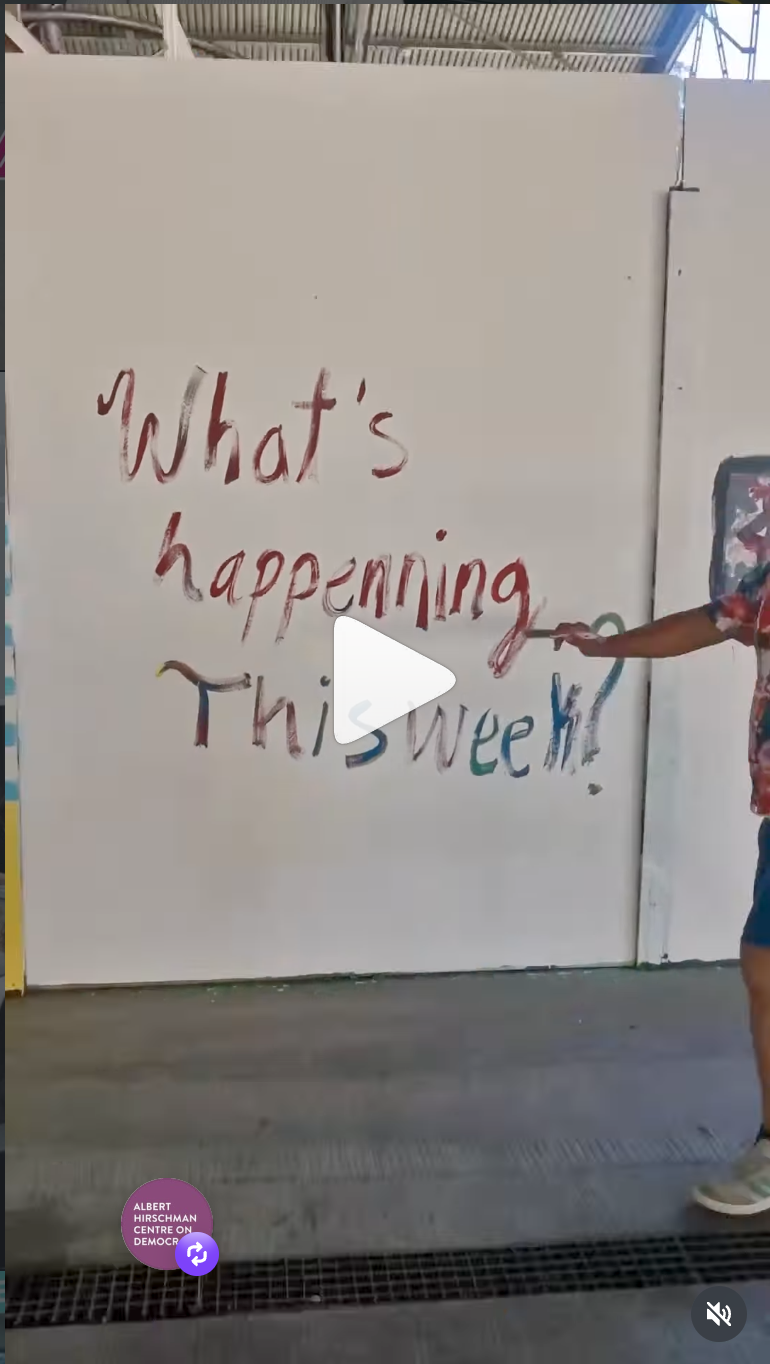
Of course, if you asked Moises Juarez, the GISA events coordinator, he'd tell you this event was all about mixing primary colours. Moises made his own mark on the mural while filming a segment for the instagram series What's Happening This Week series right there among the paint cans. 

If you asked Bryan Sommé, artistic coordinator of La MAP, he'd keep it simple: "Nous gardons surtout à l'esprit un excellent partenariat, tout au long de la préparation et pendant l'événement." An excellent partnership, from preparation through to the event itself. 

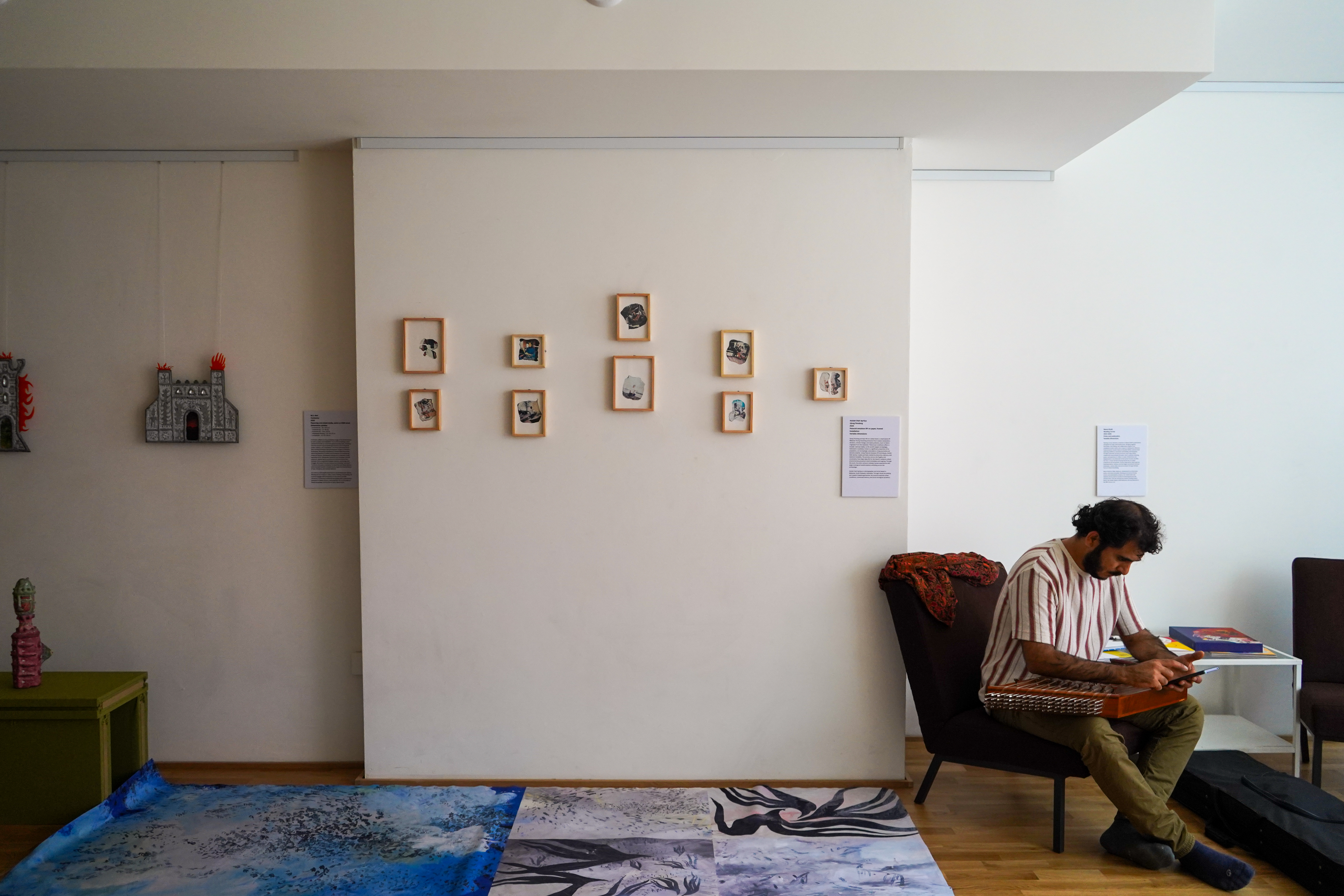
La MAP, the Maison des Arts Hip-Hop à Genève (Rue Docteur-Alfred-Vincent 16), hosted the Talking Walls exhibition and its vernissage on 2 June. The sound of Geneva based musician Bager's Santoor, and the work of eight artists were showcased: Adlun Fiqri, Aziziah Diah Aprilya, Betty Adii, Fadrié, Maeva Rubli, M.S. Alwi, Saliha Hamlaoui, and Zahra Hakim. 

Sculptures, paintings, drapery, pieces that didn't announce themselves so much as wait for you to arrive at them. Patricia Spyer and Amanda Ariawan led a curatorial walkthrough at 17:00, drawing threads between the artworks and the research behind them. An intimate opening, unhurried, the kind where you end up in a real conversation with an artist.

In one of those conversations, you might ask Ando (Indonesian filmmaker Sumando Oktaviano), and he might describe Streetwise as a visual collage, something you experience more than explain. He spent the week weaving through every event with a camera, capturing mural sessions, the parade, the quiet moments between the loud ones. His film Le Rythme (2023) screened at La MAP on 3 June alongside Aziziah Diah Aprilya's Mattude (2024), followed by a cineconcert. But if you caught him between shoots, he'd probably encourage you to put the programme down and try the Indonesian food first. The cuisine kept participants going all week. 

Ask enough people and a picture starts to form. A week where Geneva's streets, parks, and post-industrial corners became stages for stories that don't usually get told here. Where Indonesian and Swiss artists worked side by side, and the public wandered in, sometimes on purpose, sometimes by accident, sometimes following the sound of music or the smell of food or the sight of a very large dog.

That was the point of Streetwise. Not to hand people a summary, but to put something in their path and let them find their own way in. By the basketball court, by the lake, in a quiet room off a loud street. All you had to do was ask.

Streetwise was produced in collaboration with La MAP and supported by the Swiss National Science Foundation, as part of the Albert Hirschman Centre on Democracy at the Geneva Graduate Institute.