

For me, the real question is not simply whether humanitarianism survives in the abstract. It is about whether it can resist becoming only a system managing the consequences of crises and whether protection can remain meaningful in a world increasingly comfortable with selective empathy and layered inequality.
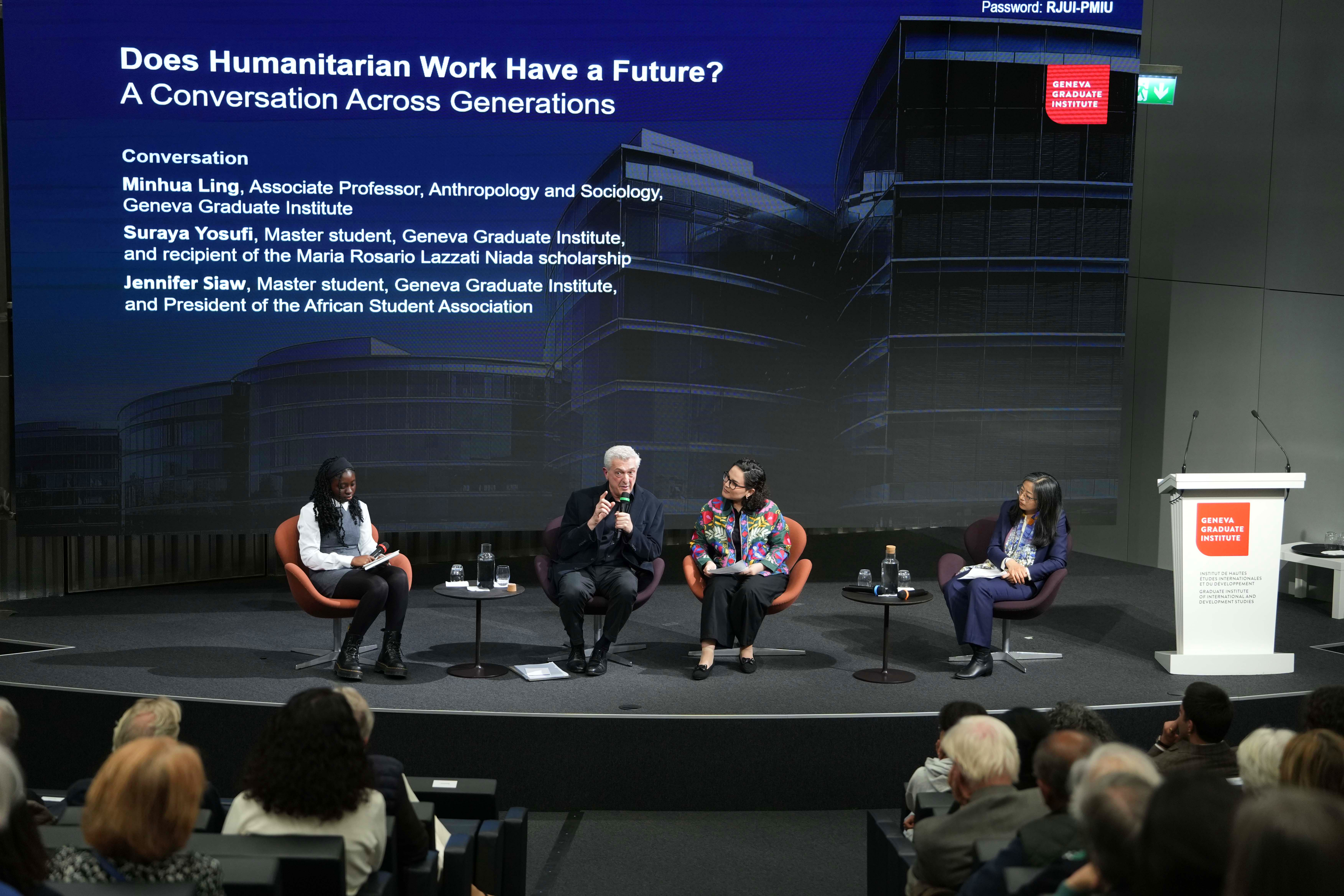
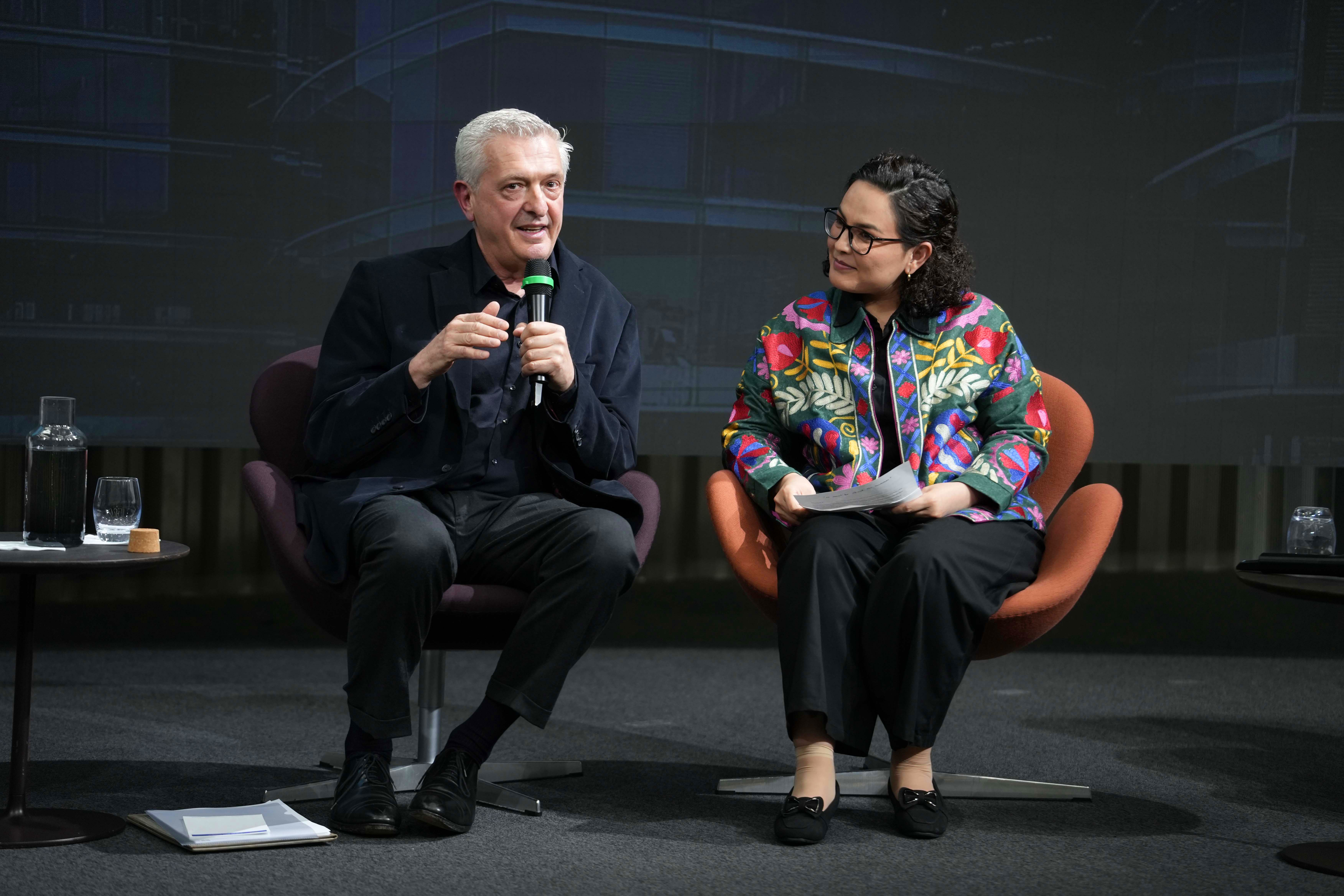
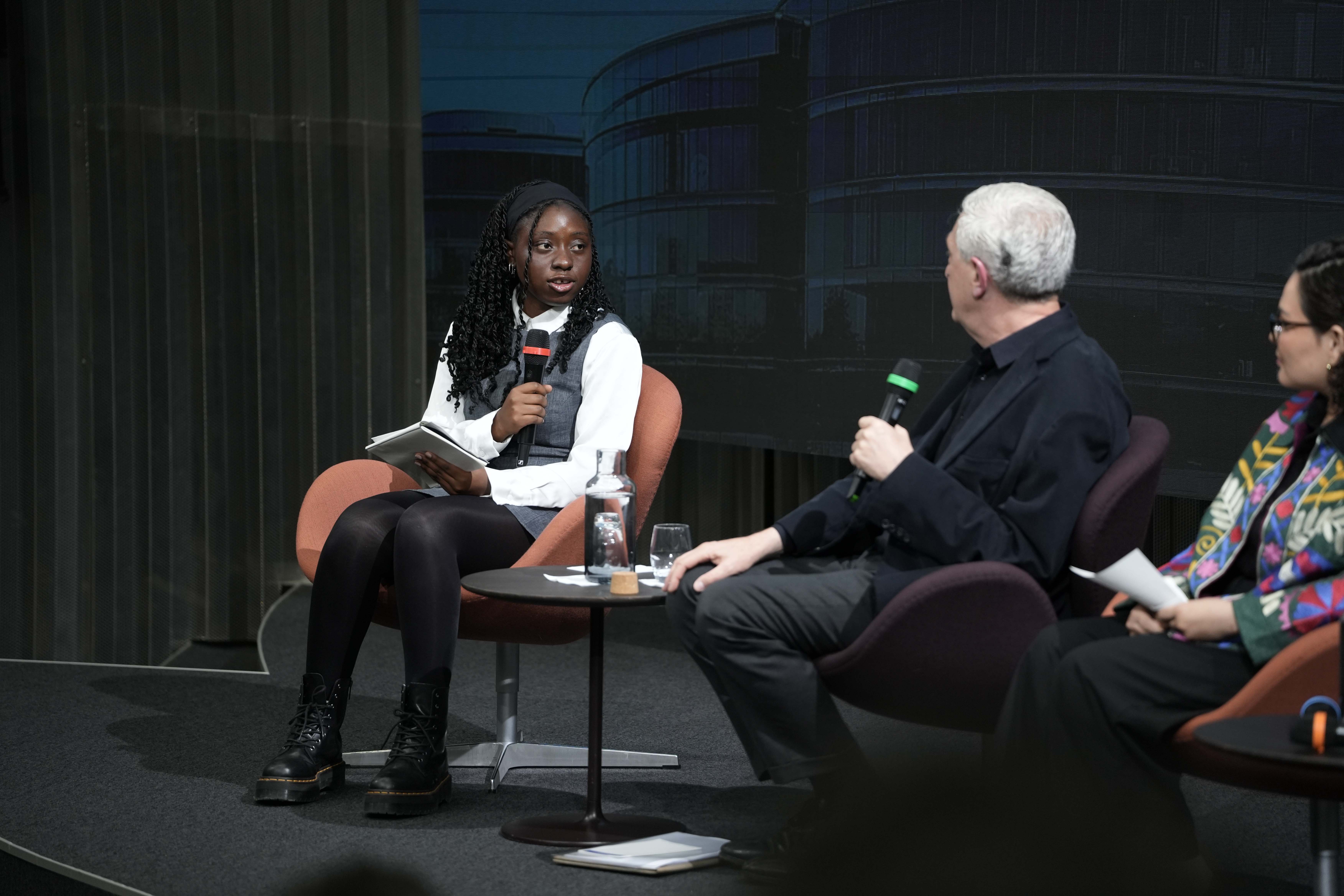
As part of the Director’s Global Leadership Series at the Geneva Graduate Institute on April 14, I, along with Jennifer Siaw, participated in an intergenerational dialogue and open discussion with former UN High Commissioner for Refugees Filippo Grandi on the timely topic of “Does Humanitarian Work Have a Future?”
When the Institute reached out to me to participate in the talk, I had doubts and some hesitation. As both a student and a refugee from Afghanistan, where multiple rounds of displacement have shaped my life, I have often found not only the humanitarian language and imagery surrounding Afghanistan and the Afghan crisis to be partial and selective in global media narratives, but also humanitarian practices to be often shaped by external priorities rather than local realities. At the same time, that curiosity led me to broader questions about the future of humanitarianism itself, the role of multilateralism, and what humanitarian work can mean under conditions of political fragmentation and growing division. The hesitation and curiosity thus made the invitation difficult to refuse, while offering an opportunity to engage and bring forward some of the questions that have stayed with me for years, along with others that required more grounding through dialogue and experience.
As Grandi began the event by saying, “the reality is that I have no answers to that question,” referring to whether humanitarian work has a future, I found it to be unexpectedly grounding, as it made space for a conversation about humanitarianism not only as a moral slogan but a field shaped by financial constraints, institutional dilemmas, political pressures, and very human consequences. Three themes emerged clearly throughout the discussion:
First, humanitarianism is inseparable from politics. Grandi, drawing on his field experience, from Syria to Gaza to Myanmar, did not refuse but rather acknowledged the contradiction between what is required of humanitarian actors to remain neutral while working and navigating their way through donor pressures, access negotiations, border regimes, and wars whose terms they do not control. It stood out to me as it cut through the binary myth that humanitarianism is only affected when outside politics intrudes; rather, politics is very much inside humanitarian practice.
Second, humanitarian aid without rebuilding reproduces fragility. One of the most important arguments of the evening was that the world is often better at responding to emergencies rather than addressing the underlying fragility that makes crises recur. For me, this was one of my main questions, bringing the broader analysis down to the Afghan case. I asked what repeated cycles of Afghan displacement and pressured return reveal about the limits of the humanitarian regime, and “what has been fundamentally misread in the Afghan case?” What I took from the exchange was that the Afghan case was “an incomplete reading,” acknowledging that humanitarian actors neglected some of the angles of Afghan displacement, and that the post-2001 period moved quickly while the reconstruction phase was “really dominated by foreign donors, by foreign-grown Afghan technocrats, and by the old ruling class of the warlords.” In other words, relief is necessary, but relief alone cannot rebuild a society.
Third, the future of humanitarianism is a struggle over meaning. In my second intervention, I returned to the question of shrinking, politically conditioned funding, and what must remain central when humanitarian institutions are forced to prioritise. Grandi replied first that scarcity is not new. “The humanitarian work is always about prioritising,” pushing the discussion toward structure and a “bridge between humanitarian and development,” more serious investment in local organisations, and less dependence on a short-term emergency logic alone. Grandi insisted that “humanitarian work is undoubtedly also a mission” and that “If humanitarian work has a future, it must remain about human beings,” against the narrowing of the field into cost-efficiency, crisis management, and institutional self-preservation.
I left the room with less certainty but more clarity than when I entered. For me, the real question is not simply whether humanitarianism survives in the abstract. It is about whether it can resist becoming only a system managing the consequences of crises and whether protection can remain meaningful in a world increasingly comfortable with selective empathy and layered inequality.