news
Faculty & Experts
06 July 2026

Summer Reads: Six Recent Faculty Publications

The first half of 2026 saw the publication of a selection of books by Geneva Graduate Institute faculty, covering a wide range of topics from human rights to women in science to transimperial history and more.

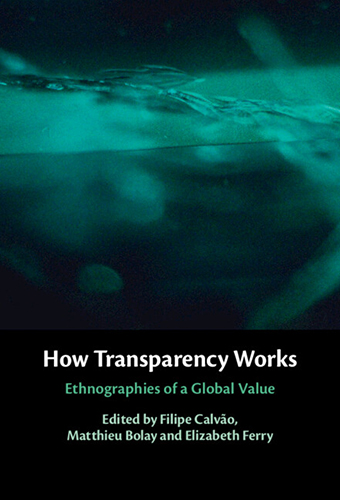
How Transparency Works: Ethnographies of a Global Value

Edited by Filipe Calvão, Matthieu Bolay, and Elizabeth Ferry

Transparency has become a ubiquitous presence in seemingly every sphere of social, economic, and political life. Yet, for all the claims that transparency works, little attention has been paid to how it works — even when it fails to achieve its goals.

Instead of assuming that transparency is itself transparent, this book questions the technological practices, material qualities, and institutional standards producing transparency in extractive, commodity trading, and agricultural sites. Furthermore, it asks: how is transparency certified and standardised? How is it regimented by “ethical” and “responsible” businesses, or valued by traders and investors, from auction rooms to sustainability reports?

The contributions bring nuanced answers to these questions, approaching transparency through four key organising concepts, namely disclosure, immediacy, trust, and truth. These are concepts that anchor the making of transparency across the lifespan of global commodities.

Cambridge University Press. 2026. 298 p. Available in open access.
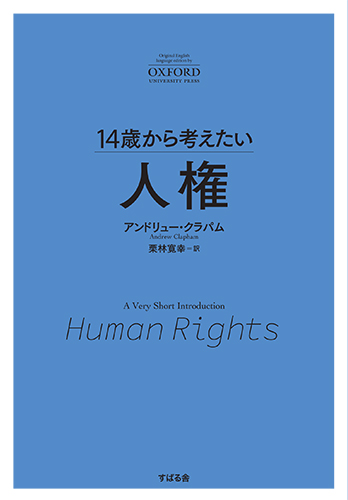
Human Rights: A Very Short Introduction

Andrew Clapham

The second edition of Human Rights: A Very Short Introduction is now
available in Japanese, thanks to a translation by Hiroyuki Kuribayashi. It covers the history and philosophy of human rights and details developments concerning rights related to torture, arbitrary killing and detention, food, education, health and housing, freedom of expression and discrimination. Issues related to the death penalty and the rights of persons with disabilities are discussed in the contemporary context.

The Japanese version features a preface by Ambassador Sumi from the Japanese Ministry of Foreign Affairs and an afterword by the author and translator situating the topic in contemporary Japan. Yotaro Nishi, an Institute student studying international law, assisted with the translation and the accompanying website.

The book has also been translated into Chinese, Turkish, Swedish, German, Korean, Thai, Arabic, Spanish, and Portuguese.

Subaru. 2026. 304 p.

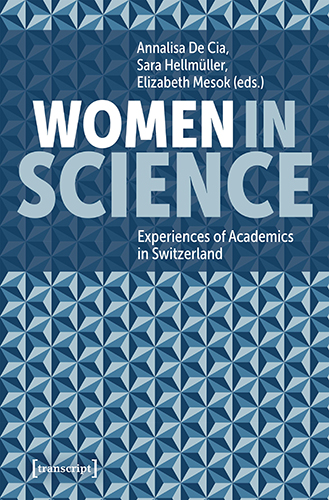
Women in Science: Experiences of Academics in Switzerland

Edited by Sara Hellmüller, Annalisa De Cia, and Elizabeth Mesok Khan

Women in science face particular challenges, such as structural inequalities, highly competitive work environments, and at times toxic cultures.

This collection conveys the experiences of women academics in Switzerland, featuring insights from twelve scholars across various universities and disciplines. Each contributor shares their unique journey in pursuit of a professorship, illustrating the rich diversity of the Swiss scientific community.

This volume offers hope for those struggling with finding their place in science, emphasising the joys and privileges that can be found in an academic career and the passion and perseverance of those pursuing it.

Transcript. 2025. 126 p. Available in open access.

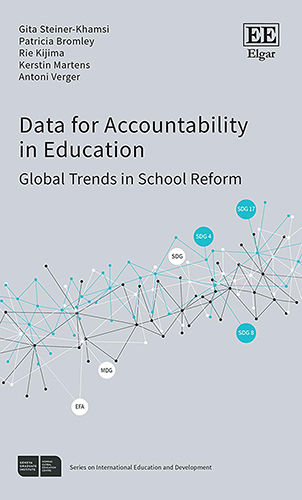
Data for Accountability in Education: Global Trends in School Reform

Gita Steiner-Khamsi, Patricia Bromley, Rie Kijima, Kerstin Martens, and Antoni Verger

This timely book investigates the emergence of data-for-accountability as a governing tool in education. Five leading scholars explore its evolution over time and across regions, highlighting how datafication in education benefits some and disadvantages others.

The authors trace the origins of using data for accountability in education back to the 1990s, demonstrating how various actors have adapted and tailored this trend, thus diversifying its use as a governance tool. They examine the rise of student testing, performance-based evaluation and governance by numbers to reveal the political, economic and pedagogical uses and abuses of data. Drawing on a variety of methods, theories and disciplines, including a combination of macro-, meso-, and microlevel analyses, the authors illustrate how these instruments have taken root globally, why they persist and how their meanings and effects vary across policy contexts.

NORRAG Series on International Education and Development. Edward Elgar Publishing. 2026. 192 p. Available in open access.

Como pesquisar elites no Brasil (How to Research Elites in Brazil)

Edited by Graziella Moraes Silva, Débora Thomé, and Matias López

With the worsening inequality around the world, interest in elites has grown both within and outside academia. Brazil is no exception; this discussion is already part of our intellectual and scientific tradition. Many of the historical ills experienced in the country have been attributed to elites: coronelismo (local political bossism), patrimonialism, authoritarianism, among others. However, little has been produced by the social science community on how to access members of the elite for research purposes.

This book (in Portuguese) fills that gap. It offers an overview of the methods that can be applied to better understand the world of power and the particularities of implementing a study with elites in Brazil.

FGV Editora. 2025. 188 p. Free ebook available.

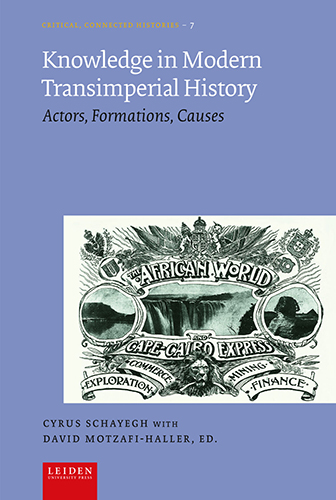
Knowledge in Modern Transimperial History: Actors, Formations, Causes

Edited by Cyrus Schayegh with David Motzafi-Haller

This volume intervenes in the growing field of transimperial history, which explores interactions across empires — European and non-European — between the mid-1800s and mid-1900s, a period of heightened imperial entanglement. It focuses on how actors from one empire came to know, interpret, and position themselves in relation to actors from other empires, emphasising the role of socio-professional profiles, informal networks, and formal institutions.

The volume is structured around three themes: individual actors and professional groups; formations of transimperial knowledge through diverse textual objects; and the exploration of causes. Altogether, it sheds light on concrete, situated ways in which transimperial knowledge was produced, mediated, and made meaningful in a competitive imperial world.

Leiden University Press. 2025. 269 p. Available in open access.