
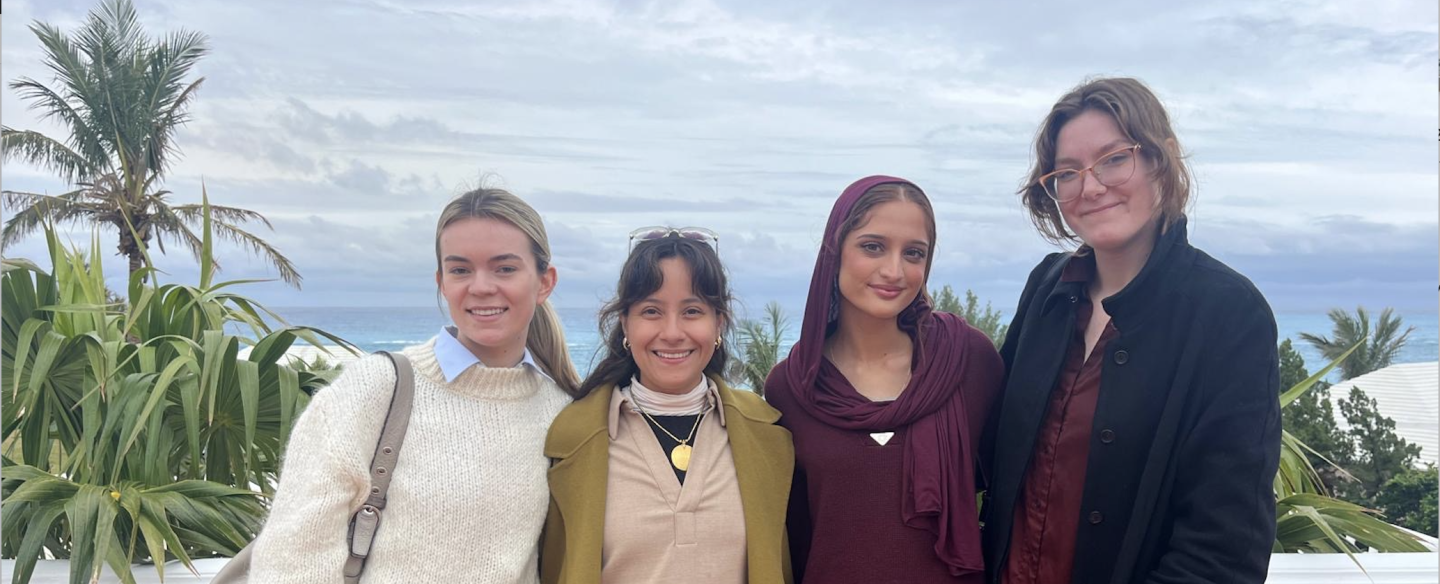
Tania Tam shares with us thoughts on supervising the Applied Research Project over the years, collaborating with students and her approach to this project in particular:
I’ve supervised Applied Research Projects for two years now, and one of the things I love most about them is watching students move from “research question on paper” to real conversations with real people. This project was especially interesting because it asked students to think not only about human rights in the abstract, but about how they show up in everyday life: in schools, housing, employment, identity, belonging and the possibility of leaving – or staying on – a small island.
What I appreciated about this team was their curiosity and openness. They were working in a context that was new to them, and they had to listen carefully, ask questions, and keep adapting as they learned more. That, to me, is the heart of good applied research: being rigorous, but also humble.
It was also a fun project to supervise because Bermuda is such a rich and complex case. There are big questions here – about history, inequality, community, education, and youth voice – but also very practical ones: What should human rights education actually include? And how do you create space for young people to talk about difficult issues in a way that feels safe and real?
For me, the value of this ARP is that it gives HuRen a starting point: not a finished answer, but a grounded, youth-informed foundation for the next stage of work. And that is exactly what these projects are meant to do.