news
ARP SERIES
10 June 2026

TANIA TAM AND MINT STUDENTS DISCUSS ARP FIELDWORK

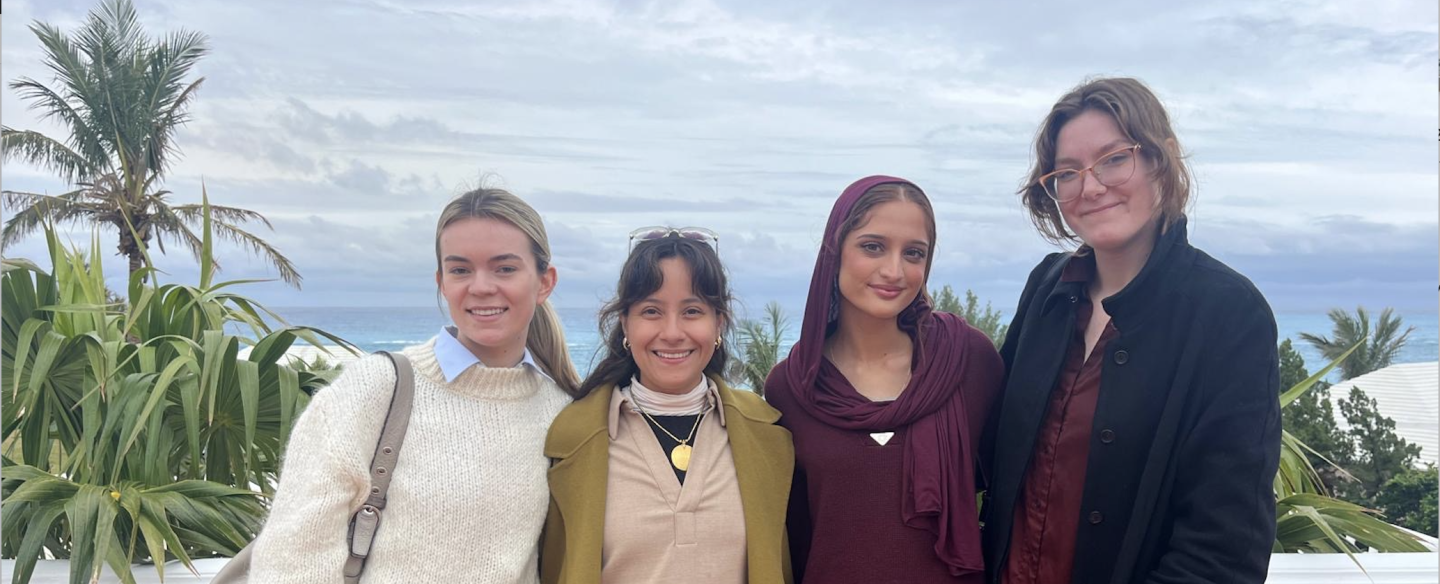
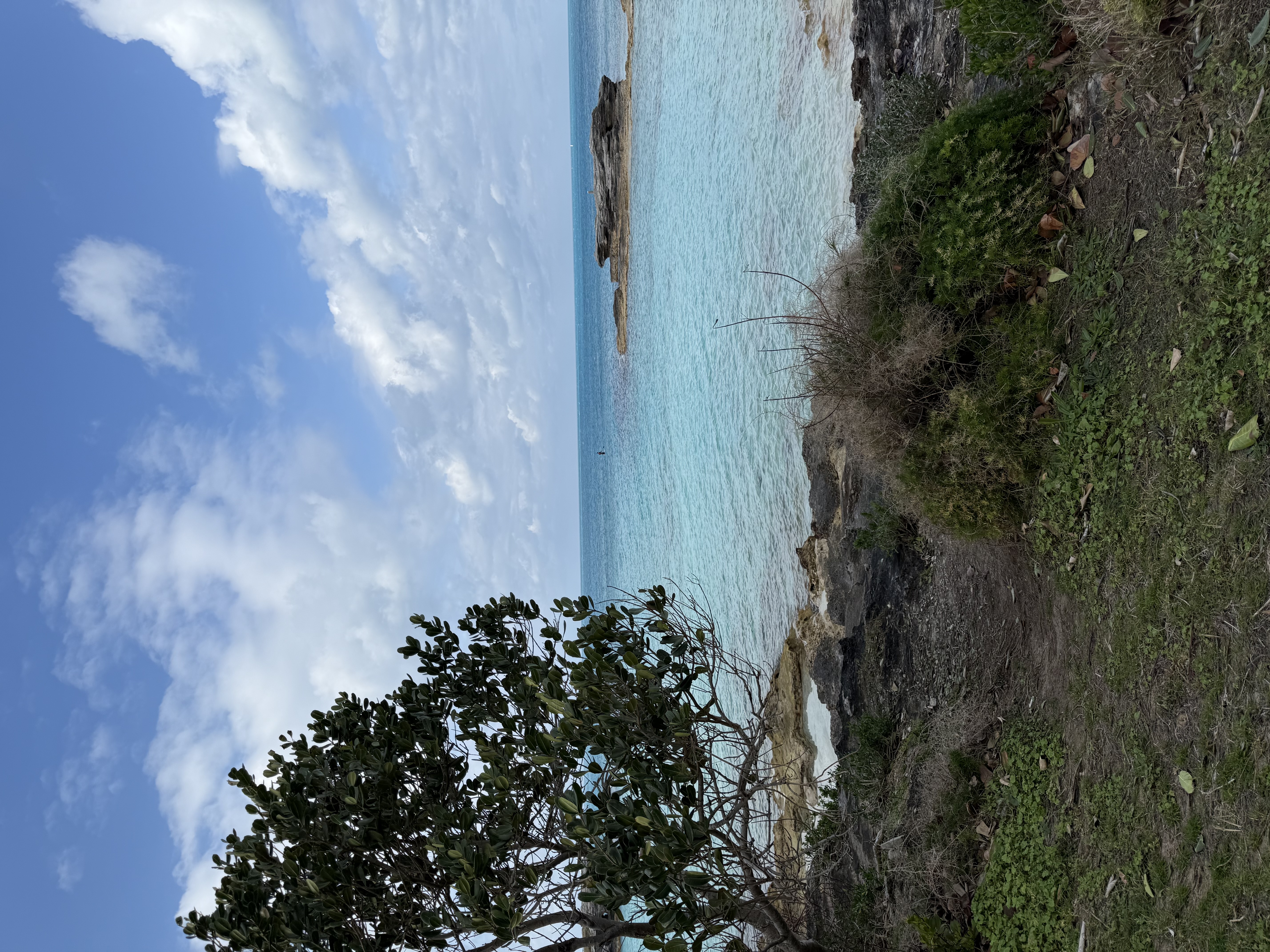
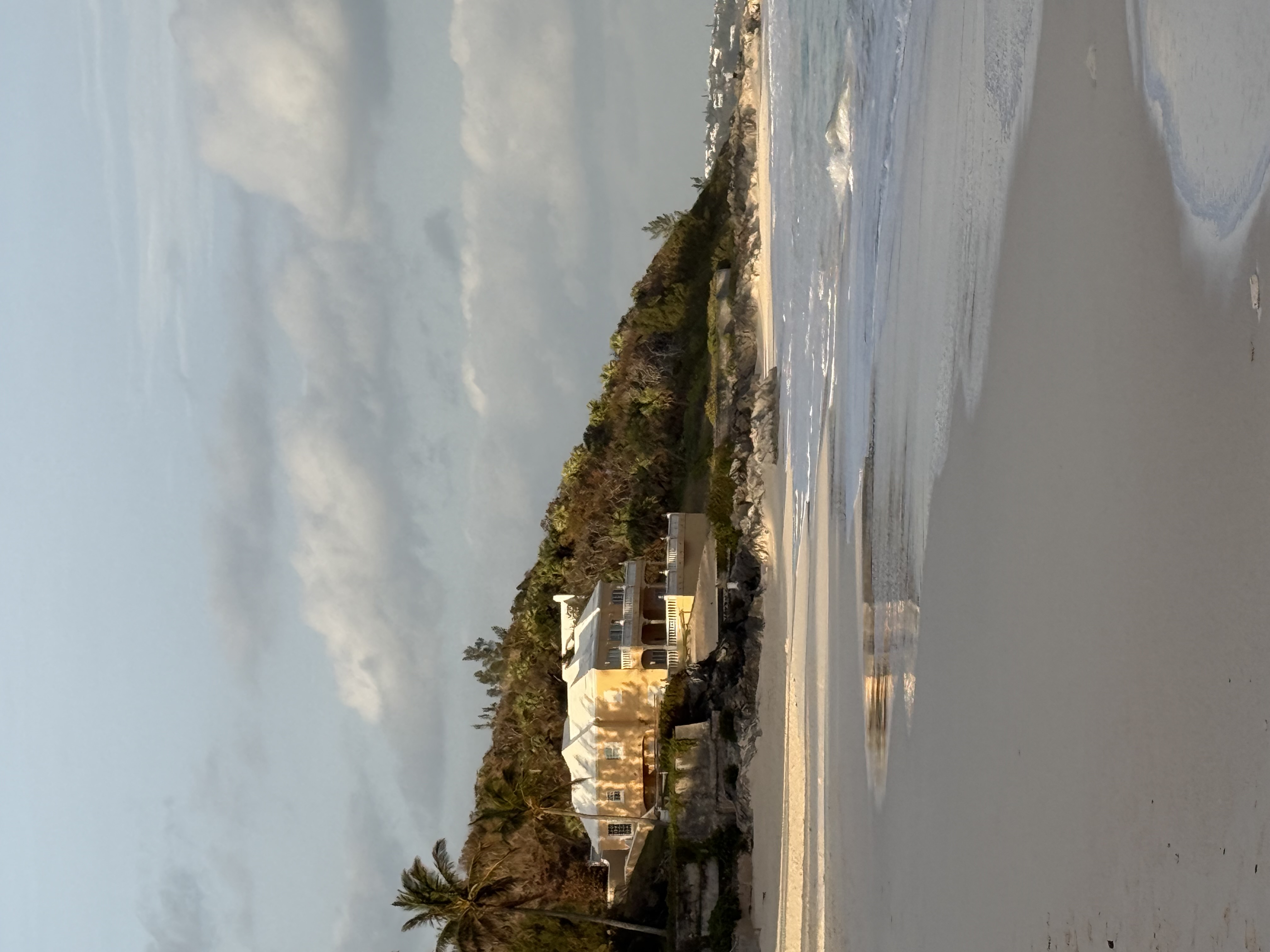
As part of their MINT Applied Research Project (ARP) supervised by Dr Tania Tam, students Ana Gomez, Jessica Baker and Isabelle Goodrich spent one week in Bermuda conducting fieldwork on human rights education for Bermudian youth. In partnership with the Human Rights Education Network (HuRen), they set out to better understand what young people in Bermuda already know about human rights, what issues matter most to them and what kind of human rights education would feel relevant and useful in their lives.

Tania Tam shares with us her insights on supervising the Interdisciplinary Master's (MINT) Applied Research Projects (ARPs) over the years, and on this project in particular: 

I’ve supervised ARPs for two years now, and one of the things I love most about them is watching students move from “research question on paper” to real conversations with people. This project was especially interesting because it asked students to think not only about human rights in the abstract, but about how they show up in everyday life: in schools, housing, employment, identity, belonging and the possibility of leaving – or staying on – a small island.

What I appreciated about this team was their curiosity and openness. They were working in a context that was new to them, and they had to listen carefully, ask questions, and keep adapting as they learned more. That, to me, is the heart of good applied research: being rigorous, but also humble.

It was also a fun project to supervise because Bermuda is such a rich and complex case. There are big questions here – about history, inequality, community, education, and youth voice – but also very practical ones: what should human rights education actually include? And how do you create space for young people to talk about difficult issues in a way that feels safe and real?

For me, the value of this ARP is that it gives the partner, HuRen, a starting point: not a finished answer, but a grounded, youth-informed foundation for the next stage of work. And that is exactly what these projects are meant to do.
 Ana Gomez, Jessica Baker and Isabelle Goodrich discuss the experience: 

Your vision was to address human rights education in the youth, do you find that your project was successful in assessing this?

Our project was very impactful and I believe we did more than just assessing human rights education. We connected with the community and were inspired by their eagerness to help us in our research process. Not only were we successful in assessing human rights education, we explored everything there was to learn about Bermuda and its rich history and very friendly people. I think the three of us are really proud of the work we have collaborated on and will always remember our interviews and focus groups which led to such interesting findings.

How was your experience preparing for the field work? How did you go about the logistics and what was the support you received? 

I think overall we felt very supported by both Claudia and Tania when preparing for the fieldwork, and our partner organization was so welcoming and kind. Logistically this project unfolded smoothly and we felt comfortable within our research communities both in Geneva and Bermuda. Also, we loved that our entire team was female led! 

What were some key take-aways or conclusions you drew from this experience and how does it support your overall learning experience in the MINT programme?

This experience has honestly reignited my love for research. I have some research experience prior to the MINT program and this project reminded me how much I love research and working with organizations like our partner organisation, who work tirelessly everyday to promote human rights education. My ARP experience has been by far my greatest learning and growing experience in the MINT program thus far, contributing to real world experience and growth within the research and NGO sector. 

The ARP encourages team work. How did you approach working collectively before, during and after the trip to the Bermuda?

The three of us were all equally engaged and excited about the project and this desire to do well kept us going. We honestly work pretty well together and have grown throughout the past year as a unit, in understanding each other better and how we work individually. 

Could you share with us a fun or important moment that occurred during this experience?

In Bermuda we worked with local Bermudian students throughout the research project and ended up spending a lot of time with them. These students significantly aided in our research but we also became really good friends at the end of the week and genuinely liked spending time together. I think these connections are what make the research process so special and so memorable and something we could have never predicted.