

For the 2026 edition of the Geneva Challenge, teams of graduate students from academic programmes all over the world presented innovative and pragmatic solutions to address the challenges of migration. Out of 123 project entries submitted by 430 students, 15 teams were chosen as semi-finalists. A jury of high-level policymakers then selected five finalist teams, one per continent, who defended their projects at the Geneva Graduate Institute on 10 November 2026.
This year, the team from Asia, consisting of three students from the Indian School of Business, was awarded the first prize. Their project, “KADAM: Reimagining Hospitals as Community Workforce Hubs” aims to address India’s shortage of healthcare workers and the exclusion of millions of young people from meaningful employment opportunities by reimagining hospitals as workforce development hubs. KADAM aims to recruit, train, certify, and deploy local youth as KADAM Health Associates (KHAs), creating a new cadre of digitally enabled frontline healthcare workers.
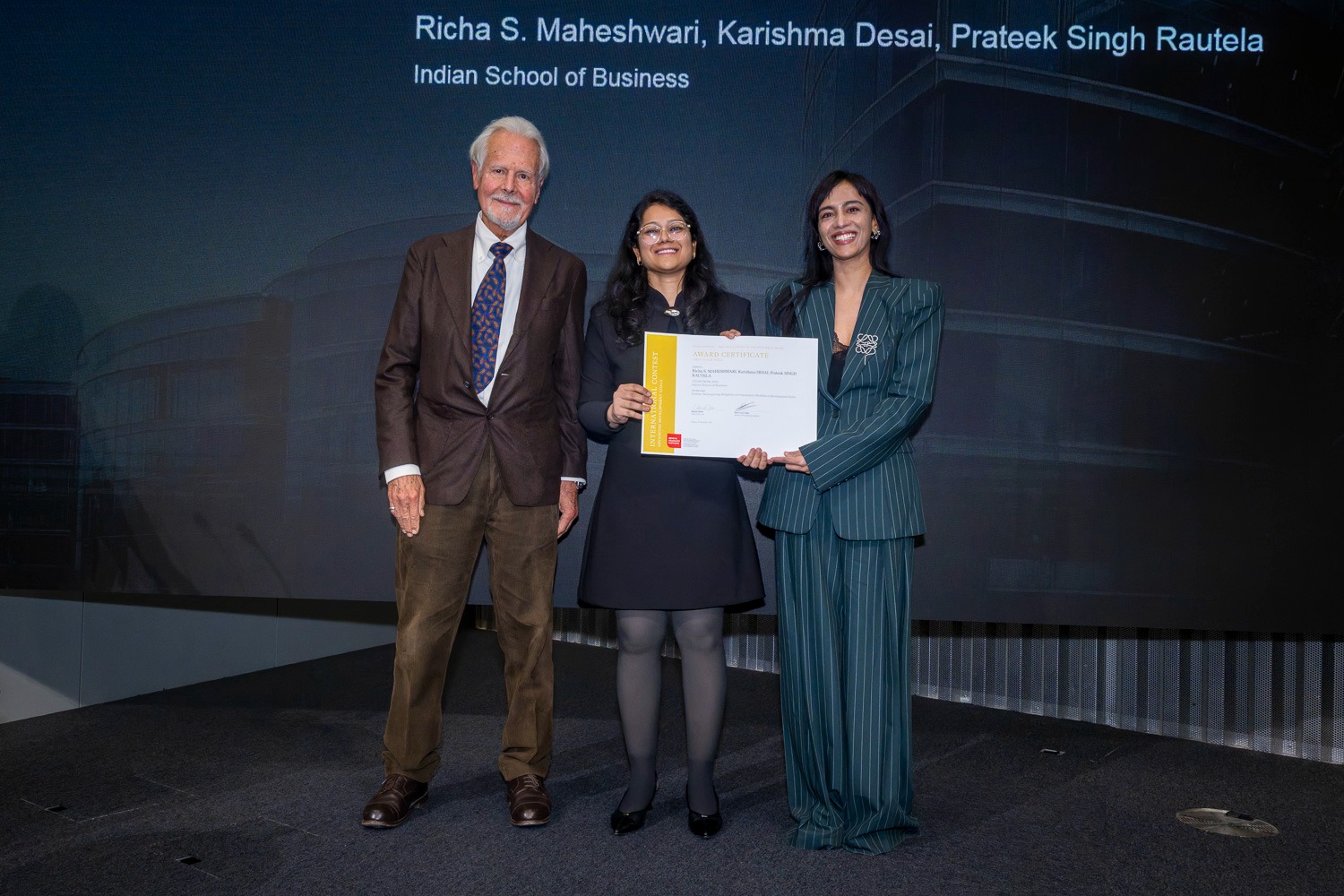
The winners of the 2026 Geneva Challenge, Team Asia, with Amb. Jenö Staehelin
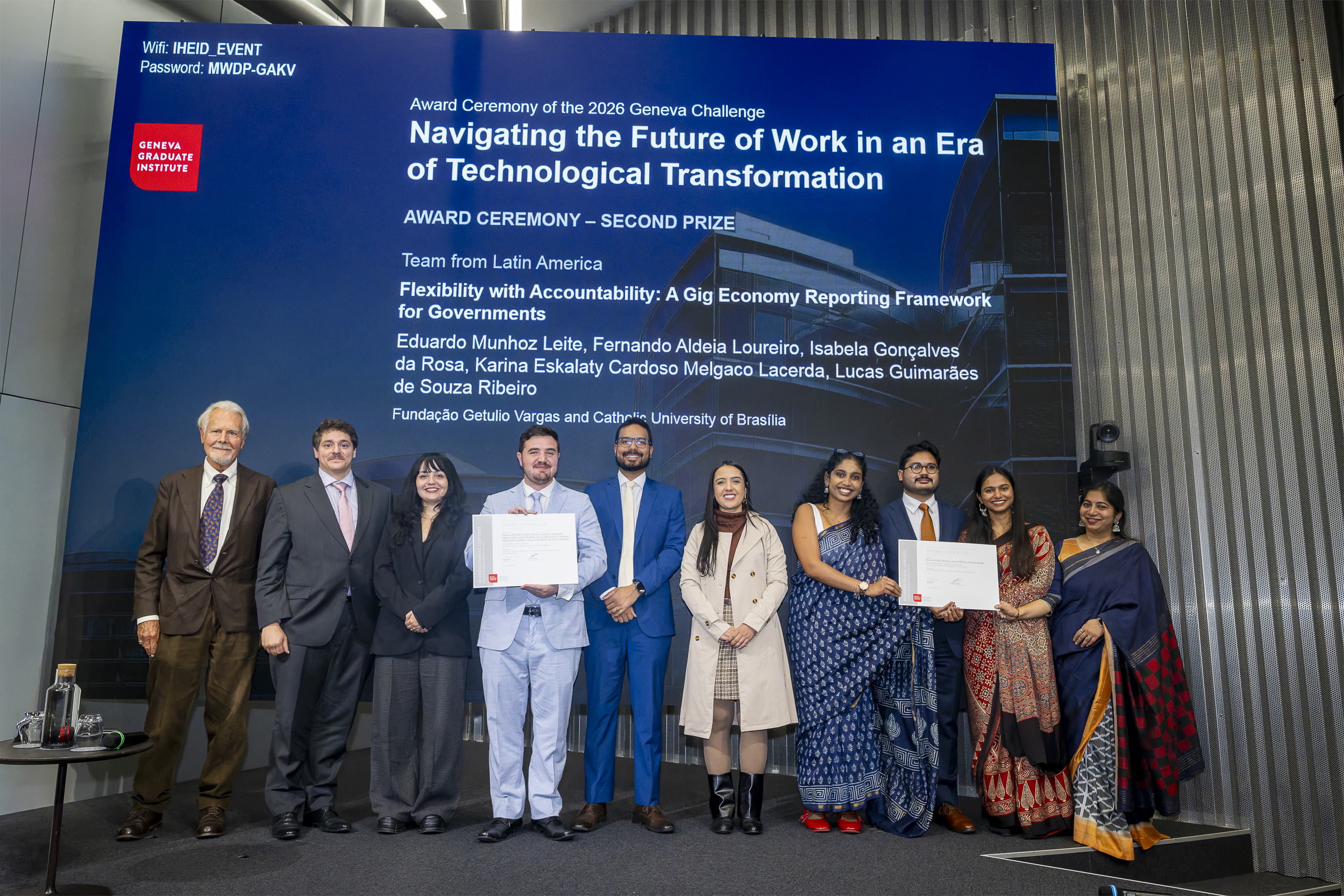
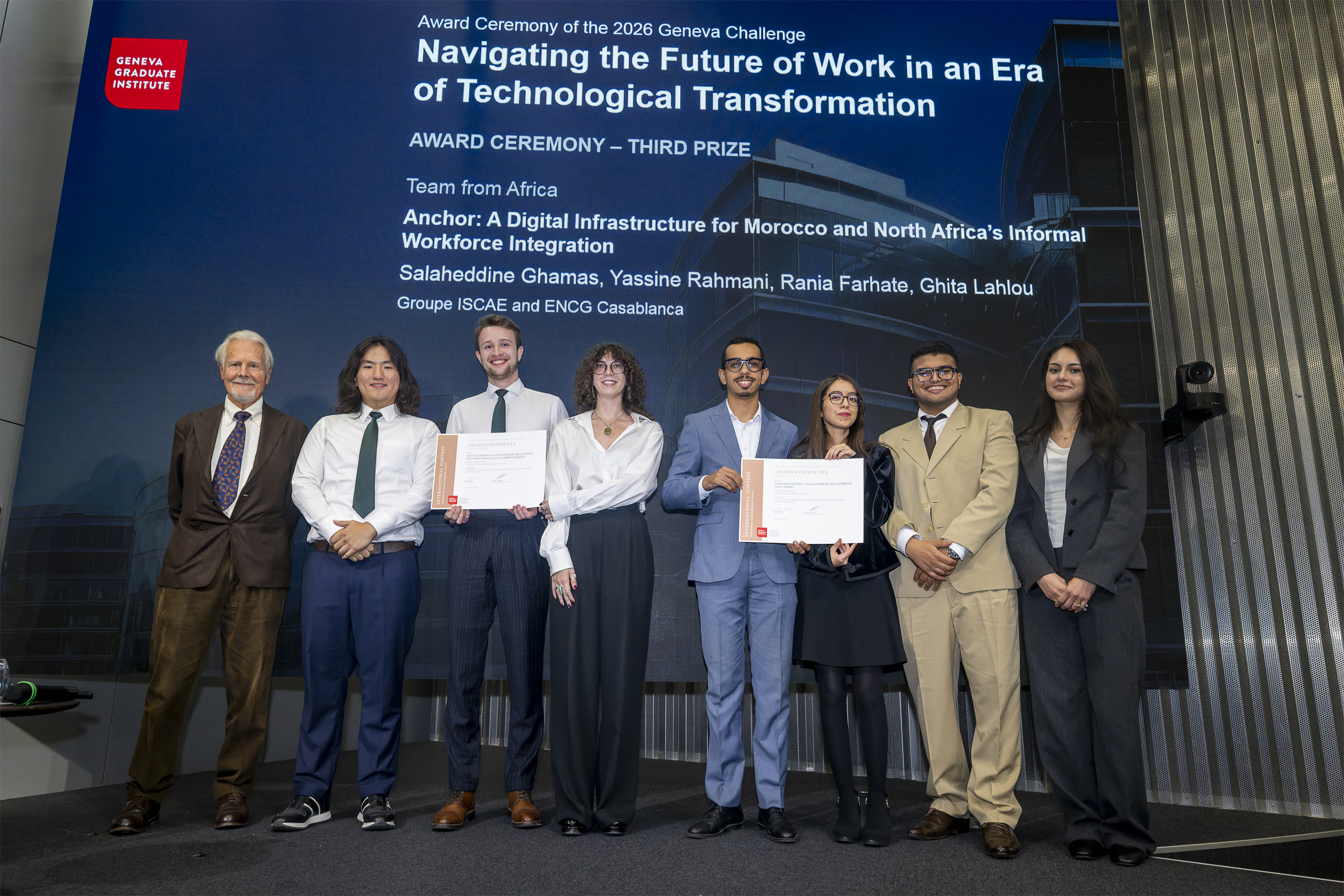
Second place went to both the team from North America and Oceania with their project “DISHA” and the team from Latin America with their project “A Gig Economy Reporting Framework for Governments”. The teams from Africa (“ANCHOR”) and Europe (“PraxisPass”) won the third prizes.
In her introductory remarks, Marie-Laure Salles, Director of the Geneva Graduate Institute, stressed the importance of empowering young people to achieve the sustainable development goals.
In their keynote address, Cathy Li, Head of the Centre for AI Excellence at the World Economic Forum, and Sergei Soares, Senior Economist at the International Labour Organization, provided complimentary perspectives about adaptation to and the impact of artificial intelligence on the future of work. Cathy Li, drawing on her experience at WEF, focused on what has been made possible for us because of AI — and how it has made knowledge and tools more accessible and equitable to many more sections of society. She highlighted that the youth must make themselves capable and complement the tools provided by AI: “If technology makes it easier to build things, then knowing what is worth building becomes even more valuable.”Sergei Soares, on the other hand, provided the impact perspective drawing on his research at the ILO, and explained how certain industries and jobs are more exposed to AI compared to others, addressing how we must accurately assess the impacts of the digital divide and labour mobility in policymaking to ensure the AI dividend is broadly shared.
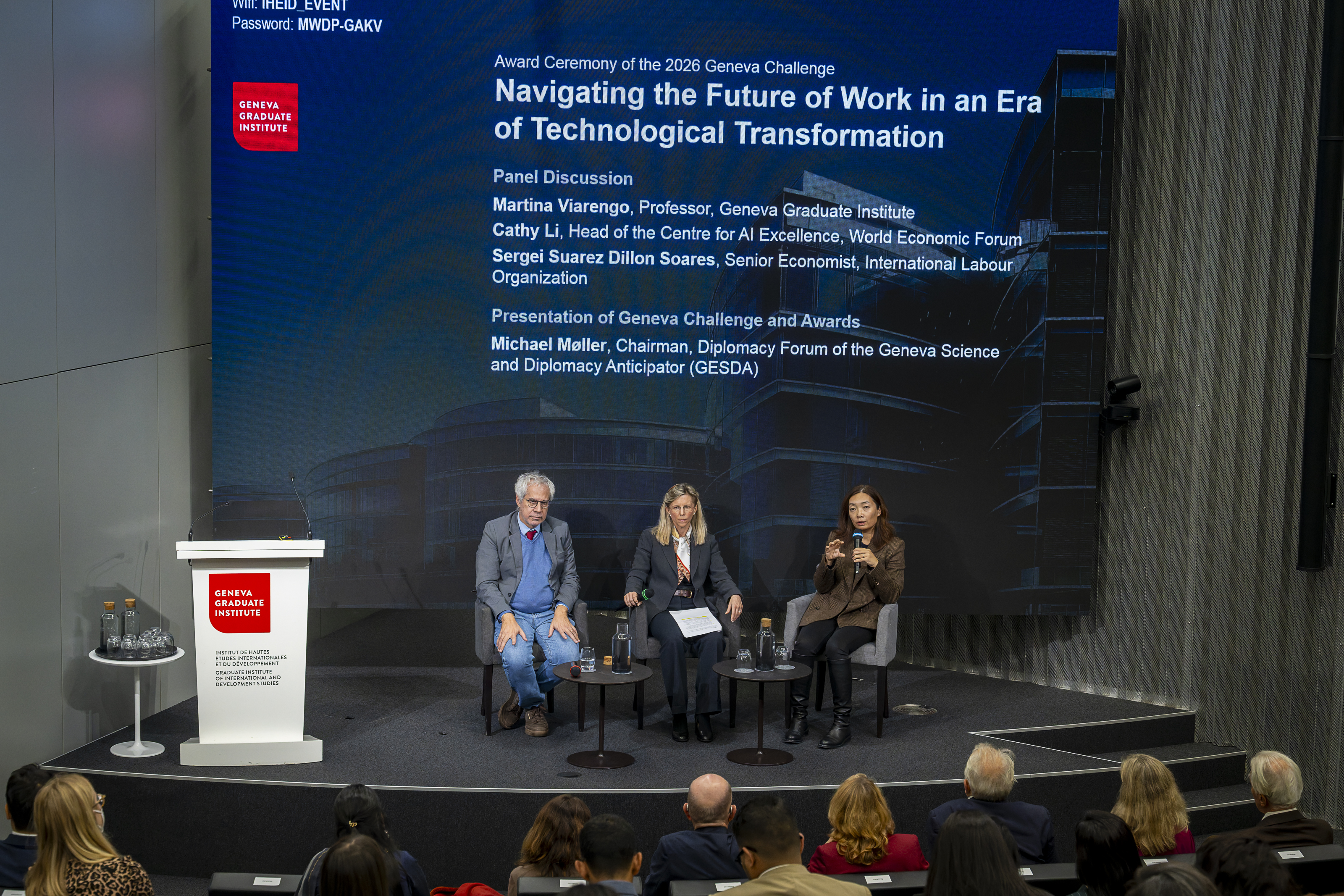
The keynote speakers - Dr. Sergei Soares and Ms. Cathy Li, with Prof. Martina Viarengo
Their speech was followed by a conversation with Martina Viarengo, Professor of Economics and Chair of the Academic Steering Committee for the Geneva Challenge.
In his congratulatory speech, Michael Møller, President of the Jury, announced the theme for the 2027 edition of the Geneva Challenge, which will be "The Challenges of Addressing Corruption". Corruption remains one of the most persistent obstacles to sustainable development, and is evolving faster than the institutions meant to confront it. Geopolitical fragmentation, illicit financial flows and digital expansion, and shifting public expectations are redefining how corruption operates and who it harms. This theme draws upon the topical struggle of eroding trust in institutions, capture of public institutions by private interests, and rapid technological transformation and influence. The problem of addressing corruption in today’s world intersects the issues of legal or technical compliance, with deeply political and societal concerns of trust and public integrity. Graduate students from around the world will be called upon to develop innovative solutions that address the global challenges to addressing corruption.