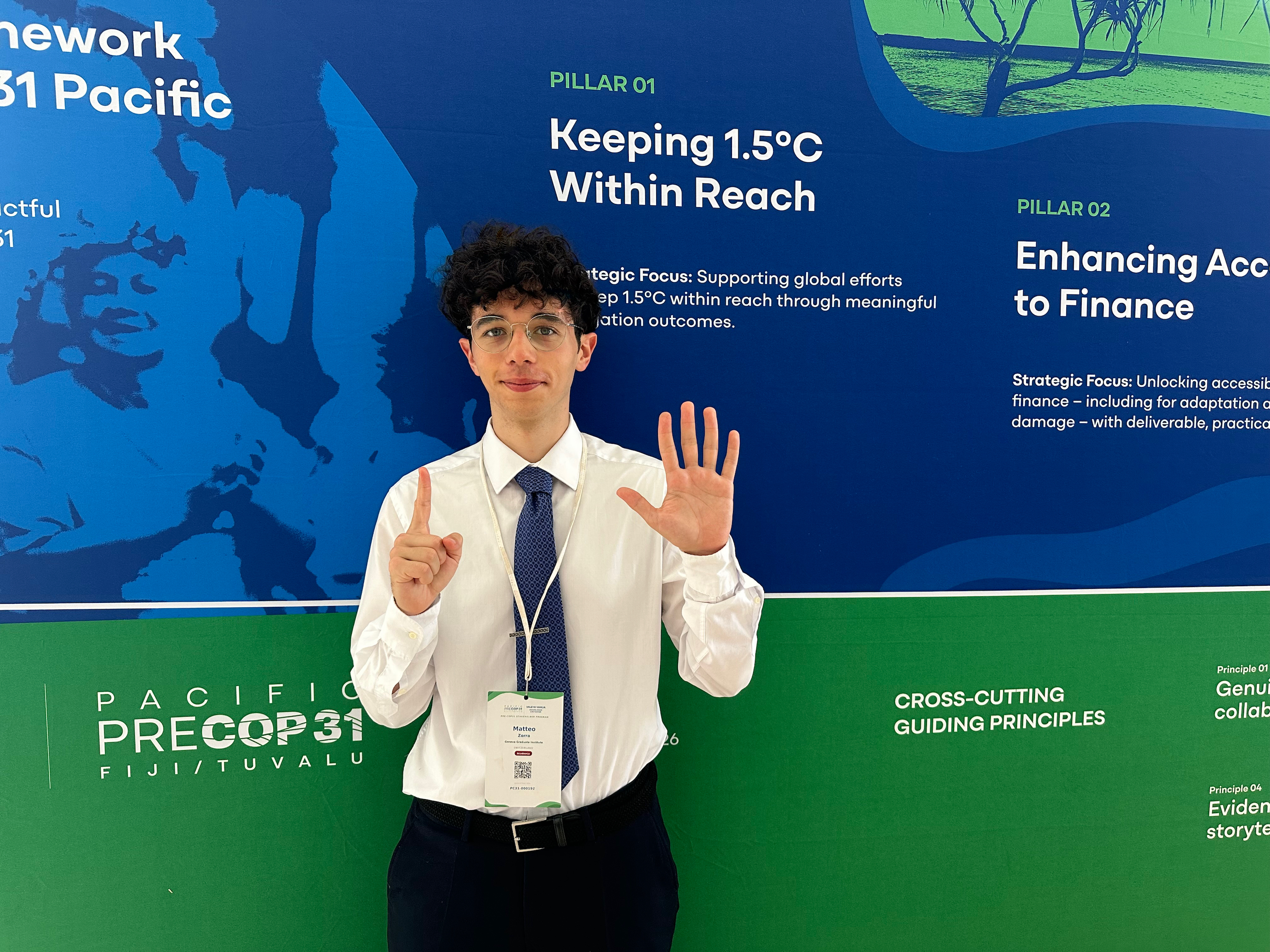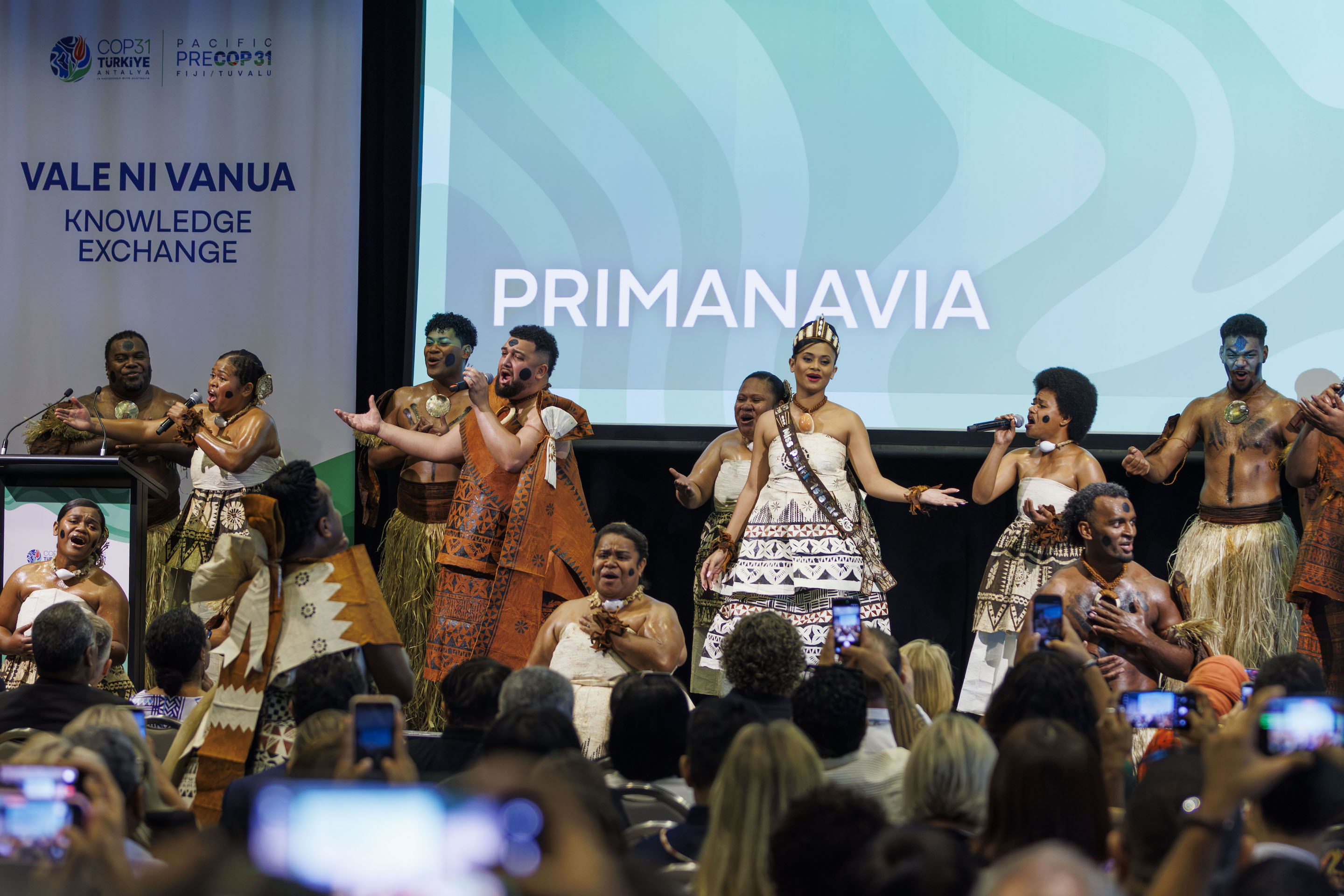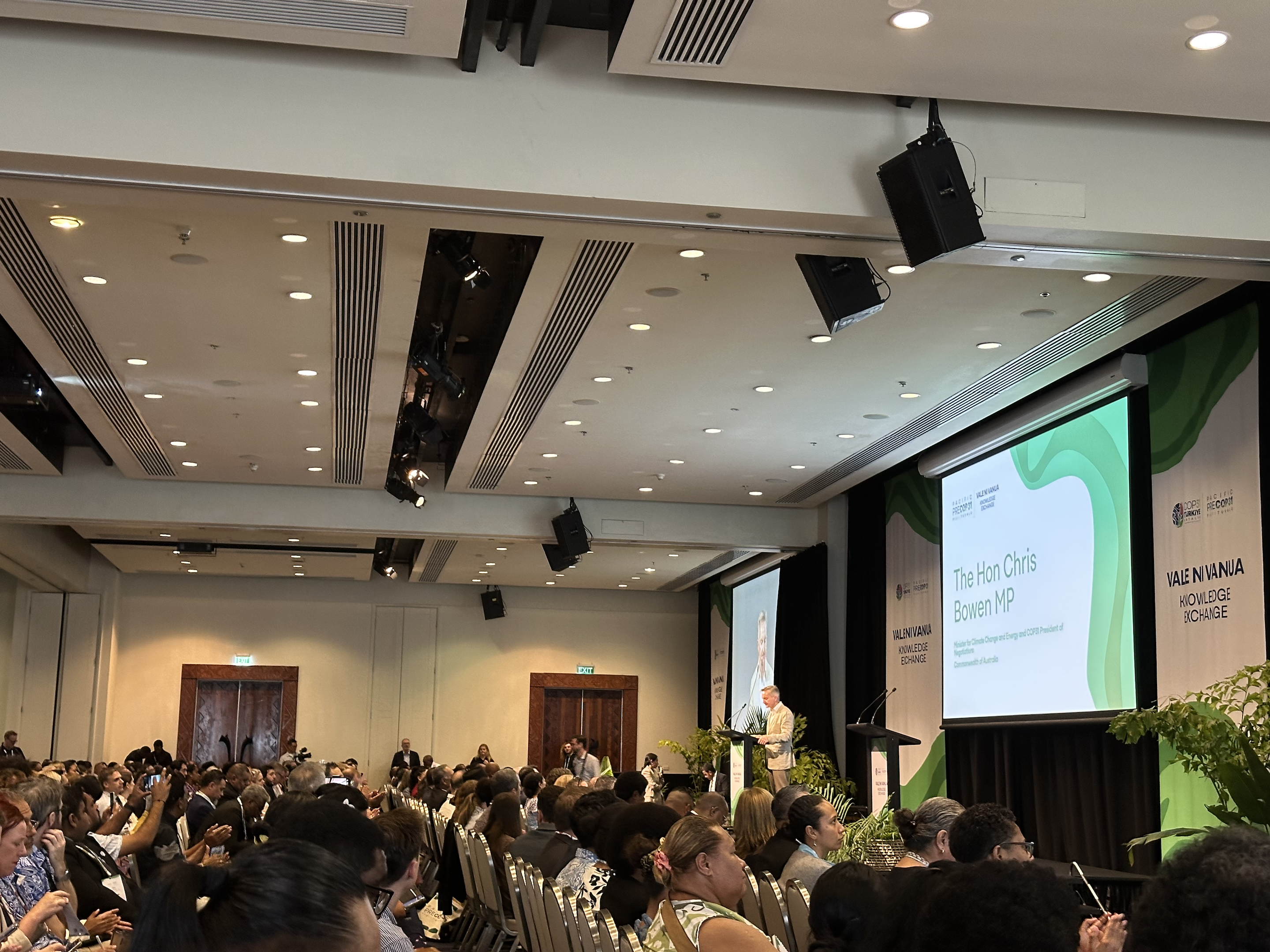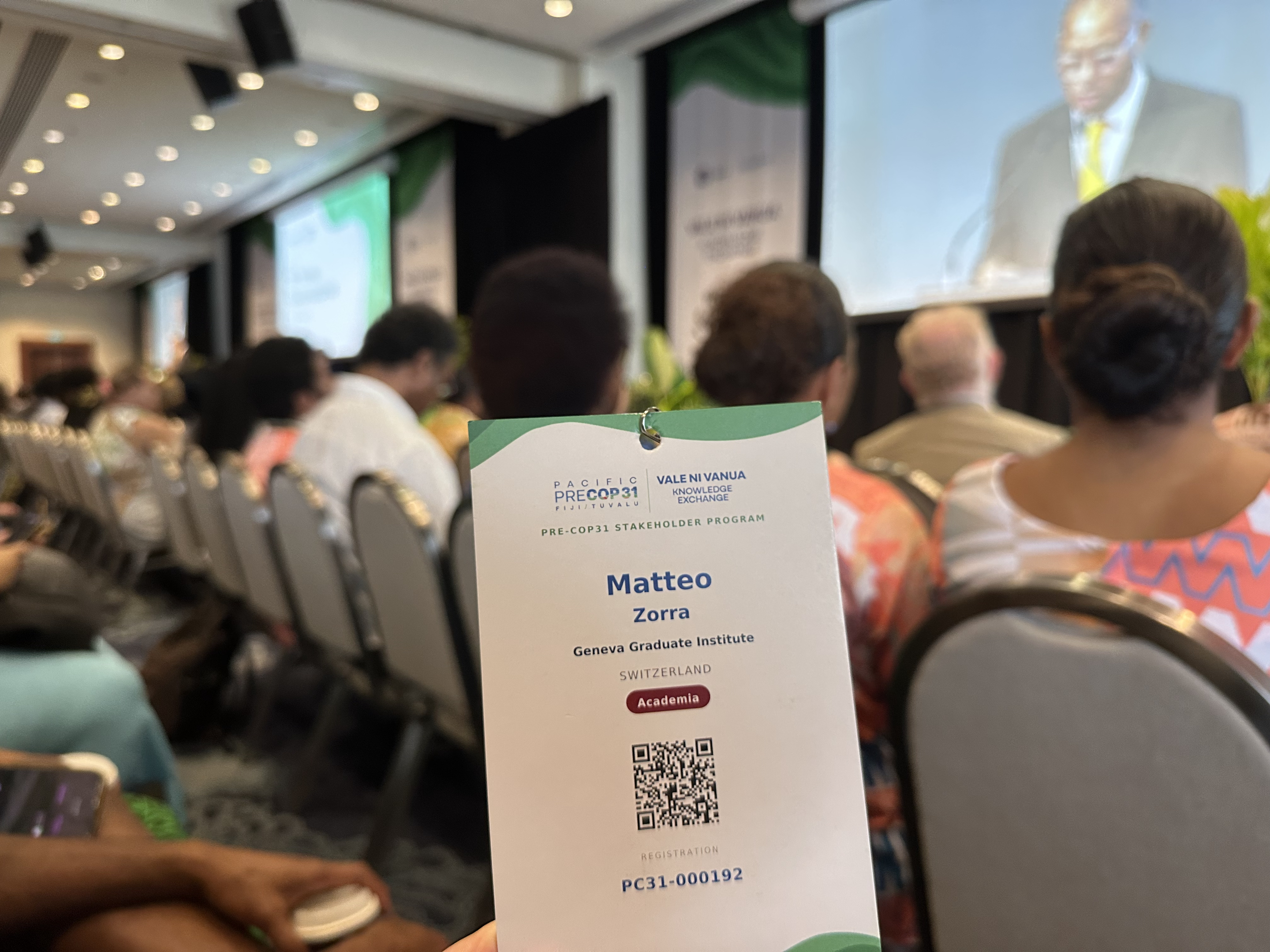


Bula vinaka, welcome to Fiji! I was told while entering the Vale Ni Valua, the Stakeholder Program of the Pre-COP31, the multilateral preparatory meeting held in the heart of the Pacific ahead of COP31. I was privileged enough to attend Pre-COP31 representing the Geneva Graduate Institute during my exchange semester at the University of Melbourne’s Law School in Australia.
Pre-COP was a truly transformative experience that went beyond seeing climate diplomacy in action and further exposed me to Voices of the still hidden realities of natural resources’ exploitation, climate vulnerability, as well as traditional systems of knowledge. From Suva (during the “1.5°C to Stay Alive” climate forum at the University of the South Pacific) to Nadi (the milieu of climate negotiations), I travelled across the Fijian mainland, listening and learning from those who are at the forefront of climate justice in the Pacific, those who historically contributed the least to global GHG emissions, but face the highest repercussions; those who once were the testing ground for nuclear colonialism are now the testing ground for how far we can still push climate inaction.
Pre-COP felt very different from any multilateral forum I have attended in the past,. primarily because it was as policy-centered as it was People-centered. From the ministers of Small Island Developing States (SIDS) to Indigenous Peoples’ representatives, powerful stories of hope, despair, and anxiety were being told by those who not only live them, but also continue to fight for them to be told. Testament to this are the words of Emeline Siale IIolahia (Pacific Islands Association of Non-Governmental Organisations, PIANGO) in front of the COP31 joint Presidency of Australia and Turkey: “We won’t be remembered for what the world allowed to disappear". It is worth noting that in this new chapter of climate diplomacy, SIDS had a seat at the table; it is yet to be seen whether they will be truly listened to — and not just heard — by the world powers.
Stirringly, Pre-COP31 problematised law and climate science alike, namely through the ICJ Advisory Opinion on the Obligations of States in respect of Climate Change that originated precisely here, from the campaign of the 27 law students of the Pacific Islands Students Fighting Climate Change (PISFCC). From the 1.5°C target to the due diligence standards, from fossil fuel licences to Scope III emissions, the ICJ AO (which I also studied through the Climate Change Litigation course at the Institute) is unquestionably clear, and what this experience taught me is that climate negotiators cannot shy away from its grammar.
Nonetheless, PISFCC’s Director warned the Pre-COP attendees, making a rather striking declaration not to “let the Advisory Opinion become a footnote people cite”, a message that, I think, should inspire academia and governments alike to sustain and keep alive the promises and the obligations of international law.
Pre-COP was not only remarkably informative for my studies in the ever-growing mosaic of environmental law, but also for my final thesis that explores the intersection between climate negligence and sovereignty (-ies), encompassing legal research on and with Australia’s First Nations: on the one hand, Aboriginal communities in Victoria, within the framework of the Yoorrook Justice Commission’s account on “Land, Sea, Sky”; on the other hand, with the Elders of the Torres Strait Islands. The latter — represented by Dr Aunty McRose Elu, Uncle Pabai, and Uncle Paul (who lodged the 2025 High Court climate lawsuit Pabai Pabai v Commonwealth of Australia) — were also present at Pre-COP in multiple panels. The custodians of the remotest islands, annexed by Australia only in 1901, then officially invited me into their Country, in the Islands of Boigu and Saibai, to conduct my fieldwork research.
From Geneva to Canberra, we should care because climate erosion is washing away their ancestors’ graveyards, the medicinal plants they rely on, their cultural identity, their totemical gods and, soon, perhaps even their own survival as a distinct ethnic group. At Pre-COP31 and beyond, in the heart of the Pacific, studying, questioning, and unpacking the power and the limits of law is an opportunity I will cherish for life.