


This summer, with the support of the Davis Projects for Peace grant, I am piloting a project in Goma, in the eastern Democratic Republic of Congo, that emerges from a central preoccupation of my doctoral research: in protracted conflict settings, insecurity is not produced by armed violence alone. It is also produced discursively, through the circulation of information itself.
In Goma, a WhatsApp voice note announcing an imminent attack can empty a market within minutes. An unverified alert can reconfigure how entire neighbourhoods move, trade, and extend trust. Whether the anticipated violence materialises is, analytically, almost secondary. The rumour has already performed its work: fear has circulated, behaviour has shifted, and the urban fabric has reorganised itself around a threat that may never arrive. Rumour, in this sense, does not merely reflect insecurity. It constitutes it.
Dominant policy responses frame this phenomenon through the lens of misinformation, privileging fact-checking and correction. My project proceeds from a different premise. It treats rumour circulation as a security phenomenon in its own right, one that resists the truth and falsity binary on which the misinformation paradigm rests. Rumours in conflict settings are frequently neither false nor deliberately deceptive. They are shared because people are afraid, and because sharing operates as a vernacular practice of protection. Correcting facts does little to address the affective conditions that make rumours travel in the first place.
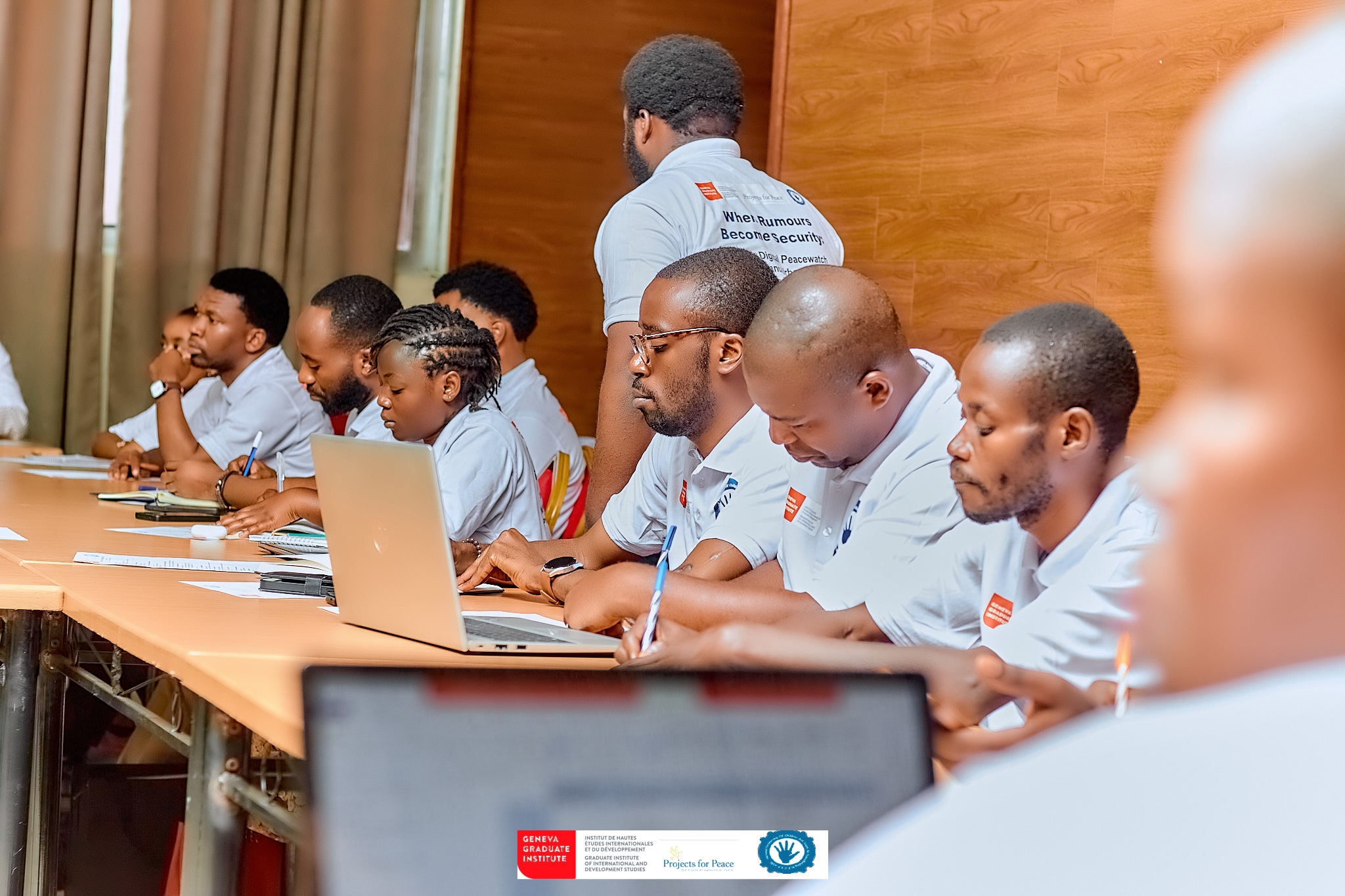
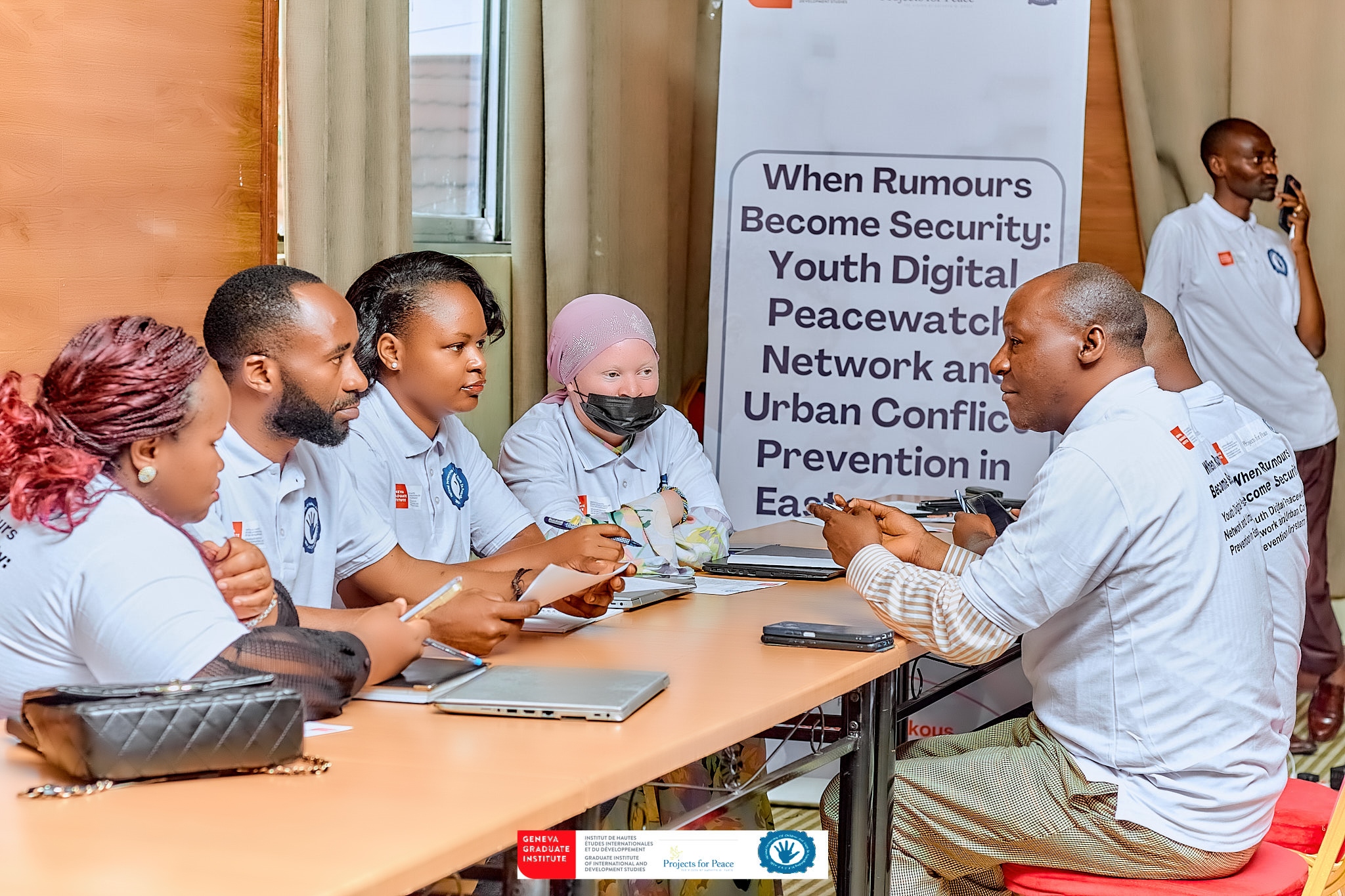
The project, "When Rumours Become Security: Youth Digital Peacewatch Network and Urban Conflict Prevention in Eastern DRC," trains young people in Goma as Digital Peacewatchers: ethical intermediaries embedded in the digital spaces where rumours circulate. Their role is neither to police information nor to surveil their communities, but to contextualise, to verify where possible, and to de-escalate fear through reassurance. This distinction is foundational. In a region where surveillance carries considerable historical and political weight, the project is deliberately constructed around an ethic of care rather than one of control.
The work is conducted in partnership with the National Partnership of Children and Youth in Peacebuilding (NPCYP), a Goma-based organisation with longstanding roots in community peacebuilding. Their situated knowledge of the city and its youth anchors the intervention in local realities rather than imported assumptions. Given the current security environment in North Kivu, we have adopted a hybrid model combining remote coordination with in-person activities led by the local team, an adaptation that has itself become an object of inquiry within the pilot.
Concretely, the Peacewatchers operate through a five-stage protocol: detect, log, verify, confirm, respond. Circulating rumours are first identified within the digital spaces where they emerge, then systematically documented, cross-checked against trusted local sources, confirmed through the network, and finally addressed through calibrated, community-appropriate responses. The sequence is deliberately simple. In moments of heightened tension, what matters is not analytical sophistication but speed, consistency, and trust in the process. The protocol is also designed to be transferable: it does not depend on any particular technology or platform, but on a trained human network capable of applying it wherever rumours and insecurity intersect.
The pilot is already underway. In coordination with NPCYP, we have begun recruiting and training the first cohort of Peacewatchers, and initial monitoring of local digital spaces has started. These early weeks have confirmed the premise of the project: rumours circulate constantly, and the demand for trusted, calm intermediaries is real.
Should the pilot prove conclusive, the ambition is to extend the model to other urban centers in eastern DRC and, ultimately, to other African contexts marked by similar dynamics. A further ambition is to develop an additional technological layer: an open-source detection software that would serve the Peacewatchers as a tool, amplifying their capacity rather than replacing their judgment. For now, the work begins in Goma.