

- Timeline: 2025-26
- Funding organisation: Microsoft
- Keywords: Artificial Intelligence (AI), Global Majority, AI for Good, AI Governance, AI Policy, Applied Research.
- Call for Projects – AI for the Global Majority: Charting a Way Forward
- A joint initiative by the Geneva Graduate Institute, Microsoft, and the International Telecommunication Union (ITU).
Overview
AI for the Global Majority is a joint initiative of the Geneva Graduate Institute's Tech Hub, Microsoft, and the International Telecommunication Union (ITU). It supports applied research exploring practical pathways towards more inclusive, responsible, and context-sensitive artificial intelligence.
Launched in 2025 through an international Call for Projects, the initiative brings together researchers from different regions and disciplines to address real-world challenges at the intersection of AI, governance, and sustainable development. Rather than promoting a single model of AI, AI for the Global Majority seeks to amplify locally grounded approaches that reflect the needs, experiences, and priorities of the Global Majority.
Background
Artificial intelligence is transforming every aspect of society, from healthcare and education to finance, agriculture, and public services. While AI offers tremendous opportunities to improve human wellbeing and accelerate sustainable development, significant challenges remain. Unequal access to technology, algorithmic bias, governance gaps, and limited representation in AI development risk reinforcing existing inequalities.
AI for the Global Majority was created to support research that responds directly to these challenges through interdisciplinary, evidence-based, and policy-relevant approaches.
The Four Selected Projects
Following an international Call for Projects, four research teams were selected.
Inclusive Speech Recognition for Low-Resource Languages (Ghana)
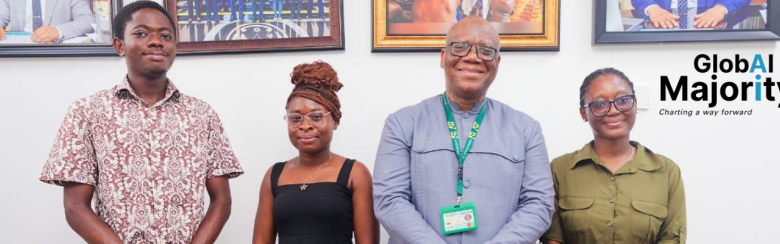
Led by Professor Jerry John Kponyo (Kwame Nkrumah University of Science and Technology), this project develops inclusive automatic speech recognition systems capable of understanding multilingual, code-switched, and impaired speech. The research contributes to reducing digital exclusion by making voice technologies more accessible in low-resource linguistic environments.
Governing AI in Indian Finance: Consumer Risks and Policy Responses (India)
Led by Dr. Tanushree Kaushal (University of Bern), this project investigates how AI is transforming India's fintech sector and examines its implications for consumer protection, financial inclusion, and AI governance through close collaboration with industry and policymakers.
Inclusive AI Governance and Capacity Building for Public Health (Canada)
Led by Professor Jude Kong (University of Toronto), this multidisciplinary project develops governance frameworks and monitoring tools to support responsible AI deployment in public health systems across the Global Majority, with a particular focus on participatory governance and capacity building.
Cooperative AI in Argentina: Towards AI as a Commons (Argentina)
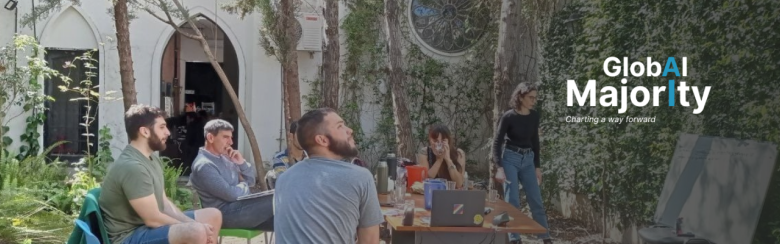
Led by Dr. Denise Kasparian (CONICET / University of Buenos Aires), this project explores alternative models of AI development based on cooperative ownership, democratic participation, and shared benefit. Working with technology cooperatives in Argentina, it investigates how AI can be governed as a commons rather than a proprietary asset.
Knowledge Exchange and International Engagement
Throughout the project, the Tech Hub conducted a series of interviews with each research team, resulting in a collection of articles highlighting the motivation, methodology, challenges, and emerging findings of each project.
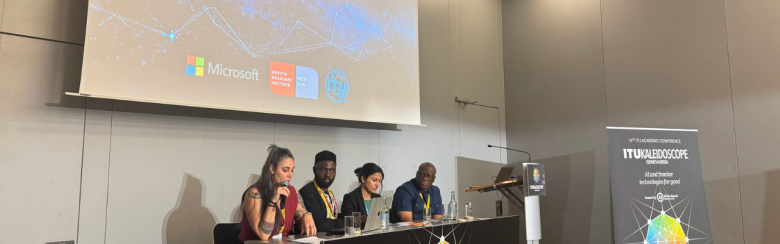
The four teams presented their research at the AI for Good Global Summit 2026 in Geneva during a dedicated ITU Kaleidoscope session. Their work was also showcased at the ITU Kaleidoscope Research Projects Exhibition, providing an opportunity to engage with researchers, policymakers, international organisations, and the wider AI community.
Looking Ahead
The AI for the Global Majority initiative demonstrates the value of interdisciplinary and internationally collaborative research in addressing the societal challenges raised by artificial intelligence. In the coming months, each research team will publish an article presenting its research and key findings. Together, these contributions will enrich international discussions on responsible AI governance, inclusive innovation, and evidence-based policymaking.
For more information, contact us at techhub@graduateinstitute.ch