FOLLOW US





The 2025 edition aims to present innovative and pragmatic solutions to address the challenges of migration.
Eager to stimulate reflection and innovation on development issues from diverse disciplinary and contextual perspectives and with the generous support of Ambassador Jenö Staehelin, the Graduate Institute launched the Advancing Development Goals Contest, an international competition for Master students, in 2014.
The idea is to gather contributions that are both theoretically grounded and offer pragmatic solutions to a relevant international development problem stemming from an interdisciplinary collaboration between three to five enrolled master students from anywhere in the world.
Learn more about the contest here.
The world is currently experiencing one of the largest waves of migration in history. In 2020, over 280 million individuals (or 3.6% of the world’s population) lived outside their country of birth. Meanwhile, migration occurs within a country's borders.
The number of people forcibly displaced by conflict, persecution, and climate-related disasters has increased over the past decades, reaching 122.6 million in 2024. Among them, 43.7 million are formally recognised as refugees. The vast majority of refugees, around 71%, is hosted by low- and middle-income countries that often face significant challenges in meeting the needs of their own populations. Just as voluntary migration occurs within a country's borders, so does forced displacement, referred to as internal displacement. In 2024, the 72.1 million internally displaced people made up more than half of all forcibly displaced people globally.
Migration is an integral part of human history, shaping economies, cultures, and societies across the globe. However, migration also presents complex challenges. In addition to affecting the migrants themselves, it also affects the host countries that receive them and the sending countries they leave behind. Thus, the challenges of migration require innovative solutions that turn these challenges into opportunities.
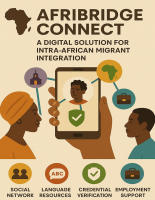
AFRIBRIDGE CONNECT: Across Africa, over 15 million migrants live outside their country of origin, many navigating linguistic divides and bureaucratic dead-ends that limit access to jobs, education, and public services. Despite growing regional integration, systemic barriers such as non-recognition of credentials, lack of bilingual tools, and disjointed migration governance continue to marginalize youth, skilled professionals, and uncredentialed labourers. The result is a cycle of underemployment, exclusion, and "brain waste" that undermines SDGs 4 (Education), 8 (Decent Work), 10 (Reduced Inequalities), and 16 (Strong Institutions). AfriBridge Connect is our response: a bilingual (French-English), mobile-first platform that simplifies credential recognition, job matching, and cross-border integration for African migrants. It blends AI-powered translation, blockchain-secured document verification, and voice-accessible onboarding to ensure inclusion even for low-literate or disabled users.
Inspired by the Bologna Process and Germany’s Anabin system but reimagined for Africa’s informal, multilingual, and mobile realities AfriBridge Connect bridges formal frameworks like the ACQF and RPL with real-time, user-friendly tools. The platform will launch pilot corridors between Ghana–Côte d’Ivoire and Cameroon–Nigeria, enabling migrants to upload credentials, match with mentors or jobs, and navigate services in their preferred language. Our backend integrates with national systems to allow policy harmonization, and our front-end ensures migrants can access services online, via USSD, or offline kiosks. By reducing friction in credential portability, enabling language access, and linking migrants to opportunity ecosystems, AfriBridge Connect turns structural challenges into drivers of inclusive mobility. With real time impact tracking and institutional partnerships, the platform is built to scale and contribute to Agenda 2063’s vision for an integrated Africa.
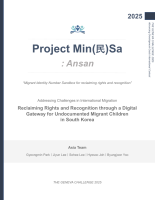
PROJECT MINSA: Undocumented migrant children in South Korea, particularly in cities like
Ansan, face systemic exclusion from education, healthcare, and legal recognition due to their lack of official status. Despite international legal commitments, South Korea’s fragmented policy landscape leaves this population in a state of civic anonymity, perpetuating intergenerational marginalization. The Min(民)Sa Project addresses this critical gap through an innovative civic-tech solution: a pseudonymous identity and service coordination platform grounded in Zero-Knowledge Proof (ZKP) technology. By enabling undocumented children to access essential services without disclosing their legal status, MinSa balances anonymity and accountability offering a secure, rights-based alternative to formal documentation. This pilot initiative not only bridges immediate service gaps but also creates a scalable model for inclusive governance, transforming how undocumented children are recognized, protected, and integrated into society. MinSa thus advances child welfare, strengthens social cohesion, and contributes to long-term structural reform in Korea’s highly status-dependent public service infrastructure. The project aims to reach other countries facing similar issues and ultimately work towards the 2030 SDGs goals in ‘leaving no one behind’.
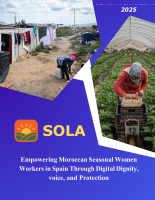
PROJECT SOLA: Each year, over 15,000 Moroccan women enter Spain's billion-euro strawberry harvest, a system that promises economic opportunity but often delivers systemic exploitation on a massive scale. This is the frontline of a Europe-wide crisis affecting over 100,000 non-EU seasonal workers annually. Trapped by contracts they cannot read and a legal status tied to a single employer, these women face inhumane housing conditions, rampant wage theft, and pervasive sexual violence. A deep-rooted culture of fear ensures their silence: fewer than 2% of workers ever dare to file a formal complaint, creating a near-perfect shield of impunity for abusers.
SOLA intervenes as a revolutionary digital lifeline in this accountability vacuum. It is a coordinated defense network led by the trusted NGOs and unions already on the ground. By deploying advanced, dialect-specific voice-AI, SOLA shatters the barrier of illiteracy, allowing women to safely and anonymously report abuse in their language for the first time, creating an unerasable record of their experience. This testimony forges a new weapon for justice: a live "Dignity Map" that exposes patterns of exploitation in real-time. The platform's dashboard becomes a critical tool for journalists, ethical buyers, consumer advocacy groups, and researchers, enabling them to act decisively. With this data, supermarkets can shift multi-million-euro contracts toward verified farms, journalists can trace accountability through the supply chain, and communities can mobilize pressure. SOLA does not just document abuse; it makes it bad for business. By prioritizing verified data and creating direct lines of action for NGOs and market actors, this indirect system makes worker dignity a non-negotiable competitive advantage. This is a new paradigm of justice, built from the ground up to protect Europe's most invisible workforce.
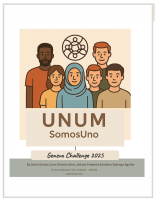
UNUM - SOMOSUNO: UNUM “SomosUno” is a free digital platform designed to promote equal employment opportunities for both internal and international migrants by removing discriminatory barriers in labor market access. The project emerges in response to a growing challenge faced by governments:
managing human mobility in the context of profound structural, social, and technological changes. Despite their high levels of training and resilience, migrants often face structural obstacles such as informality, non-recognition of qualifications, and lack of access to local networks—factors that are further exacerbated by algorithm-driven systems that can reproduce biases.
UNUM addresses this problem by offering a multi-dimensional, evidence-based solution grounded in empirical data collected through a survey designed under OECD and ILO standards. The platform includes a neutral, bias-free job matching system that hides sensitive data like origin or age; a participatory diagnosis informed by migrant experiences; free training in technical skills, circular economy, and labor rights; and a robust impact evaluation framework. It also features participatory tools such as forums and surveys to continuously refine its design in response to user feedback. What sets UNUM apart is its ethical and sustainable use of technology, its alignment with international human rights frameworks, and its circular planning approach that integrates social, institutional, and environmental sustainability. Built through public-private and multilevel cooperation with embassies, governments, and the ILO, UNUM transforms migration from a challenge into a strategic opportunity to strengthen local communities and economies.
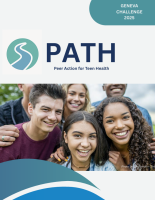
PATH (Peer Action for Teen Health): Adolescent migrants around the world face challenges accessing accurate health information and emotional support due to language barriers, social isolation, and legal or financial exclusion. These challenges are universal across both high-income and low-income countries. Migrant teens are particularly vulnerable to misinformation, mental health risks, and risky behaviors due to a lack of culturally sensitive, age-appropriate health education. PATH (Peer Action for Teen Health) is a peer-led health education and support initiative for migrant adolescents aged 13-18, combining in-person mentorship with a web-based platform to promote well-being through culturally adapted learning and peer connection. The project recruits older migrant teens as trained “health navigators” to support newly arrived youth through group sessions focused on mental health, reproductive health, and nutrition. Each navigator uses a multilingual, visual toolkit to facilitate interactive learning, and open discussion. The PATH web platform complements these sessions by offering self-paced modules, downloadable toolkits, a digital health passport, and a moderated peer discussion space. Accessible via mobile phone or school devices, the platform ensures continuity for teens who may move frequently or face barriers to in-person participation. The pilot will run in Jakarta (Indonesia), San Diego (USA), and Melbourne (Australia)—three cities representing distinct migrant integration challenges. By combining peer mentorship with a digital resource hub, PATH offers a scalable, community-based solution to a universal development challenge.