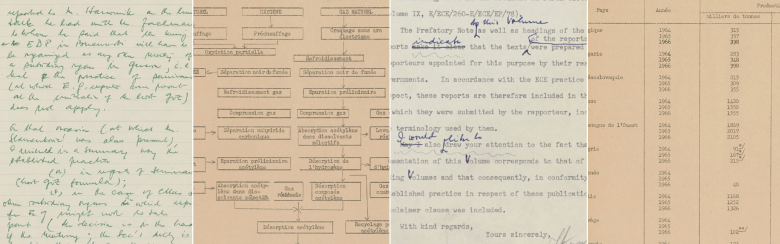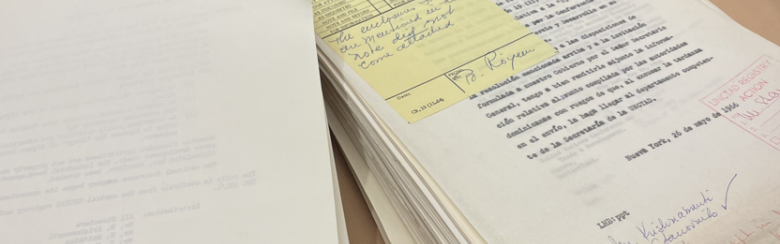


This means that about 50 percent of CDHM resources goes toward targeted digitisation projects of pre-determined scope, which involve a curated process from start to finish, including: scoping exercises on segments of fonds and collections carried out with academic expertise, pre-digitisation work by the CDHM’s team of dedicated archivists and partners, state-of-the-art scanning and creation of interoperable digital formats by an external team, and post-digitisation work with metadata creation to allow for optimal access across multiple platforms. This work further provides for cross-pollinating outputs with the Centre’s research wing, including publications, workshops, seminars, and events.
In close collaboration with its partner international organisations, the Centre reaches agreements on a small subset of collections that can be digitised while still maximizing impact. Targeted projects like these shine a light on archives that are increasingly at-risk during austerity measures; archival data enhances academic research – acting as content engines for new scholarly projects, and can provide historically relevant resources for stakeholders and decision-makers bringing multilateralism into its next era.
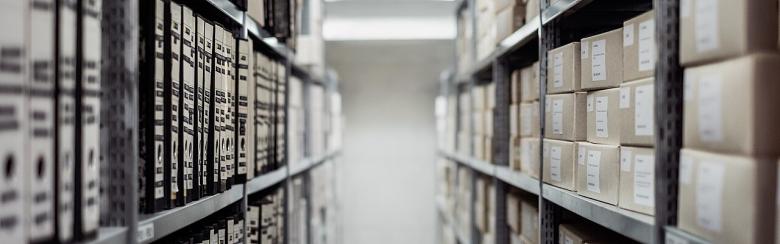
In addition, the CDHM conducts projects that aim at ensuring that digital preservation is not detrimental, but rather complementary to the physical preservation of the archives of International Geneva, which are the stronghold of historical material on the birth of modern multilateralism. Its efforts reflect a commitment to ensuring the integrity of physical and digitised archives for future generations according to the principles of findable, accessible, interoperable, and reusable data that is not just stored, but also readily discoverable by researchers and the wider public.
Please find below select updates on our work in the digitising space.